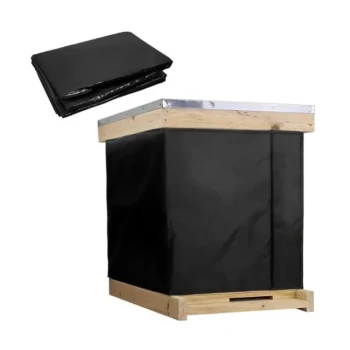
Dark-colored hive coverings act as passive thermal collectors. They are specifically engineered to absorb powerful winter sunshine, converting light energy into heat to raise the hive's external temperature. This passive heating reduces the metabolic workload on the colony, allowing bees to conserve energy they would otherwise expend on generating their own warmth.
By strategically utilizing dark surfaces to absorb solar radiation, beekeepers can stabilize hive temperatures and significantly reduce the rate at which colonies consume winter food stores.
The Mechanics of Solar Heat Gain
Absorbing Thermal Energy
In regions with significant winter sunshine, the color of the hive covering dictates its thermal performance. Dark colors have a low albedo, meaning they absorb the majority of solar radiation that hits them rather than reflecting it away.
On clear, sunny winter days, a dark covering acts as a heat sink. It captures the energy from the sun and transfers it to the hive body, effectively creating an external heating layer.
Preserving Colony Resources
Honeybees generate heat through metabolic activity. To keep the winter cluster warm, they consume honey stores and vibrate their wing muscles.
When a dark covering raises the ambient temperature of the hive, the thermal gradient between the inside and outside of the cluster decreases. This means the bees do not have to work as hard to maintain survival temperatures.
Improving Energy Efficiency
The primary function of this heat absorption is energy conservation. By relying on the sun to provide a baseline of warmth, the colony burns fewer calories.
This conservation is critical in late winter when food stores are often running low. The external warmth helps bridge the gap until spring foraging can begin.
Understanding the Trade-offs
While dark coverings offer distinct advantages in specific climates, they are not a universal solution. It is important to understand the limitations of this strategy.
Dependency on Sunlight
This method relies entirely on the presence of "powerful sunshine." In regions with consistently gray, overcast winters, a dark covering offers little thermal advantage over a light one.
Potential for Overheating
In areas where winter days can occasionally become warm, a dark covering can absorb too much heat. This might trigger the bees to break their cluster prematurely or become active when there are no resources available to forage.
Making the Right Choice for Your Goal
To determine if dark hive coverings are appropriate for your apiary, consider your specific regional climate and winter conditions.
- If your primary focus is maximizing survival in cold, sunny climates: Use dark coverings to harvest free solar energy and reduce the colony's honey consumption.
- If your primary focus is preventing premature activity in fluctuating climates: Monitor daytime temperatures carefully to ensure the solar gain does not overheat the hive on unseasonably warm days.
By aligning your equipment choices with your local weather patterns, you turn the environment into an asset rather than a liability.
Summary Table:
| Feature | Function & Impact |
|---|---|
| Primary Mechanism | Passive solar thermal collection (low albedo) |
| Energy Benefit | Reduces metabolic workload and honey consumption |
| Heat Source | Converts solar radiation into external hive warmth |
| Climate Suitability | Best for cold regions with high winter sun exposure |
| Key Risk | Potential for overheating during unseasonal warm spells |
Maximize Your Apiary's Winter Success with HONESTBEE
Are you looking to enhance colony survival rates and operational efficiency? HONESTBEE specializes in supporting commercial apiaries and distributors with high-performance beekeeping solutions. From specialized hive-making and honey-filling machinery to a full spectrum of durable tools and essential consumables, we provide the hardware you need to thrive in any climate.
Partner with HONESTBEE today to access premium wholesale equipment and expert industry insights. Contact us now to discuss your bulk requirements!
Related Products
- Inner Beehive Cover for Beekeeping Bee Hive Inner Cover
- Telescopic Beehive Outer Cover Lid Roof with Galvanised Sheeting for Langstroth Hive and Beehive Outer Cover
- Professional Insulated Winter Hive Wrap for Beekeeping
- Yellow Plastic Bucket Pail Perch for Beekeeping
- Solid Bottom Board Australian Pine Wood Langstroth Bottom Board for Wholesale
People Also Ask
- What is the purpose of the inner cover in a beehive? A Key to Hive Health & Easy Management
- What is the function and placement of an inner cover in a beehive? Essential Hive Management Guide
- What is the purpose of the inner and outer covers in a beehive? Essential for Hive Health & Management
- What is a beehive's inner cover and how is it used? Essential Guide for Hive Insulation and Ventilation
- What are the functions of the inner and outer covers on a beehive? Essential Guide for Hive Protection and Management