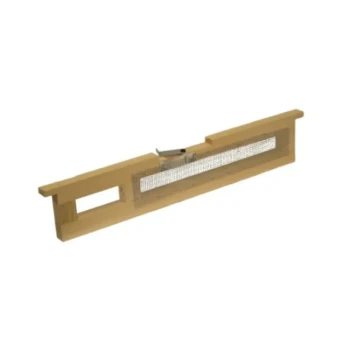
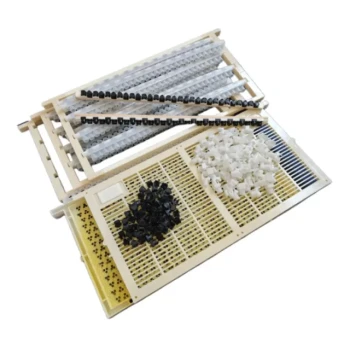
High-precision artificial insemination equipment serves as the fundamental hardware that allows breeders to bypass the honeybee’s natural, uncontrolled mating behavior. By enabling the precise, mechanical injection of drone semen into queen bees, this technology provides the absolute genetic control necessary to isolate and "fix" specific hereditary traits.
Core Takeaway In honeybee breeding, natural mating is chaotic and introduces unknown genetic variables. High-precision insemination equipment eliminates this uncertainty, allowing breeders to strictly control both maternal and paternal lines to rapidly stabilize complex resistance traits, such as Varroa Sensitive Hygiene (VSH), which would otherwise be diluted in the wild.
Achieving Absolute Genetic Control
Overcoming Natural Promiscuity
In the wild, a queen bee naturally engages in multi-male mating flights, collecting sperm from numerous drones of varying genetic origins.
This biological imperative creates a "noisy" genetic background that makes it nearly impossible to isolate specific traits.
High-precision equipment effectively overrides this behavior, allowing the breeder to substitute random natural mating with a controlled laboratory process.
Eliminating External Interference
Without this equipment, a breeding program is constantly at risk of introducing susceptible genes from nearby, unmanaged colonies.
Artificial insemination creates a biological firewall, ensuring that only drones with proven survival advantages contribute to the next generation.
Accelerating Resistance to Pests and Disease
Fixing the VSH Trait
The primary application of this technology is the development of colonies with Varroa Sensitive Hygiene (VSH).
This behavior allows bees to detect and remove mite-infested brood, but it is a complex trait that requires specific genetic combinations to function effectively.
By using insemination devices to mate VSH-resistant queens with VSH-resistant drones, breeders can "fix" this trait in the population much faster than natural selection permits.
Increasing Allele Frequency
Resistance to viral infections and mite infestations often relies on specific, sometimes recessive, alleles.
Precision equipment allows for directional breeding, which systematically increases the frequency of these targeted resistance alleles within the gene pool.
This prevents the dilution of resistance traits that often occurs when a selected queen mates with a non-resistant drone in the wild.
The Foundation of Scientific Breeding
Establishing Accurate Pedigrees
To scientifically validate a breeding line, you must know the exact parentage of the offspring.
This equipment facilitates Single-Drone Insemination (SDI) or controlled Multi-Drone Insemination (MDI), providing the data needed to establish accurate pedigree charts.
Calculating Heritability Parameters
With the variables of wild mating removed, breeders can calculate heritability parameters (h²) with high confidence.
This data is crucial for using mixed linear models to predict how likely traits like Suppressed Mite Reproduction (SMR) or Recapping (REC) are to be passed down.
Determining Genetic Origins
Controlled insemination allows researchers to isolate variables to determine the source of a trait.
By crossing specific lines, they can definitively identify whether a resistance trait is derived from maternal genetics, paternal genetics, or a combination of both.
Understanding the Trade-offs
The Necessity of Technical Expertise
Possessing the hardware is not enough; the process requires a high degree of manual dexterity and biological knowledge.
Improper use of the equipment can damage the queen or result in poor insemination, leading to premature queen failure.
Managing Genetic Diversity
While "fixing" traits is the goal, strictly controlled breeding can inadvertently lead to inbreeding depression if not monitored.
Breeders must use this equipment to balance the concentration of desired traits with the need for enough genetic diversity to maintain colony vigor.
Making the Right Choice for Your Goal
- If your primary focus is Trait Stabilization (VSH): Use the equipment to perform Single-Drone Insemination (SDI) to rapidly increase the frequency of resistance alleles and eliminate susceptible genes.
- If your primary focus is Heritability Research: Use the equipment to strictly control paternal inputs, allowing you to calculate precise heritability parameters (h²) and determine maternal vs. paternal contributions.
- If your primary focus is Production Breeding: Use the equipment to create "breeder queens" with fixed traits, which can then produce daughters for open mating to reintroduce hybrid vigor.
Precision equipment transforms honeybee breeding from a game of chance into a controlled, scientific pursuit.
Summary Table:
| Feature | Role in Selective Breeding | Impact on Resistance |
|---|---|---|
| Genetic Control | Bypasses natural multi-male mating | Eliminates "noisy" genetic backgrounds |
| Trait Isolation | Fixes complex traits like VSH & SMR | Prevents dilution from wild drone populations |
| Pedigree Accuracy | Enables Single-Drone Insemination (SDI) | Facilitates precise heritability (h²) calculation |
| Directional Breeding | Increases targeted allele frequency | Accelerates development of pest-resistant lines |
Scale Your Breeding Success with HONESTBEE
At HONESTBEE, we empower commercial apiaries and distributors with the professional-grade tools needed to master honeybee genetics. From high-precision artificial insemination equipment that secures your breeding lines to specialized honey-processing machinery, we provide a comprehensive wholesale solution for the modern beekeeping industry.
Our value to you:
- Total Genetic Control: High-end hardware to fix VSH and resistance traits effectively.
- One-Stop Wholesale: Access a full spectrum of tools, machinery, and essential consumables.
- Industry Expertise: We cater specifically to the needs of large-scale operations and global distributors.
Ready to elevate your apiary’s genetic performance and operational efficiency? Contact us today to explore our wholesale catalog.
References
- T. Blacquière, Delphine Panziera. A Plea for Use of Honey Bees’ Natural Resilience in Beekeeping. DOI: 10.1080/0005772x.2018.1430999
This article is also based on technical information from HonestBee Knowledge Base .
Related Products
- Queen Bee Artificial Insemination Instrument Equipment for Instrumental Insemination
- Stainless Steel Beekeeping Queen Grafting Tool for Honey Bee Rearing
- Plastic Beekeeping Honey Bee Larvae Grafting Tools for Queen Rearing and Chinese Grafting
- Double Head Beekeeping Grafting Tools for Beekeepers
- Retractable Chinese Queen Rearing Grafting Tools Equipment
People Also Ask
- Why is maintaining sanitary conditions important during artificial insemination? Protect Your Queen from Fatal Infections
- Why are artificial insemination instruments critical in bee hybridization? Master Genetic Control & Pure Breeding
- What is the core value of bee artificial insemination instruments in breed improvement? Achieve Precise Genetic Control
- Why is professional bee artificial insemination equipment considered a core tool for genetic control in honeybee breeding? Ensure 100% Purity
- Why is high-purity CO2 used for queen bee artificial insemination? Unlock Precision Breeding & Faster Egg-Laying