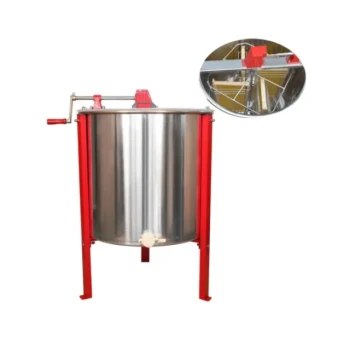
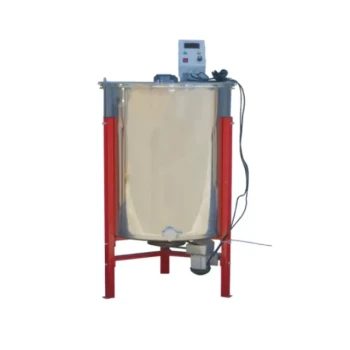
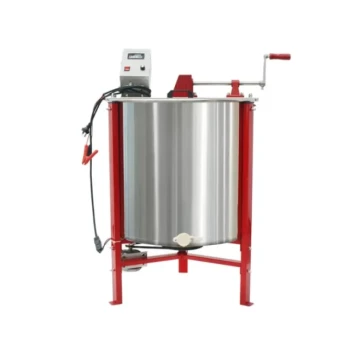
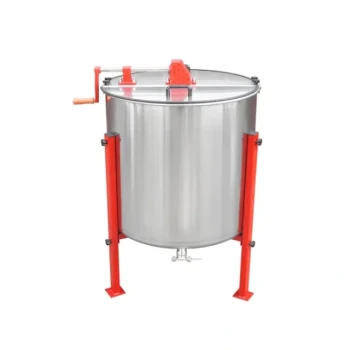
Cleaning a honey extractor effectively relies on the fact that honey is naturally water-soluble, making simple water and rags the most practical and cost-effective tools for the job. The process involves draining residual honey, using the machine's own rotation to agitate the water, and ensuring a thorough air-dry to prevent corrosion or mold.
Core Takeaway You do not need harsh chemicals to clean extraction equipment. By utilizing the extractor's centrifugal force to circulate warm water, you can clean internal components without manual scrubbing, preserving the integrity of the machine for future harvests.
Phase 1: Preparation and Draining
Before introducing water, you must remove as much raw product as possible. This step reduces waste and makes the washing process significantly easier.
Remove Debris and Drain
Begin by scraping out any large pieces of wax cappings or propolis using a spatula or uncapping tool. Once the large debris is clear, close the honey gate.
The Overnight Tilt
Tilt the extractor forward to allow the remaining honey to pool near the gate. It is best to leave the unit in this position overnight. This allows gravity to pull the viscous honey down, maximizing your harvest and minimizing the amount of water needed later.
Clear the Bottom Seam
After draining the pooled honey, use a long-handled spatula to loosen any stubborn honey accumulating in the inside bottom seam. This area is often overlooked and can trap residue.
Phase 2: The Wash Cycle
This phase utilizes the mechanical action of the extractor to clean the internal components, rather than relying solely on manual scrubbing.
Dissolve the Residue
Add a small amount of cool or warm water to the bottom of the extractor. Avoid boiling water, as it can melt residual wax, creating a sticky mess that is difficult to remove.
Wash the Walls
Dribble water down the interior walls of the tank to rinse away surface honey. Use a wet rag to wipe down any stubborn spots on the sides.
The Submersion Technique
Fill the bottom of the extractor with enough water to completely submerge the bottom ring or rail of the basket mechanism.
The Spin Clean
Turn on the extractor (or hand-crank it) at a slow speed for a few minutes. This is the most critical step: the rotating parts will stir and agitate the water, effectively scrubbing the bottom assembly without manual effort.
Phase 3: Draining and Drying
Proper drying is essential to prevent rust on metal components and fermentation of missed residue.
Flush the System
Open the honey gate to drain the dirty water. Tilt the extractor again to ensure the wash water is fully removed from the bottom.
Exterior Maintenance
While the inside drains, use a damp rag to wipe down the outside of the machine, removing dust and sticky fingerprints.
The Air Cure
Leave both the top lids and the honey gate open. Allow the extractor to air dry completely for a day or two. Do not rush this step; moisture trapped inside can lead to bacterial growth or equipment damage.
Common Pitfalls to Avoid
Inspecting for "Hidden" Honey
A common mistake is failing to clean the honey gate valve itself. Ensure water has flushed through the gate mechanism thoroughly, as trapped honey here can crystallize or ferment, potentially ruining your next batch.
Storage Safety
Once the unit is bone-dry, cover it with a plastic bag or sheet. This prevents dust accumulation during the off-season, ensuring the unit is ready for immediate use next year.
Making the Right Choice for Your Goal
- If your primary focus is Equipment Longevity: Ensure the unit is 100% dry before covering to prevent rust on bearings and metal seams.
- If your primary focus is Efficiency: Utilize the "Spin Clean" step described above to let the motor do the hard work of scrubbing the bottom rails.
Mastering this simple water-and-rag technique ensures your equipment remains sanitary and durable without the need for specialized cleaning agents.
Summary Table:
| Cleaning Phase | Key Action | Tool/Material |
|---|---|---|
| Phase 1: Preparation | Scrape wax and tilt unit overnight to drain residual honey. | Spatula & Gravity |
| Phase 2: Wash Cycle | Use centrifugal force to agitate warm water in the base. | Warm Water & Extractor Motor |
| Phase 3: Draining | Flush system and wipe exterior surfaces. | Damp Rags |
| Phase 4: Drying | Leave lids/gates open for 24-48 hours to prevent rust. | Air Circulation |
| Maintenance | Cover with plastic to prevent dust accumulation. | Plastic Sheet |
Maximize Your Harvest Efficiency with HONESTBEE
Maintaining a sanitary apiary starts with the right equipment and proper care. At HONESTBEE, we support commercial apiaries and distributors by providing a full spectrum of professional-grade beekeeping tools. From high-capacity honey extractors and honey-filling machines to essential consumables and specialized hive-making hardware, our wholesale solutions are designed for durability and performance.
Ready to upgrade your commercial honey production or stock the best equipment for your customers?
Contact HONESTBEE Today to Explore Our Wholesale Catalog
Related Products
- HONESTBEE 72 Frame Industrial Electric Honey Extractor for Beekeeping
- Commercial Electric 12 Frame Honey Extractor Spinner Motorized Honey Extractor
- HONESTBEE 6 Frame Self Reversing Electric Honey Extractor for Beekeeping
- HONESTBEE 3-Frame Manual Acrylic Honey Extractor
- Stainless Steel Manual 8 Frame Radial Honey Extractor Machine for Beehives
People Also Ask
- What is the importance of balancing honeycomb frames within a honey extractor? Ensure Stability and Protect Machinery
- How is honey separated from the frames after they are uncapped? Efficient Extraction Methods for High Yields
- What are the main benefits of using a honey extractor? Maximize Yields and Protect Your Honeycomb
- What are the recommended methods for removing honey from the honeycomb? Top Extraction Techniques for Maximum Efficiency
- How do manual honey extractors compare to electric honey extractors? Choosing the Right Tool for Your Apiary Growth