Fluid ounces measure the space a liquid occupies (volume), whereas net weight ounces measure the mass or "heaviness" of the substance. Because honey is significantly denser and heavier than water, these two measurements are not interchangeable. A container holding 8 fluid ounces of honey will actually weigh between 12 and 14 ounces on a scale.
The Core Takeaway: Volume does not equal weight when handling high-density liquids. To ensure accuracy and meet commercial standards, honey should always be measured and sold by net weight, not by the space it takes up in a jar.
The Science of Density
Defining the Units
Fluid ounces are strictly a measurement of volume. They calculate how much physical space a substance fills inside a container.
Net weight ounces are a measurement of mass. This indicates how heavy the substance is when placed on a scale, regardless of the space it occupies.
The Density Factor
Water serves as the standard baseline for these measurements: 8 fluid ounces of water weighs exactly 8 ounces.
However, honey is significantly denser than water. Because of this high density, a specific volume of honey packs more mass into the same space. Consequently, a cup of honey is much heavier than a cup of water.
Implications for Packaging and Bottling
Commercial Standards
Commercial honey is typically sold by weight, not volume. To prevent underfilling or overfilling containers, you must rely on net weight ounces.
Using volume measurements for sales can lead to inconsistencies. Distributors and bottlers must distinguish between these units to ensure customers receive the correct amount of product.
The "Honey Bear" Example
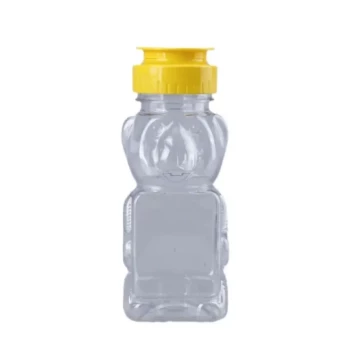
Container labeling often varies based on the intended industry. Jars designed specifically for beekeepers, such as the classic "Honey Bear," are usually labeled by the weight of honey they can hold.
For example, a standard "8 oz Honey Bear" is designed to hold 8 ounces of honey by weight. However, the actual internal volume of that container is only approximately 6 fluid ounces.
Understanding the Trade-offs
Consumer Jars vs. Industry Jars
A common pitfall occurs when purchasing general-purpose canning jars (like Mason jars). These are typically advertised in fluid ounces.
If you purchase a "pint" jar (16 fluid ounces) and fill it with honey, you will have roughly 22 to 24 ounces of honey by weight. If you are labeling this for sale as "16 oz," you are giving away free product.
Kitchen Conversions
For cooking and baking, confusing these units can ruin a recipe. A standard kitchen measuring cup represents 8 fluid ounces of volume.
If a recipe calls for "8 ounces of honey" (weight), and you fill a measuring cup, you have actually added 12 to 14 ounces (approx. 340 grams) of sweetener. This excess can drastically alter the texture and flavor of the final dish.
Making the Right Choice for Your Goal
Whether you are bottling for sale or measuring for a recipe, accuracy depends on the tool you use.
- If your primary focus is Bottling/Selling: Buy containers rated for honey weight (not water volume) and always use a scale to verify the final net weight.
- If your primary focus is Baking/Cooking: Determine if the recipe calls for volume (cups) or weight (oz/grams); if it requires weight, do not use a liquid measuring cup.
Treat honey as a solid mass rather than a liquid volume to ensure precision in every jar or recipe.
Summary Table:
| Measurement Type | Unit Category | Measures | Honey Application |
|---|---|---|---|
| Fluid Ounce (fl oz) | Volume | Physical space occupied | Standard for water/liquid jars |
| Net Weight Ounce (oz) | Mass/Weight | Heaviness on a scale | The commercial standard for honey |
| Comparison | Density Factor | Honey is ~1.5x heavier | 8 fl oz of honey ≈ 12 oz net weight |
Maximize Your Profits with Professional Honey Bottling Equipment
Don't lose money by overfilling jars or risk your reputation with inconsistent weights. HONESTBEE empowers commercial apiaries and distributors with the precision tools needed for industrial success. From high-accuracy honey-filling machines to specialized hive-making hardware and premium beekeeping consumables, our wholesale range covers every aspect of your operation.
Ready to scale your honey production? Contact HONESTBEE today to discover how our comprehensive machinery and equipment can streamline your bottling process and protect your bottom line!
Related Products
- Classic Honey Bear Jars with Flip Top Dispensing Cap for Liquid Sweeteners
- Economy Small Scale Honey Dryer Dehumidifier Thickening Machine
- Professional Plastic Honey Dipper for Easy Honey Drizzling
- Inverted Squeezable Honey Jar with No Drip Flip Top Cap for Easy Pouring
- Digital Honey Refractometer for Precision Measurement of Optimal Honey Quality
People Also Ask
- What food safety standards must honey containers meet? Expert Guide to Packaging Integrity & Hygiene
- Why is it important to distinguish between weight and volume when selecting honey containers? Maximize Profits Now
- What are the benefits of purchasing honey containers in bulk? Maximize Margins & Secure Your Supply Chain
- What should be considered when choosing a container for honey to ensure effective sealing? Master Honey Packaging Success
- What is the best container to store honey in? Preserve Purity & Flavor for Years