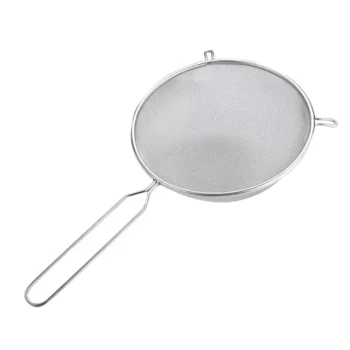
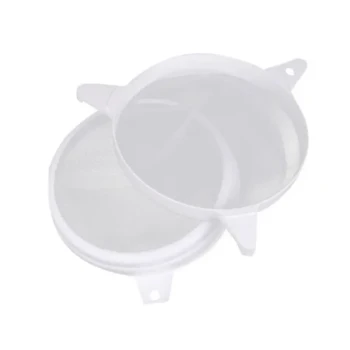
A 100 µm industrial filter serves as a critical physical barrier designed to intercept beeswax residues, particulate impurities, and small precipitates found in raw honey. By removing these solids immediately after extraction, this filtration step significantly enhances the visual clarity of the product while ensuring it meets standardized commercial consistency requirements.
Core Insight: The primary value of a 100 µm filter extends beyond simple cleaning; it is a stabilization tool. By removing micro-particles that act as "seeds" for crystallization, this specific filtration level delays solidification, ensuring the honey maintains the consistent liquid state demanded by the commercial market.
The Mechanics of Purification
Elimination of Extraction Residues
Raw honey releases from the extractor containing various physical contaminants. The 100 µm filter specifically targets and eliminates beeswax residues and other particulate matter that inevitably mix with the honey during harvest.
Enhancing Visual Clarity
High-precision filtering equipment is utilized to refine the aesthetic quality of the product. This process removes suspended particles to produce a clean, clear final product, eliminating the cloudiness often associated with unfiltered raw honey.
Stability and Crystallization Control
Preventing Premature Solidification
Impurities and small precipitates left in the mixture can act as nucleation sites. These particles trigger abnormal crystallization, causing the honey to turn grainy or solid much faster than intended.
Maintaining Commercial Consistency
By physically removing these crystallization triggers, the filter helps preserve the honey's liquid physical state. This ensures the final output is consistent with standardized commercial honey, which typically requires a stable, non-crystallized texture for shelf appeal.
Understanding the Process Integrity
Physical Filtration Only
It is vital to distinguish this method from chemical refining. The 100 µm filter performs a strictly physical filtration, removing solids without chemically altering the honey’s intrinsic composition.
Preservation of Natural Characteristics
While the process aggressively removes impurities, it is engineered to preserve the honey's original color. The goal is to achieve purity and stability while retaining the natural visual identity of the harvest.
Making the Right Choice for Your Goal
To determine if this filtration level aligns with your processing objectives, consider the following specific outcomes:
- If your primary focus is Shelf Stability: Use this filtration size to remove the precipitates that accelerate crystallization, thereby extending the liquid life of your product.
- If your primary focus is Market Standards: Implement this step to ensure your honey meets the rigorous purity and clarity requirements of the general food industry.
Effective filtration bridges the gap between raw harvest and a professional, shelf-ready commodity.
Summary Table:
| Feature | Function & Benefit |
|---|---|
| Filtration Target | Removes beeswax residues, particulate impurities, and small precipitates |
| Clarity Enhancement | Eliminates cloudiness to produce a clear, professional visual appearance |
| Crystallization Control | Removes nucleation "seeds" to significantly delay honey solidification |
| Process Integrity | 100% physical filtration that preserves natural color and composition |
| Market Alignment | Ensures honey meets standardized commercial purity requirements |
Elevate Your Honey Production with HONESTBEE
Are you looking to scale your commercial apiary or expand your distribution with professional-grade results? HONESTBEE is your dedicated partner in honey processing excellence. We provide a comprehensive wholesale range of beekeeping tools, high-precision filtration machinery, honey-filling equipment, and essential industry consumables.
From specialized hardware to cultural merchandise, we help you achieve the perfect balance of purity and shelf stability to meet global market standards. Contact us today to discover how our tailored equipment solutions can streamline your operations and enhance your product quality.
References
- Cuilan Chen, Dee Carter. The effect of standard heat and filtration processing procedures on antimicrobial activity and hydrogen peroxide levels in honey. DOI: 10.3389/fmicb.2012.00265
This article is also based on technical information from HonestBee Knowledge Base .
Related Products
- Electric Double Wall Honey Filtering Machine Purifier Equipment for Honey Processing Plant
- Professional Honey Filter with Tripod Support Stand
- Honey Concentrating and Filtering Dehumidifier Machine 2T Capacity for Honey
- Professional Stainless Steel Honey Filter with Support Handle
- 0.5T Capacity Honey Dehumidifier Dryer with Vacuum Heating and Thickening Filtering Machine
People Also Ask
- What is the process of filtering honey? A Guide to Clean, Pure, and Market-Ready Honey
- What types of equipment are used in honey filtering? Build an Efficient System for Pure, Marketable Honey
- What is the overall importance of using the right equipment in honey filtering? Boost Quality & Marketability
- How should honey filtering equipment be properly maintained? Extend Equipment Life & Protect Honey Purity
- What are the benefits of drying honey filtering equipment after use? Protect Your Honey Quality & Equipment Investment