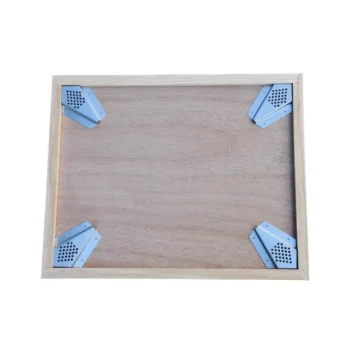
A Dead-bee Trap is a specialized retrieval device installed directly at the beehive entrance to automatically collect queen bee carcasses that have been ejected by worker bees. It serves as a critical instrument for recording the end of a queen's lifecycle without requiring the beekeeper to physically open or disturb the hive.
Core Takeaway: This tool is essential for non-invasive, long-term research into queen replacement behavior. It allows for the precise dating of queen death and turnover events while maintaining the natural stability of the colony.
Capturing Critical Lifecycle Milestones
Identifying Queen Supersedure and Culling
The primary function of the Dead-bee Trap is to provide physical evidence of queen turnover.
When a colony replaces a queen (supersedure) or eliminates an unfit one (culling), worker bees remove the carcass. The trap captures these specific remains, giving researchers confirmation of these events.
Tracking Virgin Queen Emergence
Beyond established queens, the device is instrumental in monitoring the development of new leaders.
It can capture evidence related to virgin queen emergence, helping observers piece together the timeline of the colony's reproductive cycle.
The Non-Invasive Advantage
Eliminating Hive Disassembly
Traditional methods of confirming a queen's presence or death often require smoking the bees and taking apart the hive frames.
The Dead-bee Trap eliminates the need for this frequent hive disassembly.
Preserving Natural Behavior
Frequent physical inspections can stress the colony and alter its behavior, potentially skewing research data.
By operating passively at the entrance, the trap avoids interfering with the colony's normal life cycle, ensuring that the data collected reflects natural biological rhythms.
Understanding the Scope and Limitations
Reliance on Worker Behavior
It is important to understand that the Dead-bee Trap is a passive collection tool.
It relies entirely on the hygienic behavior of worker bees to physically remove the carcass from the hive interior and deposit it at the entrance.
Specificity of Data
While other tools like accelerometers measure general activity or vibration, this trap provides a binary data point: the physical recovery of a specific bee.
It does not measure the health of a living queen; it confirms the removal of a dead one.
Making the Right Choice for Your Goal
To select the correct monitoring tool, you must distinguish between tracking activity and tracking lifecycle events.
- If your primary focus is pinning down exact dates of queen death: Use the Dead-bee Trap to capture the physical carcass immediately upon removal by workers.
- If your primary focus is monitoring general colony activity or stress: Utilize embedded accelerometers to measure hive vibrations and buzzing frequencies non-intrusively.
- If your primary focus is tracking food stores and population growth: Deploy industrial electronic scales with tray lifters to measure hive weight without opening the box.
- If your primary focus is verifying the identity of a living queen: Rely on enamel marking pens to color-code queens for rapid visual confirmation during inspections.
Successful colony management often involves layering these non-invasive tools to create a complete picture of hive health without disrupting the bees.
Summary Table:
| Feature | Function & Purpose | Data Provided |
|---|---|---|
| Primary Use | Automatic retrieval of ejected queen bee carcasses | Confirmation of queen death and lifecycle end |
| Installation | Attached directly to the beehive entrance | Non-invasive collection (no hive opening) |
| Behavioral Insight | Monitors supersedure, culling, and virgin emergence | Precise dating of natural replacement events |
| Key Advantage | Minimizes colony stress and preserves stability | Authentic data reflecting natural biological rhythms |
Maximize Your Colony Productivity with HONESTBEE
Are you looking to scale your operations with professional-grade tools? HONESTBEE is the trusted partner for commercial apiaries and global distributors, providing a comprehensive wholesale range of everything from specialized hive-making and honey-filling machinery to high-durability consumables.
Whether you need precision monitoring equipment like dead-bee traps or heavy-duty hardware for your facility, we deliver the quality and reliability your business demands.
Ready to elevate your beekeeping business?
Contact HONESTBEE Today to explore our full spectrum of beekeeping solutions and industrial equipment.
References
- Norman E. Gary, Roger A. Morse. The Events Following Queen Cell Construction in Honeybee Colonies. DOI: 10.1080/0005772x.2011.11417391
This article is also based on technical information from HonestBee Knowledge Base .
Related Products
- Removable Plastic Pollen Trap With Ventilated Tray for Bees Pollen Collector
- 30 cm Plastic Entrance Hole Bee Pollen Trap and Collector
- HONESTBEE Collapsible Tiered Bee Swarm Catcher for Beekeeping
- Plastic Bee Pollen Trap Strips Comb Catcher Collector
- Plastic Beetle Blaster Trap Beekeeping Tools and Supplies
People Also Ask
- What are the design principles and advantages of pollen traps in the collection of bee pollen? Boost Your Apiary Yield
- What is the function of professional pollen traps in evaluating honey plants? Quantifying Pollination and Crop Potential
- What functions do pollen traps serve for bee bread production? Optimize Your Raw Material Collection
- What maintenance and pest prevention measures should be taken for pollen traps? Protect Your Hive and Harvest Quality
- How does the use of pollen traps in honeybee hives enhance crop fertilization? Boost Your Yield Through Induced Activity