A professional pollen trap is a precision hardware device installed at the entrance of a beehive designed to intercept and collect pollen pellets from returning foragers. Its primary technical function is to mechanically strip pollen loads from the bees' hind legs, allowing for the quantification of floral resources and the identification of plant species without compromising the colony's overall health or nutritional supply.
Core Insight By utilizing a calibrated grid to separate pollen from foraging bees, these traps provide a direct, physical dataset of the surrounding environment's biodiversity. They enable accurate "resource assessment" by turning biological activity into measurable metrics—volume, weight, and species diversity—while maintaining a non-destructive relationship with the hive.
The Mechanics of Interception
The Calibrated Grid
The core mechanism of the trap is an interception grid, typically featuring precise apertures (often 3.75mm or 5mm). As foragers return to the hive, they are forced to squeeze through these specific pore sizes to enter.
Mechanical Stripping
This passage is just narrow enough to allow the bee's body to pass but too narrow for the pollen pellets (bee bread) carried on their hind legs. The friction causes the pellets to dislodge and fall away from the bee.
Sample Purity and Collection
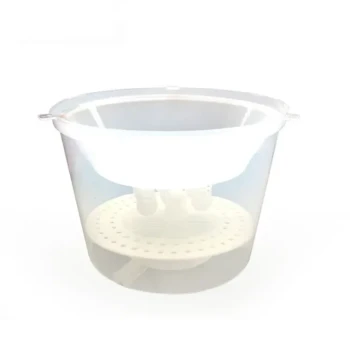
The dislodged pollen falls through a wire mesh screening layer into a protected collection tray below. This multi-layer design ensures the sample remains pure and prevents the bees from retrieving the pollen once it has been stripped.
The Role in Resource Assessment
Quantifying Foraging Intensity
For resource assessment, the volume of pollen collected serves as a direct proxy for colony productivity and resource availability. Researchers can weigh the yield over specific time periods to generate data on foraging intensity and seasonal peaks.
Monitoring Floral Diversity
The collected pellets provide a physical sample of the local plant phenology. By analyzing the color and composition of the trapped pollen, experts can identify exactly which plant species are blooming and which are preferred by the colony at any given time.
Non-Destructive Sampling
Crucially, the trap is designed to be non-destructive. It intercepts only a portion of the incoming pollen, ensuring that the colony retains enough protein resources to maintain brood rearing and general health.
Understanding the Trade-offs
Impact on Colony Nutrition
While professional traps are designed to leave some pollen for the bees, prolonged use can still stress the colony. If the trap is too efficient or left on too long during a dearth, it may create a nutritional deficit that hinders brood development.
Physical Obstruction
The grid restricts the entrance, which can slow down traffic during heavy nectar flows or obstruct larger bees. Most professional models address this with a removable grille or bypass mechanism, allowing unimpeded access for drones and queens when sampling is not active.
Making the Right Choice for Your Goal
When employing a pollen trap for assessment, align your usage with your specific data requirements:
- If your primary focus is Ecological Surveying: Prioritize traps with high-purity collection trays to ensure samples are clean enough for microscopic species identification and diversity mapping.
- If your primary focus is Colony Health Monitoring: Use the trap intermittently (e.g., 24 hours every week) to gauge foraging intensity without risking the colony's protein reserves.
Effective resource assessment requires balancing the need for data with the biological needs of the hive, ensuring sustainable long-term monitoring.
Summary Table:
| Feature | Technical Specification | Primary Function for Assessment |
|---|---|---|
| Interception Grid | 3.75mm - 5mm apertures | Mechanically strips pollen pellets from foragers |
| Collection Tray | Protected, multi-layer design | Ensures sample purity and prevents bee retrieval |
| Data Proxy | Volume & weight metrics | Measures foraging intensity and seasonal peaks |
| Species Analysis | Color & composition sampling | Identifies local plant phenology and diversity |
| Bypass Mechanism | Removable grille | Allows drone/queen access and prevents nutritional stress |
Maximize Your Apiary Productivity with HONESTBEE
At HONESTBEE, we specialize in empowering commercial apiaries and distributors with high-precision beekeeping hardware. Whether you are conducting ecological surveys or monitoring colony health, our comprehensive wholesale range—from professional pollen traps and hive-making machinery to honey-themed cultural merchandise—is designed for performance and durability.
Why partner with HONESTBEE?
- Scalable Wholesale Solutions: Full spectrum of tools, machinery, and industrial consumables.
- Precision Engineering: High-quality hardware that ensures accurate resource assessment.
- Industry Expertise: Dedicated support for large-scale operations and global distributors.
Ready to upgrade your equipment or expand your inventory? Contact us today to discover how our tailored solutions can drive your success in the beekeeping industry.
References
- Charlène Heiniger, Patrice Prunier. Floral resources used by bees in urban areas: the case of Geneva, Switzerland. DOI: 10.3389/fevo.2023.1199438
This article is also based on technical information from HonestBee Knowledge Base .
Related Products
- Removable Plastic Pollen Trap With Ventilated Tray for Bees Pollen Collector
- Black Plastic Beetle Barn Hive Beetle Trap for Beehives
- 30 cm Plastic Entrance Hole Bee Pollen Trap and Collector
- Plastic Bee Pollen Trap Strips Comb Catcher Collector
- Reusable Clear Small Hive Beetle Traps for Beehives Beetle Trapping Tools
People Also Ask
- What are the design principles and advantages of pollen traps in the collection of bee pollen? Boost Your Apiary Yield
- What is the function of professional pollen traps in evaluating honey plants? Quantifying Pollination and Crop Potential
- What functions do pollen traps serve for bee bread production? Optimize Your Raw Material Collection
- What maintenance and pest prevention measures should be taken for pollen traps? Protect Your Hive and Harvest Quality
- How does the use of pollen traps in honeybee hives enhance crop fertilization? Boost Your Yield Through Induced Activity