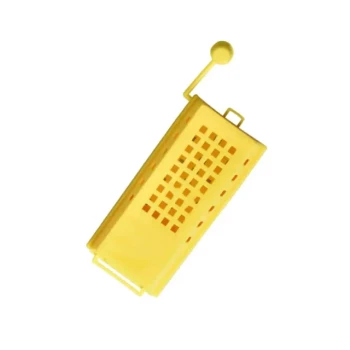
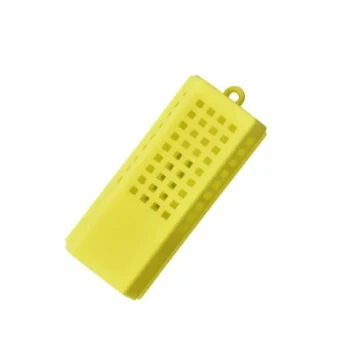
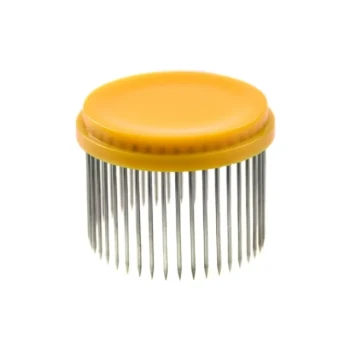
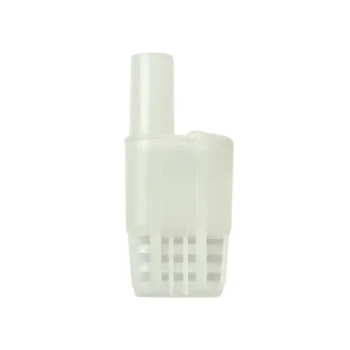
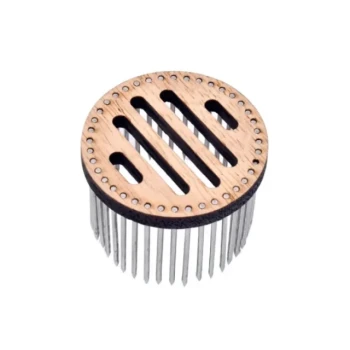
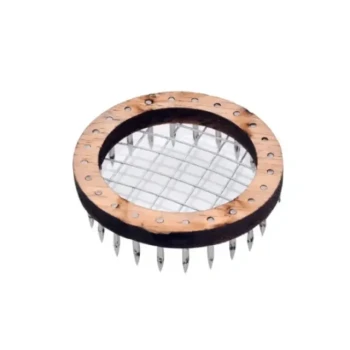
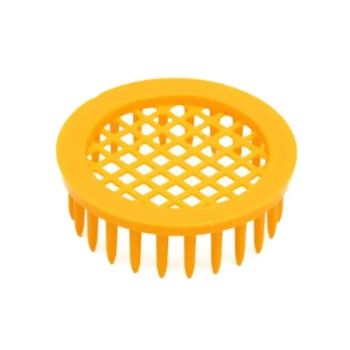
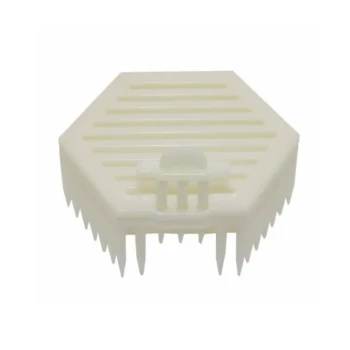
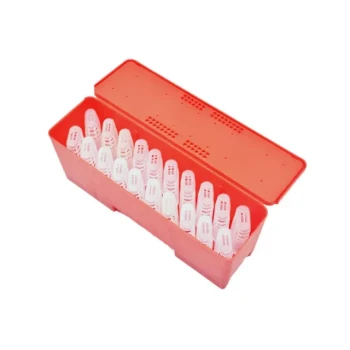
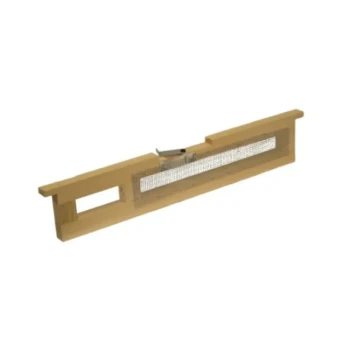
A Specialized Queen Cage functions as a precision isolation tool designed to confine the queen bee to specific target areas, such as plastic queen cups, on a comb foundation. This device is primarily used during the initial stages of honeybee differentiation experiments to enforce strict control over the location and timing of egg-laying.
By removing the variables associated with natural movement, this tool ensures the generation of larvae with uniform ages and zero mechanical damage, providing the high-consistency samples required for accurate scientific data.
Achieving Experimental Precision
Controlled Confinement
The primary mechanic of the Specialized Queen Cage is spatial restriction. By limiting the queen's movement to a defined area of the comb, you compel her to lay eggs exactly where required for the experiment.
This is most often used in conjunction with specific substrates, such as plastic queen cups. This ensures that eggs are deposited directly into the vessels intended for rearing, rather than randomly across the honeycomb.
Elimination of Manual Grafting
One of the most significant technical advantages of using this cage is the removal of manual grafting from the workflow. Traditional methods often require moving larvae by hand from a comb to a queen cup.
Because the queen lays the egg directly into the target cup, there is no need for human intervention to transfer the delicate larvae. This streamlines the process and reduces handling time significantly.
The Importance of Larval Consistency
Uniform Age Distribution
For differentiation experiments, temporal accuracy is paramount. The Specialized Queen Cage ensures high consistency in the timing of egg production.
Because the queen is confined and lays continuously in the target zone, the resulting larvae are of a uniform age. This creates a standardized sample set, which is critical when comparing developmental milestones or biological differentiation.
Preserving Sample Integrity
Manual transfer techniques inherently carry the risk of mechanical damage to the larvae. Even a skilled technician can inadvertently harm a larva during grafting.
By utilizing a Specialized Queen Cage, you eliminate this physical trauma completely. The larvae develop undisturbed in their original laying location, preventing stress factors or physical injuries from skewing experimental results.
Operational Considerations
Specificity of Application
It is important to recognize that this tool is engineered for controlled scenarios, specifically honeybee differentiation experiments.
While highly effective for research and specific breeding tasks, it is a specialized intervention. It is distinct from general brood rearing, focusing specifically on obtaining standardized biological inputs (the larvae) without the variables introduced by human handling or random laying patterns.
Making the Right Choice for Your Goal
To determine if this methodology aligns with your project requirements, consider the following:
- If your primary focus is Scientific Accuracy: Utilize the Specialized Queen Cage to guarantee larvae are of identical age and free from handling-induced stress.
- If your primary focus is Workflow Efficiency: Adopt this tool to bypass the labor-intensive and risk-prone process of manual grafting.
Mastering the use of the Specialized Queen Cage allows you to transition from random biological sampling to a controlled, rigorous production of viable larvae.
Summary Table:
| Feature | Traditional Manual Grafting | Specialized Queen Cage Method |
|---|---|---|
| Egg Location | Random placement on comb | Targeted placement in queen cups |
| Larval Handling | High risk of mechanical damage | Zero-touch (natural development) |
| Age Consistency | Varied (hard to synchronize) | Uniform (controlled timing) |
| Labor Intensity | High (requires skilled grafting) | Low (automated confinement) |
| Sample Integrity | Potential for human-induced bias | High-consistency scientific data |
Elevate Your Apiary’s Productivity with HONESTBEE
Are you a commercial apiary or a global distributor looking to refine your honey production and queen rearing processes? HONESTBEE is your dedicated partner, offering a comprehensive wholesale range of professional-grade beekeeping tools.
From precision queen cages and hive-making machinery to advanced honey-filling systems, we provide the hardware you need to eliminate manual error and scale your operations. Beyond machinery, we supply essential industry consumables and unique honey-themed cultural merchandise to help your brand stand out.
Ready to optimize your workflow and secure high-quality larvae at scale? Contact us today to discuss how our wholesale solutions can empower your business!
References
- Yuan Shi, Weiyu Yan. Diet and Cell Size Both Affect Queen-Worker Differentiation through DNA Methylation in Honey Bees (Apis mellifera, Apidae). DOI: 10.1371/journal.pone.0018808
This article is also based on technical information from HonestBee Knowledge Base .
Related Products
- Professional Queen Cage with Sliding Gate and Feeder Plug
- Professional Queen Bee Introduction and Transport Cage
- Professional Multi-Functional Queen Bee Cage
- Professional Multi-Compartment Queen Cage with Sliding Lid
- Professional Round Push-In Queen Cage with Metal Tines
People Also Ask
- Why are specialized queen bee cages used for the banking of mated queen bees? Maximize Commercial Apiary Storage Efficiency
- What is the mechanism of action for using temporary queen bee cages? Master Successful Queen Introduction
- How is a queen bee released from a queen cage? Ensure Safe Colony Integration & Hive Success
- What is the step-by-step process for installing a queen bee's cage onto a frame? Ensure Hive Acceptance Safely
- What technical precaution must be taken regarding the mesh or grill side of a queen bee cage? Ensure Queen Survival