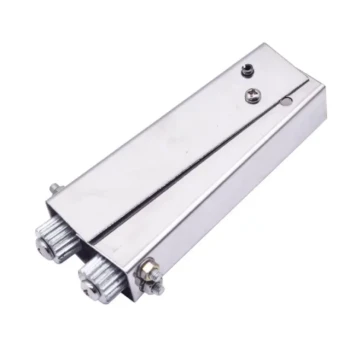
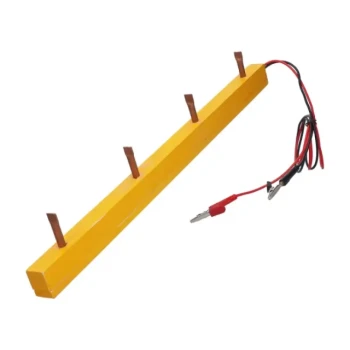
The function of a wired grad frame with 1.0 square inch scales is to provide a precise, standardized method for quantifying the brood area within a honeybee colony. This device acts as a measurement overlay, allowing beekeepers and researchers to count exact units of occupied comb rather than relying on visual estimates. By converting visual observations into hard data, it enables the accurate assessment of a colony’s nursing capacity and reproductive development.
Core Takeaway The wired grad frame transforms subjective observation into objective statistical data. By measuring the exact area of brood in square inches, you can scientifically validate the effectiveness of nutritional strategies and track the precise rate of colony expansion.
The Role of Precision in Colony Assessment
To understand the value of this tool, one must move beyond simple observation and into the realm of quantitative analysis. The wired grad frame serves two critical purposes in advanced apiary management.
Eliminating Estimation Errors
Visual inspections of honeybee frames are notoriously subjective. A "strong" frame to one beekeeper might appear average to another.
The wired grad frame places a standardized 1.0 square inch grid directly over the honeycomb. This forces the observer to count specific units of capped brood. This process removes the variable of human error, ensuring that the data recorded is consistent regardless of who is performing the inspection.
Evaluating Nutritional Strategies
The primary application of this data is assessing inputs vs. outputs. The primary reference highlights that this tool is specifically used to evaluate how different nutritional strategies impact the colony.
By measuring the exact change in brood surface area over time, you can correlate specific feeding programs (such as protein supplements or sugar syrup) with the queen's egg-laying performance and the workers' nursing capabilities.
Technical Implementation and Utility
This tool allows for the translation of biological activity into mathematical models.
From Area to Population Counts
While the grid measures surface area (square inches), this data acts as a proxy for total population growth.
Because the density of cells on a honeycomb is relatively constant, the measured area can be converted into a specific count of bee offspring. This allows for the calculation of proliferation rates and future workforce projections.
Non-Destructive Field Measurement
The design of the wired grad frame allows for "in-situ" measurement. It is an overlay tool, meaning it is placed temporarily on top of the hive frame during inspection.
This allows technicians to capture high-precision data without destroying the comb or harming the larvae. It serves as a non-invasive bridge between qualitative field checks and rigorous scientific data collection.
Understanding the Trade-offs
While the wired grad frame offers superior accuracy, it is important to recognize the operational nuances involved in its use.
Tool vs. Component
It is critical to distinguish the wired grad frame (a measurement tool) from a wired foundation frame (a structural hive component).
Standard wired foundation frames are used to induce bees to build organized comb and provide mechanical strength for extraction. The grad frame described here is strictly a measuring device placed over the structural frame to assess what the bees have built.
Speed vs. Accuracy
Using a 1.0 square inch grid requires significantly more time per hive than a standard visual inspection.
Beekeepers must weigh the cost of this time against the value of the data. For general maintenance, visual estimation often suffices. However, for research trials, breeding selection, or testing expensive feed supplements, the time investment of the grad frame is necessary to prove ROI.
Grid Standardization
The specific tool in question uses a 1.0 square inch scale. However, other scientific standards exist, including 25 square centimeter grids or 5x5 cm transparent scales.
When comparing your data to external studies or literature, you must ensure you are converting your square-inch measurements to match the metric standards used in the broader scientific community.
Making the Right Choice for Your Goal
Using a wired grad frame is a commitment to data-driven beekeeping. Here is how to apply it based on your objectives:
- If your primary focus is nutritional analysis: Use the grid to measure brood area before and after a specific feeding cycle to calculate the exact percentage increase in colony growth.
- If your primary focus is general apiary maintenance: Visual estimation is likely sufficient; reserve the grad frame for problem colonies that require detailed health tracking.
By integrating precise measurement into your workflow, you move from guessing the health of your hives to knowing it with mathematical certainty.
Summary Table:
| Feature | Wired Grad Frame (Measurement Tool) | Standard Wired Frame (Structural) |
|---|---|---|
| Primary Purpose | Quantifying brood area and growth rates | Providing structural support for comb building |
| Measurement Scale | 1.0 square inch grid overlay | N/A (Standard wire reinforcement) |
| Application | Research, nutrition trials, & breeding | General hive maintenance & honey extraction |
| Data Output | Objective square-inch brood counts | Subjective visual observation |
| Impact on Comb | Non-destructive, temporary overlay | Permanent part of the hive structure |
Optimize Your Apiary Operations with HONESTBEE
Transition from guesswork to precision with professional-grade tools. At HONESTBEE, we specialize in empowering commercial apiaries and distributors with high-performance beekeeping machinery and essential consumables.
Why partner with us?
- Comprehensive Wholesale Catalog: From specialized hardware like hive-making and honey-filling machines to a full spectrum of hand tools.
- Industry-Specific Expertise: We provide the high-precision equipment needed to validate nutritional strategies and maximize colony output.
- Global Distribution Support: We cater to the high-volume needs of distributors and large-scale commercial operations.
Ready to enhance your productivity and scale your beekeeping business?
References
- Mahmoud Darwish, Salmaa Galal. Effect of Milk Protein Nutrition (Cow casein, Buffalo casein and Whey protein isolate (WPI) on Brood Area and Hypopharyngeal glands development in Honeybee Colonies (Apis mellifera L.). DOI: 10.21608/sjas.2022.120011.1190
This article is also based on technical information from HonestBee Knowledge Base .
Related Products
- HONESTBEE Wired and Assembled Wooden Bee Frames Foundation for a Thriving Hive
- HONESTBEE Durable Frame Wiring Board with Integrated Tensioner
- HONESTBEE Ergonomic Spring Loaded Frame Wire Crimper
- HONESTBEE Professional Frame Wiring Board and Jig
- HONESTBEE Soldering Iron Style Spur Wheel Wire Embedder
People Also Ask
- What role does replacing foundation and frames play in controlling American Foulbrood (AFB)? A Key to Hive Sanitation
- What is the role of frames and foundation in a bee hive? Build a Stable and Productive Apiary with Modern Design
- What is the difference between frames and foundation in a bee hive? A Guide to Hive Structure and Comb Building
- What is the purpose of frames and foundations in a beehive? Achieve a Healthy, Manageable Hive
- How do wooden and plastic hive frames compare in terms of durability? Wood vs. Plastic Longevity & Repairability