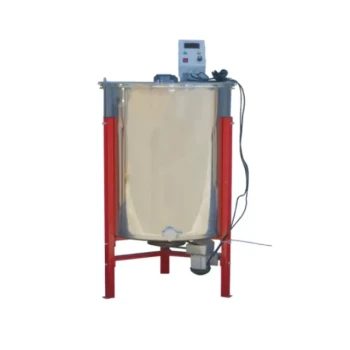
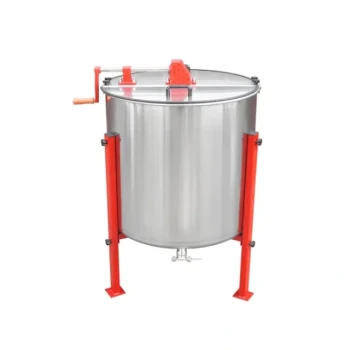
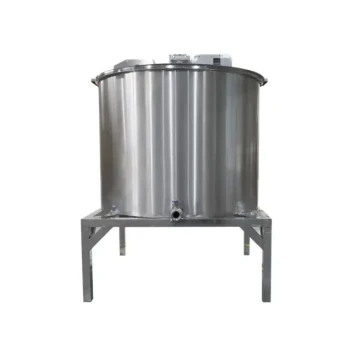
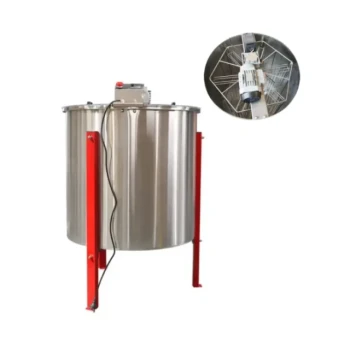
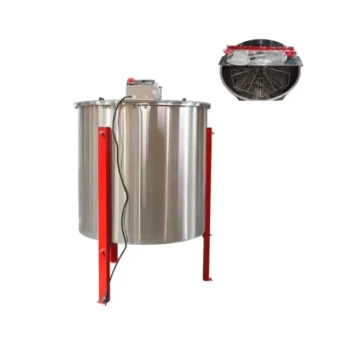
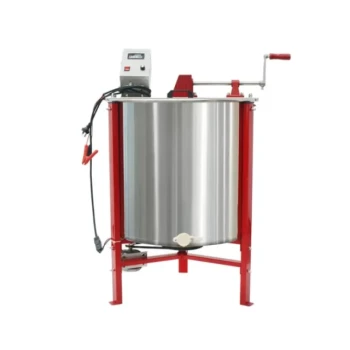
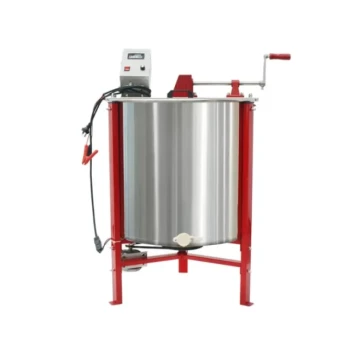
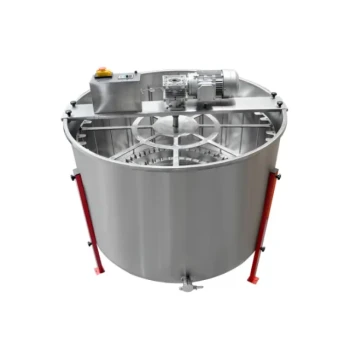
Advanced processing equipment serves as the technological backbone of modern honey production. Specifically, centrifugal honey extractors utilize high-speed rotation to mechanize the separation of liquid honey from wax combs, replacing labor-intensive manual methods to radically improve purity, consistency, and processing speed.
Core Insight: The true value of this equipment extends beyond simple speed; it lies in resource preservation. By extracting honey without destroying the comb, these machines allow bees to reuse existing wax structures, redirecting colony energy from construction to nectar collection, which significantly boosts subsequent yields.
The Mechanics of Efficiency and Yield
Separation via Centrifugal Force
The primary function of a centrifugal extractor is the application of physical force to separate materials based on density.
High-speed rotation forces liquid honey out of the honeycomb cells while retaining the heavier, solid wax structure. This eliminates the need for heating or crushing, which are common in traditional methods.
Preserving Structural Integrity
Traditional pressing methods often destroy the honeycomb, forcing the colony to rebuild from scratch.
Centrifugal extraction leaves the delicate wax comb intact. This is a critical operational advantage, as the combs can be immediately returned to the hive for the next production cycle.
The "Energy-Yield" Correlation
There is a direct biological cost to wax production. Bees consume significant amounts of honey and energy to secrete wax for building combs.
By recycling intact combs, the colony bypasses this energy expenditure. The energy saved is redirected toward foraging and nectar collection, resulting in a shorter production cycle and higher total honey yields.
Elevating Quality and Hygiene
Minimizing Contamination Risks
Manual handling is the primary vector for introducing physical debris and bacterial contaminants into raw honey.
Automated extractors operate in a closed or semi-closed system. This mechanization drastically reduces human contact, ensuring the final product meets strict hygiene standards required for commercial and medical-grade markets.
Ensuring Purity and Standardization
Advanced equipment includes filtration and refining stages that run in tandem with extraction.
These systems remove fine impurities and control moisture levels. This consistency is essential for meeting physical-chemical indicators—such as specific glucose and fructose ratios—necessary for high-end retail distribution.
Reducing Material Loss
Manual separation is inefficient, often leaving useable honey trapped within the wax matrix.
Centrifugal force maximizes extraction rates, ensuring nearly all liquid honey is harvested. This reduction in waste directly correlates to increased profit margins per frame.
Understanding the Trade-offs
Capital Intensity vs. Scalability
Advanced equipment represents a significant upfront capital expenditure compared to manual tools.
For small-scale hobbyists, the return on investment (ROI) may be slow. However, for commercial operations, the cost is offset by volume capabilities and labor savings over time.
Maintenance and Technical Complexity
Unlike simple gravity filters, centrifugal machines involve moving parts and motors.
They require regular maintenance protocols and rigorous cleaning to prevent cross-contamination between batches. Failure to maintain the equipment can lead to mechanical downtime during critical harvest windows.
Expanding the Value Chain
Downstream Integration
Extraction is often the first step in a larger automated ecosystem.
It prepares the raw product for downstream technologies, such as precision filling machines and vacuum sealing. These additional tools rely on the consistent flow and purity provided by the initial extraction process.
Market Access
Global markets require standardized packaging and verified purity.
The use of industrial-grade equipment signals professional capability. It supports the creation of a consistent brand image, facilitating entry into competitive international retail channels that demand "industrial-grade" quality assurance.
Making the Right Choice for Your Goal
When evaluating the role of advanced processing equipment in your operation, consider your primary objective:
- If your primary focus is Volume and Yield: Prioritize centrifugal extractors for their ability to preserve combs, allowing bees to focus energy on nectar collection rather than wax rebuilding.
- If your primary focus is Market Access: Focus on the hygiene and standardization benefits, using the equipment’s ability to minimize contamination to meet strict medical or export standards.
- If your primary focus is Profit Margin: Calculate the value of reduced material loss and labor reduction against the initial capital cost to determine your break-even horizon.
Investment in advanced processing is not merely a purchase of hardware; it is a strategic shift toward biological efficiency and standardized quality control.
Summary Table:
| Feature | Function in Value Chain | Primary Benefit |
|---|---|---|
| Centrifugal Force | Rapidly separates honey from wax | High-speed processing and purity |
| Comb Preservation | Keeps wax structures intact for reuse | Faster colony cycles and higher yields |
| Hygienic Design | Reduces human contact and debris | Meets international food safety standards |
| Precision Refining | Controls moisture and impurities | Ensures consistent product standardization |
| Automated Flow | Streamlines extraction to packaging | Scalable production for commercial markets |
Scale Your Apiary Success with HONESTBEE
Transitioning to advanced processing is a strategic move for any growing honey business. At HONESTBEE, we empower commercial apiaries and distributors by providing the industry's most reliable technological backbone. From high-capacity centrifugal honey extractors that preserve your valuable wax combs to precision honey-filling machines and specialized hive-making equipment, we offer a comprehensive wholesale portfolio to optimize every link in your production chain.
Whether you are looking to increase your seasonal yield, reduce labor costs, or break into high-end international markets, our professional-grade tools and essential consumables are designed to deliver a rapid ROI.
Ready to elevate your production standards?
Contact HONESTBEE today to explore our wholesale solutions
References
- Amina Kimea Mbaruku, Yonika M. Ngaga. Determinants of Profitability for Bee Product Producers, Traders and Processors in Ikungi and Kigamboni Districts, Tanzania. DOI: 10.37284/eajbe.8.1.2894
This article is also based on technical information from HonestBee Knowledge Base .
Related Products
- electric honey extractor honey centrifuge 3 frame honey extractor stainless steel honey frame extractor
- Manual Hand Crank 4 Frame Honey Extractor Centrifuge for Beekeeping
- Professional 4 Frame Self Reversing Electric Honey Extractor for Beekeeping
- Electric 4 Frame Tangential Honey Extractor
- 24 Frame Honey Extractor Commercial Radial Honey Frame Extraction Machine
People Also Ask
- What are the characteristics of electric honey extractors? Boost Your Apiary Efficiency with Automated Technology
- What are the disadvantages of using an electric honey extractor? Weighing Cost, Power, and Comb Safety
- What are the advantages of an electric honey extractor? Boost Efficiency and Scale Your Honey Production
- What are the technical advantages of electric honey extractors? Maximize Yield and Protect Your Bee Colony
- How does an electric honey extractor affect the quality of honey? Preserve Flavor & Purity with Precision Extraction