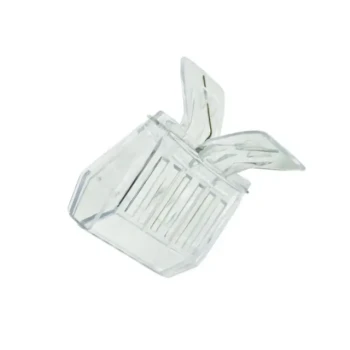
Artificial Queen Cups function as standardized, distinct vessels designed to house grafted larvae during their critical transformation into queen bees. In both commercial apiculture and scientific research, they provide a controlled physical structure that mimics natural queen cells, enabling precise management of larval development and environmental exposure.
Core Takeaway: Artificial Queen Cups bridge the gap between natural biology and managed intervention. By simulating the specific geometry of natural swarming cells, they induce nurse bees to accept grafted larvae and provision them with royal jelly, providing a uniform baseline essential for both mass breeding and controlled toxicological studies.
The Mechanics of Biological Mimicry
Simulating the Natural Environment
Artificial cups are not merely containers; they are biological triggers. They are designed to mimic the natural cell bases constructed by honey bees during swarming or supersedure events. This structural imitation is required to trick the colony's nurse bees into accepting a grafted worker larva as a potential queen.
Triggering Royal Jelly Secretion
The primary function of the cup is to induce a specific behavior: the secretion of royal jelly. Once the nurse bees accept the artificial structure, they begin to feed the larva intensively. The cup provides the stable attachment point necessary for the bees to extend the walls downward, creating the full queen cell.
The Importance of Orientation
These cups are engineered with specific dimensions that are significantly larger than standard worker or drone cells. They are designed for a downward-facing orientation, which aligns with the natural gravity-dependent structure of queen cells, distinguishing them from the horizontal cells used for regular brood.
Role in Commercial Queen Production
Standardization for Scale
In nature, queen cells vary in size and placement, making management difficult. Artificial cups serve as standardized carriers, allowing beekeepers to mass-produce queens using a uniform template. This consistency is vital for high-throughput grafting operations.
Influencing Queen Vitality
The internal volume of the artificial cup is a critical variable. The available space directly influences the storage capacity for royal jelly. A cup with optimal volume ensures the larva is submerged in ample food, which correlates directly with the developmental quality and eventual fertility of the virgin queen.
Applications in Scientific Research
Controlled Toxicological Studies
According to the primary reference, artificial cups are indispensable for toxicological research. Scientists can coat the inner walls of these cups with specific substances to test how environmental factors affect development.
Isolating Contamination Variables
In natural hives, wax combs effectively absorb pesticides and pollutants, making it hard to isolate variables. Artificial cups allow researchers to introduce precise levels of wax contamination or other toxins in a controlled manner. This allows for accurate evaluation of how specific chemical exposures impact queen survival and health.
Understanding the Trade-offs
Acceptance Rates
While designed to mimic nature, artificial cups are still foreign objects. If the material scent or texture is "off," or if the colony is not in the correct physiological state (e.g., not properly queenless or crowded), nurse bees may reject the cups by cleaning out the larvae rather than feeding them.
Material Consistency
The transition from natural wax to artificial materials (often plastic or modified wax) introduces a variable. In research, one must ensure that the carrier material itself does not leach chemicals that could skew toxicological data, distinct from the intended experimental coating.
Making the Right Choice for Your Goal
Whether you are managing an apiary or designing an experiment, the utility of the queen cup depends on your specific objective.
- If your primary focus is Commercial Breeding: Prioritize cups with optimized internal volumes to maximize royal jelly storage and ensure the highest quality queens.
- If your primary focus is Scientific Research: Utilize the cups as neutral substrates that can be coated or manipulated to test specific environmental variables without the interference of background hive contamination.
Ultimately, the artificial Queen Cup is the foundational tool that transforms a chaotic natural impulse into a controllable, measurable process.
Summary Table:
| Feature | Commercial Breeding Application | Scientific Research Application |
|---|---|---|
| Core Function | Mass-produces queens via standardized grafting | Acts as a neutral substrate for controlled experiments |
| Biological Trigger | Induces nurse bees to secrete royal jelly | Simulates natural cell geometry for larval acceptance |
| Key Benefit | Ensures uniform queen vitality and size | Allows for precise toxicological and contamination testing |
| Critical Variable | Internal volume for maximum food storage | Material purity to prevent chemical leaching |
| Orientation | Standardized downward-facing placement | Gravity-dependent design for accurate developmental data |
Elevate Your Apiary’s Success with HONESTBEE
At HONESTBEE, we specialize in empowering commercial apiaries and distributors with the precision tools required for professional queen rearing. Whether you are scaling up production or conducting rigorous scientific research, our comprehensive wholesale catalog—ranging from specialized hive-making and honey-filling machinery to high-quality queen rearing consumables—ensures your operation achieves peak efficiency.
Why Partner with HONESTBEE?
- Industry-Leading Hardware: Access durable, high-performance machinery designed for the modern beekeeper.
- Global Wholesale Supply: We provide a full spectrum of beekeeping tools and essential consumables tailored for large-scale distribution.
- Specialized Expertise: Our portfolio supports every stage of the honey production lifecycle, from equipment to honey-themed cultural merchandise.
Ready to enhance your queen production and streamline your operations? Contact our expert team today to discuss how we can support your business goals.
References
- Mark J. Carroll, Dylan C. Reitz. Methoxyfenozide has minimal effects on replacement queens but may negatively affect sperm storage. DOI: 10.1007/s13592-022-00940-7
This article is also based on technical information from HonestBee Knowledge Base .
Related Products
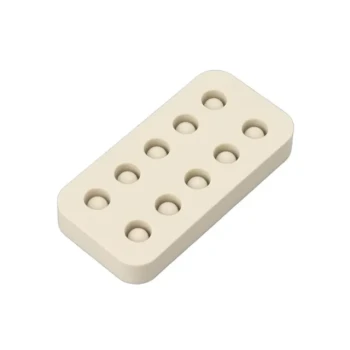
- 10-Cell Silicone Beeswax Bee Queen Cups Forming Mold
- JZBZ Type Wide Base Plastic Queen Cell Cups for Base Mounting and Queen Rearing
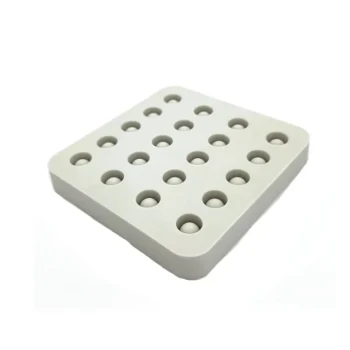
- High-Efficiency 20-Cell Silicone Mold for Beeswax Bee Queen Cup Production
- Brown Nicot Queen Cell Cups for Breeding Queen Bees Beekeeping
- JZBZ Push-In Queen Cell Cups for Beekeeping
People Also Ask
- How do beeswax queen cell cups function? Optimize Queen Rearing with Biological Mimicry
- What is the biological function of beeswax queen cell cups? Boost Acceptance in Artificial Queen Rearing
- What role do specialized queen rearing tools play in developing mite-resistant honeybee stock? Master Genetic Selection
- What materials are used to make artificial queen cell cups for grafting? Beeswax vs. Plastic Guide
- What roles do specialized queen cell cups play in royal jelly production? Optimize Your Hive's Secretion and Yield