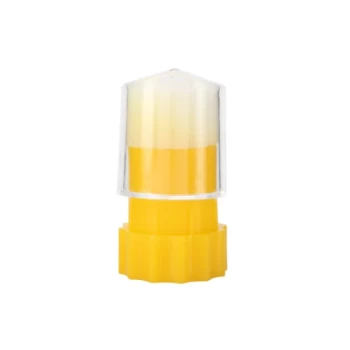
Professional collection and observation tools function as the interface between environmental conditions and quantifiable biological data. These tools provide the necessary physical means to perform precise sampling of pollinators and their resources, specifically pollen. By utilizing high-precision equipment, researchers can accurately detect and measure critical environmental stressors—such as pesticide residues and pathogen levels—within both solitary bee nests and managed hives.
Core Takeaway The primary role of these tools is to convert environmental signals into decisive data. By enabling the precise extraction and analysis of biological samples, they allow researchers to scientifically evaluate the severity of stressors and formulate evidence-based strategies for protecting insect biodiversity.
The Mechanics of Precision Monitoring
High-Precision Sampling
To understand environmental impact, general observation is insufficient. Professional tools allow for the precise sampling of pollinator resources, particularly pollen stores.
This granular level of collection ensures that researchers are analyzing the exact materials the pollinators consume and rely upon for survival.
Detecting Invisible Stressors
The most dangerous environmental threats are often invisible to the naked eye. Specialized tools enable the monitoring of pesticide residues that accumulate within the colony.
Furthermore, they facilitate the detection of specific pathogen levels inside nests. This capability allows for an early warning system regarding chemical exposure and disease vectors driven by environmental changes.
Monitoring Diverse Habitats
Effective monitoring must cover the full spectrum of pollinator environments. Professional tools are designed to function within the unique structures of solitary bee nests as well as standard managed hives.
This dual capability is vital, as solitary bees and honeybees may react differently to environmental pressures like drought or temperature shifts.
From Data to Biodiversity Protection
Providing Decisive Data Support
The ultimate output of using professional collection tools is decisive data support. Without the physical evidence gathered by these tools, environmental impact assessments remain theoretical.
This hard data provides the baseline required to correlate environmental stressors with specific declines in insect populations.
Formulating Scientific Strategies
Data collection is the precursor to action. The insights gained from precise monitoring are used to formulate scientific strategies for the protection of insect biodiversity.
By identifying exactly which stressors are present—and at what levels—conservationists can design targeted interventions rather than relying on broad, generic solutions.
Understanding the Trade-offs
Invasion vs. Observation
While collection tools are necessary for residue analysis, physical sampling is inherently invasive. The trade-off lies in balancing the need for precise biological samples with the risk of disturbing the nest structure or colony stress levels.
The Scope of Detection
Tools are highly effective at identifying chemical and biological stressors (pesticides and pathogens) but may not capture behavioral changes directly. Reliance solely on collection tools might miss behavioral adaptations to climate pressures unless paired with broader observation strategies.
Making the Right Choice for Your Goal
To select the appropriate tools for your monitoring project, consider your primary objective:
- If your primary focus is toxicological analysis: Prioritize high-precision collection tools designed to extract pollen and organic matter for laboratory testing of pesticide residues.
- If your primary focus is population health: Focus on observation tools that allow you to monitor pathogen levels and nest integrity in both solitary and managed systems.
Professional tools are not just about maintenance; they are the instruments of measurement that turn environmental challenges into solvable scientific problems.
Summary Table:
| Monitoring Function | Impact on Research | Key Stressors Detected |
|---|---|---|
| High-Precision Sampling | Enables accurate analysis of pollen and resources | Pesticide residues & chemical runoff |
| Pathogen Detection | Early warning system for colony disease levels | Viral, fungal, and bacterial vectors |
| Habitat Diversity | Supports both solitary nests and managed hives | Environmental/climate-driven shifts |
| Data Synthesis | Provides scientific baseline for protection strategies | Population decline correlations |
Elevate Your Apiary Management with HONESTBEE
At HONESTBEE, we understand that precision is the foundation of a thriving pollinator population and a successful beekeeping enterprise. We cater to commercial apiaries and global distributors, providing a comprehensive wholesale range of high-performance beekeeping tools, advanced machinery, and essential consumables.
From high-precision hive-making and honey-filling machines to specialized monitoring hardware and honey-themed cultural merchandise, our portfolio empowers you to turn environmental challenges into scientific solutions. Whether you are scaling production or conducting critical biodiversity research, our equipment ensures accuracy and durability at every step.
Ready to upgrade your professional capabilities? Contact us today to discover how HONESTBEE can support your growth and conservation goals with our premium wholesale offerings.
References
- Mace Vaughan, Scott Black. Conservation of Insects: Instant Symposium Summary. DOI: 10.1093/ae/54.2.96
This article is also based on technical information from HonestBee Knowledge Base .
Related Products
- Stainless Steel Pollen Shovel with Wooden Handle
- Heavy-Duty Ergonomic Stainless Steel Pollen Shovel
- Removable Plastic Pollen Trap With Ventilated Tray for Bees Pollen Collector
- Heavy-Duty Ergonomic Grip Galvanized Pollen Shovel
- Plastic Bee Pollen Trap Strips Comb Catcher Collector
People Also Ask
- How do bee pollen collection tools affect the quality of bee pollen used in functional dairy ice cream production?
- Why should commercial apiaries focus on the collection of diversified bee products? Maximize Your Hive’s Profit Potential
- How does a specialized pollen collector facilitate the harvesting of diverse bee products? Automate High-Value Yields
- What is the impact of pollen collectors and associated equipment on the cost structure of pollen production? Maximize ROI
- What is the technical significance of using specialized cutting tools for propolis? Master Precision Pollen Harvesting