Protective mesh cages and fencing act as the primary physical defense system for apiaries, designed to isolate beehives from external threats. Their fundamental function is to safeguard the beekeeper’s financial investment by preventing unauthorized access, theft, and vandalism in high-risk areas.
By establishing a robust physical barrier, these structures ensure uninterrupted production cycles. They provide the stable environment necessary for colony growth, securing the operation against the volatility of human interference.
The Strategic Role of Physical Barriers
Preventing Asset Loss
In areas prone to theft or vandalism, beehives are vulnerable targets. Mesh cages and fencing provide essential physical reinforcement, making it significantly more difficult for unauthorized individuals to remove or tamper with the hives.
Ensuring Environmental Stability
Beyond theft prevention, these barriers isolate the colony from general external disturbances. By limiting access, the hives remain in a calm state, which is vital for the bees to maintain their natural rhythms.
Maintaining Production Cycles
A secure environment is directly linked to productivity. When colonies are protected from physical disruption, they can grow steadily, allowing the beekeeper to rely on consistent honey production and pollination cycles.
Understanding the Distinction: Asset vs. Operator Protection
Securing the Hive vs. Securing the Human
It is critical to distinguish between securing the infrastructure and protecting the operator. Cages and fencing protect the assets (the bees and hives) from the outside world.
The Role of Personal Protective Equipment (PPE)
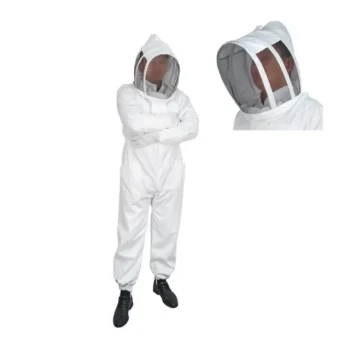
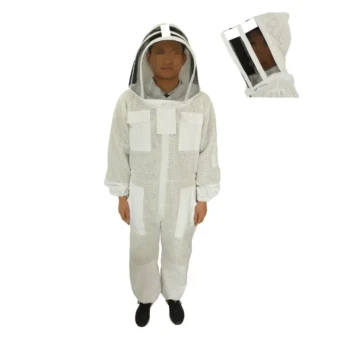
Conversely, high-performance suits and veils are designed to protect the beekeeper from the bees. As noted in supplementary documentation, this personal gear creates a safe environment for the operator to perform precise movements without the fear of defensive stings.
Operational Balance
Effective apiary management requires both layers of security. Fencing ensures the hive is there when you arrive, while suits allow you to perform fine motor tasks—such as lifting frames—without agitating the colony or crushing bees.
Making the Right Choice for Your Goal
To maximize the longevity and productivity of your apiary, you must match your security infrastructure to your specific risks.
- If your primary focus is asset retention in high-risk areas: Prioritize heavy-duty mesh cages that physically lock the hives in place to prevent theft and vandalism.
- If your primary focus is colony health and stability: Implement perimeter fencing to isolate the apiary from external disturbances, fostering a stress-free environment for consistent growth.
Physical security is the foundation that allows biological management to succeed.
Summary Table:
| Security Element | Primary Function | Target Risk | Key Benefit |
|---|---|---|---|
| Mesh Cages | Physical Enclosure | Theft & Vandalism | Asset retention in high-risk zones |
| Perimeter Fencing | Boundary Control | External Disturbances | Stress-free colony environment |
| Steel Reinforcement | Structural Barrier | Unauthorized Tampering | Protection of expensive machinery/hives |
| PPE (Suits/Veils) | Operator Safety | Bee Stings | Facilitates precise hive maintenance |
Secure Your Apiary’s Future with HONESTBEE
Protecting your commercial investment requires more than just biological expertise—it demands professional-grade infrastructure. HONESTBEE specializes in supporting commercial apiaries and distributors with a comprehensive wholesale portfolio. From heavy-duty protective solutions to advanced hive-making and honey-filling machinery, we provide the tools you need to scale your operations safely.
Our value to you:
- Full Spectrum Supply: Beekeeping tools, machinery, and essential consumables.
- Commercial Grade: Durable equipment designed for high-capacity honey production.
- Global Distribution: Tailored wholesale solutions for industry leaders.
Don't let theft or instability disrupt your honey-themed enterprise. Contact us today to discover how our specialized hardware and cultural merchandise can enhance your business performance.
References
- Katie D. Ricketts, Charlie M. Shackleton. Integrating livelihoods and forest conservation through beekeeping in northern KwaZulu-Natal. DOI: 10.1080/0376835x.2019.1698408
This article is also based on technical information from HonestBee Knowledge Base .
Related Products
- Wood and Mesh Push-In Queen Cage
- Classic Wooden and Mesh California Queen Cage
- Professional Square Folding Wire Mesh Beekeeping Veil
- Premium Cotton Beekeeper Suit with Reinforced Fencing Veil
- Hexagonal Direct Comb Introduction Queen Bee Cage
People Also Ask
- When is a queen introduced with a push-in cage ready for full release? Key Signs for Maximum Colony Acceptance
- How are queen cages used to protect newly hatched queens? Secure Your Virgin Queens During Development
- Why are queen cages or grid cages used in bee studies? Achieve Precise Biological Data for Research
- What advantages do push-in queen cages offer? Boost Acceptance Rates for Artificially Inseminated Queens
- What is a push-in queen cage and how does it differ from a standard queen cage? Boosting Your Queen Acceptance Rates