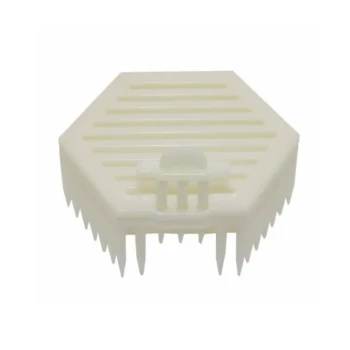
Queen Bee Cages serve as critical containment units designed to transport live worker bees from the apiary to the laboratory. Their primary function is to provide a controlled temporary habitat that maintains the bees' normal physiological states, thereby minimizing stress and mortality during transit.
By stabilizing the host bee's condition, these cages are the deciding factor in whether you obtain a biologically representative sample. They prevent stress-induced fluctuations that can alter the survival rate and community structure of the target Lactic Acid Bacteria.
Preserving Host Physiology
Creating a Controlled Habitat
The primary utility of the Queen Bee Cage in this context is the creation of a controlled temporary habitat. Rather than subjecting worker bees to the chaotic conditions of bulk transport, these cages isolate the bees in a stable environment.
Reducing Transport Stress
Transport is inherently traumatic for insects. These cages are specifically employed to ensure bees maintain a normal physiological state.
By mitigating physical and environmental stressors, the cages significantly reduce stress-induced mortality. This ensures that the subjects arrive at the laboratory alive and viable for sampling.
Ensuring Data Integrity
Obtaining Representative Samples
The ultimate goal of using these cages is to secure biologically representative gut microbial samples.
If the host bee suffers from extreme stress or death during transport, the internal chemical environment changes. Queen Bee Cages prevent this, ensuring the data collected reflects the true state of the microbiome in the wild.
Stabilizing Bacterial Communities
Lactic Acid Bacteria (LAB) populations are sensitive to the host's health. The stability of the LAB community structure relies heavily on the survival and calmness of the host bee.
Using these cages ensures that the survival rate of the target bacteria remains high, preventing artificial skewed results caused by bacterial die-off during transit.
The Risks of Improper Transport
The Chain Reaction of Stress
It is critical to understand that omitting this controlled environment is not a neutral act; it actively degrades sample quality.
Without the stabilization provided by the cages, bees are likely to experience physiological spikes in stress. This stress directly correlates to a loss of microbial stability, rendering subsequent analysis potentially inaccurate.
Mortality as a Data Failure
High mortality rates during transport do not just reduce sample size; they invalidate the sample. The primary reference indicates that maintaining the survival rate of the bacteria is inextricably linked to keeping the host alive and unstressed.
Making the Right Choice for Your Goal
To maximize the quality of your microbiological research, consider the following regarding the use of Queen Bee Cages:
- If your primary focus is Sample Viability: Prioritize the use of cages to drastically reduce worker bee mortality rates between the field and the lab.
- If your primary focus is Data Accuracy: Use these cages to maintain a stable bacterial community structure, ensuring your Lactic Acid Bacteria counts reflect the apiary conditions, not transport conditions.
The integrity of your Lactic Acid Bacteria analysis begins with the physical stability of the bee during transport.
Summary Table:
| Function Category | Key Benefit | Impact on Research |
|---|---|---|
| Habitat Control | Controlled temporary environment | Minimizes transport-induced stress |
| Host Health | Maintained physiological state | Reduces bee mortality rates during transit |
| Data Integrity | Stabilized LAB communities | Ensures biologically representative samples |
| Microbial Success | High bacterial survival rate | Prevents skewed results from host distress |
Elevate Your Apiary Operations with HONESTBEE
At HONESTBEE, we understand that precision in the field leads to excellence in the lab. As a leading supplier for commercial apiaries and distributors, we provide a comprehensive range of high-quality beekeeping tools, machinery, and equipment designed to meet the rigorous demands of professional honey production.
From durable Queen Bee Cages for secure transport to advanced honey-filling machines and specialized hive-making hardware, our wholesale portfolio covers all your essential industry consumables. Partner with us to enhance your efficiency and ensure the highest standards of honey bee health.
Ready to scale your business? Contact us today to explore our wholesale offerings and discover how our expertise can drive your success.
References
- Massimo Iorizzo, Antonio De Cristofaro. Antimicrobial Activity from Putative Probiotic Lactic Acid Bacteria for the Biological Control of American and European Foulbrood Diseases. DOI: 10.3390/vetsci9050236
This article is also based on technical information from HonestBee Knowledge Base .
Related Products
- Durable Galvanized Steel Spring Queen Bee Cage
- Professional Queen Bee Introduction and Transport Cage
- Professional Bamboo Queen Isolation Cage
- Classic Wooden and Mesh California Queen Cage
- Professional Multi-Functional Queen Bee Cage
People Also Ask
- Why are specialized queen bee cages used for the banking of mated queen bees? Maximize Commercial Apiary Storage Efficiency
- What is the mechanism of action for using temporary queen bee cages? Master Successful Queen Introduction
- What is the step-by-step process for installing a queen bee's cage onto a frame? Ensure Hive Acceptance Safely
- What is the optimal placement for a queen bee cage? Essential Strategies for Successful Re-queening
- What are the advantages and disadvantages of introducing a queen bee by embedding the cage? Boost Your Queen Acceptance