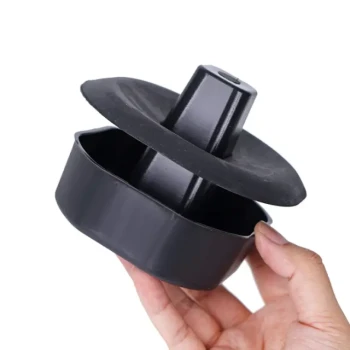
Specialized oil trough barriers function as a physical defense mechanism integrated into the base of beehive stands. Their primary purpose is to stop crawling predators, specifically ants, from climbing the stand and entering the hive by utilizing the impassable properties of oil.
The core value of an oil trough is not just pest exclusion; it is the preservation of data integrity. By physically blocking scavengers, these barriers ensure that fallen Varroa mite samples remain undisturbed for accurate long-term scientific monitoring.
The Mechanics of Protection
Creating an Impassable Boundary
The oil trough creates a liquid "moat" that insects cannot cross.
Unlike solid barriers which ants can often navigate, the physical properties of the oil prevent crawling pests from gaining traction or leverage.
This effectively isolates the hive environment from the ground, stopping pests before they reach the colony.
The Critical Role in Data Integrity
Preserving Varroa Mite Samples
For beekeepers and researchers conducting long-term experiments, the accuracy of data is paramount.
Beekeepers often use monitoring trays to catch and count dead Varroa mites to assess infestation levels.
Preventing Scavenging
Without a barrier, ants will readily enter the hive's bottom section to scavenge protein-rich debris, including dead mites.
If ants carry away the mites, the "drop count" data becomes corrupted, leading to inaccurate conclusions about the colony's health.
The oil trough ensures the "purity of data" remains high by preventing this scavenging behavior entirely.
Advantages Over Chemical Applications
Avoiding Contamination
A major benefit of using specialized physical barriers like oil troughs is the reduction of chemical risks.
Barriers allow for targeted pest control without the need to apply pesticides directly inside or around the hive structure.
Protecting Honey Products
Precision application equipment and barriers prevent the accidental contamination of honey products.
This addresses the common issue of hive damage or product spoilage caused by a lack of knowledge regarding safe chemical application.
Common Pitfalls and Trade-offs
The Risk of Chemical Over-reliance
A common mistake in apiary management is relying solely on chemical treatments to deter pests.
This approach often fails to address the root cause of access and risks harming the bee colony itself.
Physical vs. Chemical Control
While oil troughs require specialized stand designs, they offer a sustainable alternative to chemical barriers.
The trade-off is an investment in equipment (the stand) versus the recurring risk and complexity of applying chemical deterrents accurately.
Making the Right Choice for Your Goal
To determine if specialized oil trough barriers are necessary for your operation, consider your primary objectives:
- If your primary focus is Scientific Monitoring: Implement oil troughs to prevent ants from scavenging dead Varroa mites, ensuring your sample counts remain statistically valid.
- If your primary focus is Product Purity: Use these physical barriers to block pests without introducing pesticides that could contaminate honey or harm the bees.
By isolating the hive from the ground, you protect both the physical health of the colony and the integrity of the data it generates.
Summary Table:
| Feature | Function & Purpose | Impact on Apiary Management |
|---|---|---|
| Physical Moat | Uses oil to create an impassable liquid barrier for ants and crawling pests. | Prevents hive invasion without the use of harmful pesticides. |
| Data Integrity | Prevents scavengers from removing fallen Varroa mites from monitoring trays. | Ensures 100% accuracy in pest infestation sampling and research. |
| Product Purity | Eliminates the need for chemical applications near the hive entrance. | Protects honey and wax from chemical contamination and residue. |
| Sustainable Design | Long-term physical solution integrated into the hive stand hardware. | Reduces recurring costs and risks associated with chemical treatments. |
Elevate Your Apiary Management with HONESTBEE
Are you looking to protect your colony's health and ensure the integrity of your production data? At HONESTBEE, we specialize in supporting commercial apiaries and distributors with professional-grade solutions. From specialized hive stands featuring integrated pest barriers to high-efficiency honey-filling machines and hive-making equipment, we provide the full spectrum of beekeeping tools and essential consumables your business needs to thrive.
Partner with HONESTBEE today to access:
- Wholesale Excellence: Comprehensive inventory for large-scale operations.
- Advanced Machinery: Specialized hardware for honey processing and hive manufacturing.
- Industry Expertise: Tools designed for precision monitoring and product purity.
Ready to upgrade your equipment? Contact us today to discuss your wholesale needs and let HONESTBEE help you achieve superior results!
References
- Manuela Branco, Robert Pickard. A comparative evaluation of sampling methods for<i>Varroa destructor</i>(Acari: Varroidae) population estimation. DOI: 10.1051/apido:2006010
This article is also based on technical information from HonestBee Knowledge Base .
Related Products
- Professional Ant-Proof Beehive Stand with Integrated Moat for Beekeeping
- Metal Hive Feet Bee Hive Stand for Ant Protection
- Plastic Bee Hive Stand for Beekeeping
- Metal Bee Hive Stand Bee Box Stand for Beekeeping
- Professional Galvanized Steel Frame Rest for Beehives
People Also Ask
- What physical protection advantages do individual hive stands provide against Small Hive Beetles? Secure Your Apiary
- Why are specialized ant-proof stands necessary for Africanized honeybee apiaries? Prevent Absconding in Semi-Arid Regions
- Why are specialized beehive stands or protective barriers necessary for pest management in apiaries? Secure Your Colony
- What are the benefits of elevating a bee hive with a stand or base? Protect Your Colony and Your Back
- What to stand a beehive on? The Best Foundation for a Healthy, Manageable Apiary