Specialized queen bee color marking tools are precision instruments used to apply distinct, visible identifiers—such as color-coded paint or numbered disks—to the thorax of a queen bee. These tools serve the critical function of enabling technicians to instantly verify the presence of the original queen, distinguishing her from the thousands of other bees in the colony.
By providing a unique physical identifier, these tools act as a safeguard for experimental data. They allow breeders to immediately detect if a colony has undergone supersedure (natural queen replacement), ensuring that long-term performance metrics are attributed to the correct genetic lineage.
Ensuring Data Integrity in Breeding Programs
Detecting Natural Queen Replacement
The primary risk in long-term performance evaluation is "supersedure," where a colony naturally replaces an existing queen with a new daughter. Without a mark, this change is often invisible to the beekeeper.
Specialized marking tools ensure that if a queen is replaced, the absence of the mark (or the presence of an unmarked queen) alerts the technician immediately.
Preserving Genetic Accuracy
Breeding programs rely on connecting specific traits—such as honey yield or disease resistance—to a specific genetic source.
If a queen is replaced unnoticed, the performance data of the new queen could be falsely attributed to the original queen's genetics. Marking tools maintain the integrity of the pedigree chain over the honey bee's multi-year lifespan.
Mechanisms of Identification and Tracking
Tracking Age and Lineage
Beyond simple identification, marking tools are used to encode vital data directly onto the insect.
Technicians use specific color codes (often standardized internationally) to represent the queen's birth year, while numbered disks provide a unique ID for individual pedigree tracking. This allows for the precise recording of age and origin without needing to consult external records initially.
Operational Efficiency
Finding a single queen in a colony of tens of thousands of workers is time-consuming and difficult.
A bright, distinct mark on the thorax drastically reduces the time required for hive inspections. This efficiency is vital when managing large-scale breeding operations where hundreds of colonies must be assessed seasonally.
Safe Application and Tooling
Methods of Securing the Queen
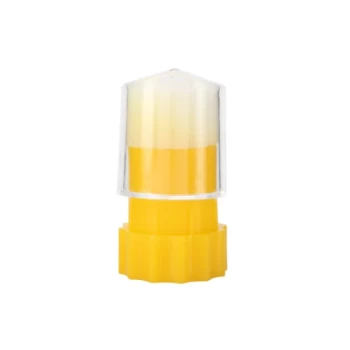
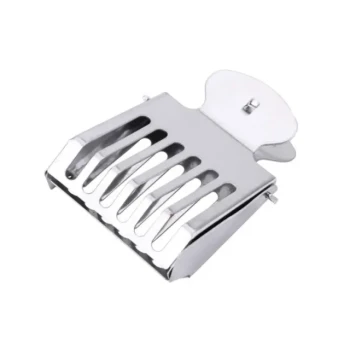
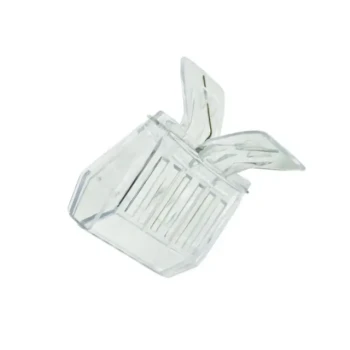
Applying markers requires immobilizing the queen without causing injury. Two common tools facilitate this:
- Queen Marking Tube: A clear tube with a foam plunger that gently holds the queen against a screen.
- Queen Marker Cage: A device that pushes into the honeycomb to temporarily enclose the queen for marking.
Common Pitfalls to Avoid
While marking is essential, improper application can compromise the queen.
Paint viscosity and placement are critical; paint must not inhibit the movement of the wings or block the spiracles (breathing pores). Furthermore, aggressive handling during the marking process can damage the queen's reproductive organs, inadvertently skewing the performance data the breeder is trying to collect.
Making the Right Choice for Your Goal
To effectively utilize marking tools in your operation, align your method with your specific objective:
- If your primary focus is Genetic Research: prioritize numbered disks to establish an exact pedigree chain connecting the queen to her specific offspring and performance metrics.
- If your primary focus is Production Management: prioritize standardized color coding to track queen age, facilitating the timely replacement of older, less productive queens.
The consistent use of marking tools is the difference between anecdotal observation and rigorous, scientifically valid breeding data.
Summary Table:
| Tool/Method | Primary Function | Key Benefit |
|---|---|---|
| Standardized Color Paint | Encodes queen's birth year | Simplifies age tracking and replacement scheduling |
| Numbered Disks | Provides unique ID for individual bees | Ensures exact pedigree tracking for genetic research |
| Queen Marking Tube | Immobilizes queen with foam plunger | Allows for safe, hands-free application of markers |
| Queen Marker Cage | Secures queen directly on the comb | Minimizes handling stress during the marking process |
Scale Your Breeding Success with HONESTBEE Professional Equipment
Maintaining genetic integrity and operational efficiency is the backbone of any successful commercial apiary or distribution business. At HONESTBEE, we understand the precision required for long-term honey bee performance evaluation. We offer a comprehensive wholesale portfolio of beekeeping tools, from specialized queen marking kits and hive-making machinery to honey-filling systems and essential industry consumables.
Whether you are a commercial breeder or a global distributor, our high-quality equipment is designed to streamline your operations and protect your valuable genetic lineages. Partner with us to elevate your apiary management—contact us today to discuss our full spectrum of wholesale solutions!
References
- Robert G. Danka, Garrett E. Dodds. Selection of VSH-derived “Pol-line” honey bees and evaluation of their Varroa-resistance characteristics. DOI: 10.1007/s13592-015-0413-7
This article is also based on technical information from HonestBee Knowledge Base .
Related Products
- One Hand Yellow Queen Marking Catcher Tube Cage Beekeeper Tool Accessory for Queen Bee
- Queen Bee Marking Pen UNI Medium Point for Queen and Bee Marking
- Plastic Long Marker Device for Catching and Marking Bees Queen Bee Marking Tube and Cage
- Queen Bee Marking Pen POSCA Queen Marking Pens for Beekeeping Bee Markers
- Queen Bee Marking Tube Cage Bottle Catcher Holder with Clear Plastic Plunger Marker
People Also Ask
- What tools are available to assist in safely marking a queen bee? Essential Gear for Professional Beekeepers
- What equipment is needed to mark a queen bee? A Simple 3-Tool Guide for Every Beekeeper
- Why are high-quality queen bee marking tools essential for pedigree tracking? Master Honey Bee Genetic Integrity
- What are the specific advantages of using international standard marking tools in queen bee production and management?
- What tools are recommended for marking a Queen bee? Ensure a Safe and Successful Mark