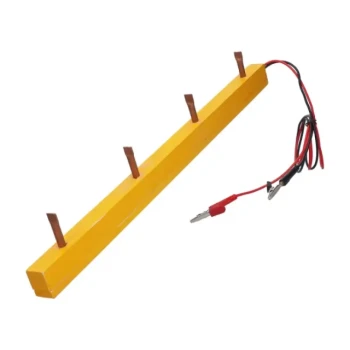
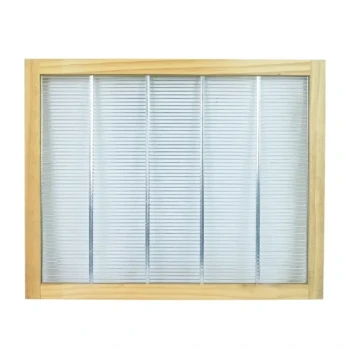
The wooden wire mesh trap serves as a precise, physical data collection tool. It functions by mechanically capturing Oriental hornets to facilitate the quantitative analysis of their population trends. By leveraging specific behavioral traits of the insect, the trap secures specimens for regular counting, allowing researchers to accurately map fluctuations during active seasons.
The trap operates not merely as a control device, but as a scientific instrument that exploits the hornet's natural phototaxis and climbing instincts to generate reliable, quantitative data on seasonal abundance.
Mechanisms of Capture
Exploiting Biological Instincts
The fundamental function of the trap is to turn the hornet's natural behaviors against it. The design specifically targets the insect's phototaxis (attraction to light) and its innate tendency to climb or fly upwards. These biological imperatives drive the hornet into the trap without the need for complex chemical lures.
The Structural Design
To facilitate capture, the trap utilizes a specific spatial structure made of wood and wire mesh. This physical layout guides the hornets into a secure cage. The mesh construction ensures the interior is illuminated, triggering the phototactic response that draws the insect further into the containment area.
Directional Entry and Retention
A key feature often found in these devices is a conical upward-facing opening. This geometry creates a one-way valve effect: hornets can easily ascend through the wide base of the cone into the cage, but the narrow opening makes the reverse path—escaping downwards—mechanically difficult.
Role in Scientific Monitoring
Generating Quantitative Data
The primary scientific function of the trap is to convert erratic insect activity into measurable data points. By physically retaining the hornets, the device allows for the quantitative collection of capture data, typically on a weekly basis.
Tracking Seasonal Fluctuations
Consistent use of these traps allows researchers to move beyond anecdotal evidence of pest presence. The data collected enables the construction of detailed timelines showing population dynamics. This reveals exactly when hornet populations peak and decline during their active seasons.
Integration with Apiary Infrastructure
These traps are frequently designed to act as "modified beehive" add-ons, often installed atop standard empty Langstroth hives. This allows for the assessment of hornet abundance over large areas without disrupting the normal operations of nearby honeybee colonies.
Understanding the Limitations
Dependence on Manual Collection
This is a passive physical device, not an automated sensor. To maintain data integrity, it requires consistent human intervention to empty the traps and manually count the specimens. Neglecting the schedule can lead to overcrowded traps or data gaps.
Behavioral Dependencies
The trap's efficiency is entirely dependent on the specific behaviors of the Oriental hornet (Vespa orientalis). Variations in local environmental conditions (such as lighting or weather) that suppress flying or climbing behavior may temporarily skew capture rates, potentially misrepresenting the actual population size.
Making the Right Choice for Your Research
To effectively use wooden wire mesh traps for monitoring, align your usage with your specific data requirements:
- If your primary focus is tracking population trends: Maintain a rigid weekly schedule for emptying traps to ensure your dataset accurately reflects seasonal fluctuations.
- If your primary focus is apiary safety: Install the units on empty hive boxes to monitor predator pressure without interfering with the productivity of active honeybee colonies.
By converting biological behavior into quantifiable metrics, the wooden wire mesh trap transforms pest control into precise ecological science.
Summary Table:
| Feature | Function in Monitoring |
|---|---|
| Biological Target | Exploits phototaxis and upward climbing instincts |
| Structural Design | Conical entry creates a one-way valve for easy capture/no escape |
| Data Type | Provides quantitative weekly counts for seasonal trend analysis |
| Field Application | Integrates with Langstroth hives for large-scale apiary monitoring |
| Operational Goal | Converts biological behavior into measurable ecological data |
Protect Your Apiary with HONESTBEE Precision Tools
Effective hornet monitoring is the first step toward safeguarding your colonies. At HONESTBEE, we empower commercial apiaries and distributors with high-quality beekeeping machinery, professional tools, and specialized hardware designed for durability and performance.
From hive-making and honey-filling machines to essential industry consumables, our comprehensive wholesale offerings are tailored to help you scale your operations and manage pests efficiently.
Ready to upgrade your equipment? Contact HONESTBEE today to discover how our professional solutions can optimize your honey production and protect your investment.
References
- M. Abd Al-Fattah, Yasser Ibrahim. THE SERIOUS EFFECT OF ORIENTAL HORNET Vespa orientalis L. ON HONEYBEE COLONIES IN GIZA REGION, EGYPT.. DOI: 10.21608/jppp.2009.188418
This article is also based on technical information from HonestBee Knowledge Base .
Related Products
- HONESTBEE Wooden Bar Copper Prong Wire Embedder for Battery Operation
- Premium Wood Framed Metal Wire Queen Bee Excluder
- Professional Multi-Component Bucket Wasp Trap
- Compact Multi-Funnel Hanging Wasp Trap
- Gourd Shaped Hanging Wasp Trap Professional Wasp Catcher
People Also Ask
- What tools and materials are required for wiring a beehive frame? Essential Equipment for Stronger Honeycomb
- What is the purpose of bee frame wire? Secure Wax Foundation and Reinforce Honeycomb
- What is the specified wire gauge for the bee frame wire? Mastering 26-Gauge Wire for Durable Honeycomb Support
- What material is bee frame wire typically made from? The Critical Choice for Hive Health
- What is the final step in wiring a frame? Secure Lasting Tension for a Durable Hive