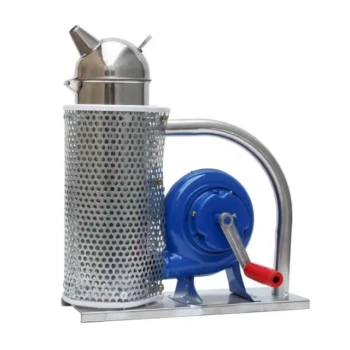
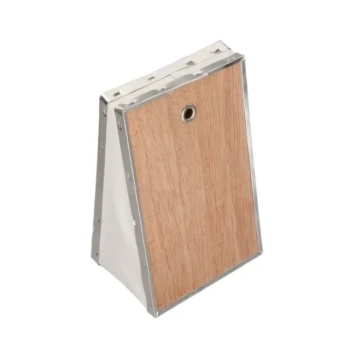
The historical use of smoke to manage bees predates modern beekeeping tools by centuries, originating as a global practice among early honey hunters. While the precise origin is unknown, indigenous Native Americans historically burned puffball fungus to anesthetize honeybees—a technique that actually inspired the medical use of smoke as a general anesthetic in 1853. Similarly, honey hunters in regions like Nepal have long used campfires and smoldering sticks to diffuse smoke near nests to safely harvest wild honey.
Smoke acts as a primal pacifier, masking alarm pheromones and triggering survival instincts that distract the colony. Historically rooted in wild honey harvesting, it remains the most effective method for safe hive management when applied correctly.
Understanding the Biological Mechanisms
While early humans observed that smoke worked, modern science explains why it remains the standard. The effectiveness relies on exploiting the honey bee's natural instincts.
Masking Chemical Communication
Smoke disrupts the colony's sophisticated alarm system. When guard bees perceive a threat, they release specific alarm pheromones (such as isopentyl acetate and 2-heptanone).
Smoke effectively camouflages these chemical signals. Without clear communication of a threat, the rest of the colony remains calm rather than triggering a mass defensive response.
Triggering the "Fire Drill" Instinct
Smoke simulates the presence of a nearby forest fire. This triggers a survival response where bees prioritize hive preservation over defense.
The colony instinctively focuses on caring for the queen and preparing to potentially evacuate the hive. This distraction occupies a significant portion of the population, diverting them from attacking the beekeeper.
The Physical Effect of Gorging
In preparation for evacuation, bees gorge themselves on honey and nectar to ensure energy reserves for travel.
This biological reaction makes the bees physically lethargic. A bee with a full honey crop (stomach) is slower and less agitated, making the colony significantly easier to manage.
Operational Trade-offs and Safety
While smoke is a powerful tool, it is not without risks or limitations. Understanding these boundaries is critical for the welfare of the colony.
The Risks of Overuse
More smoke is not always better. Excessive volume or smoke that is too hot can physically harm the bees.
Hot smoke can singe wings and damage sensitive respiratory systems. To ensure safety, the smoke applied must always be cool and white, used only as needed to maintain calm.
Limitations with Swarms
Smoke is largely ineffective—and often unnecessary—when dealing with a bee swarm.
Swarms lack established honey stores to gorge on, meaning the primary mechanism of sedation is absent. Furthermore, swarms are typically docile because they have no home or resources to defend.
Liquid Alternatives
For those avoiding combustion, liquid smoke or sugar syrup mist can be used.
Sugar syrup distracts bees by prompting grooming and feeding. However, this method should be avoided if there is a risk of "robbing," where bees from other hives attack to steal the syrup.
Applying Historical Principles to Modern Beekeeping
The tools have evolved from smoldering sticks to metal smokers, but the goal remains the same: safe, stress-free interaction.
- If your primary focus is routine hive inspection: Apply cool, white smoke sparingly to mask pheromones and initiate mild feeding behavior.
- If your primary focus is collecting a swarm: Do not use smoke; rely on the swarm's natural lack of defensiveness to move them gently.
- If your primary focus is minimizing equipment: Use a mister with sugar syrup, but only during times when the risk of robbing between hives is low.
Mastering the use of smoke is less about the tool itself and more about respecting the ancient biological instincts of the honey bee.
Summary Table:
| Mechanism | Biological Action | Beekeeper Benefit |
|---|---|---|
| Pheromone Masking | Blocks alarm signals (isopentyl acetate) | Prevents mass defensive responses |
| Survival Instinct | Triggers honey gorging for potential evacuation | Makes bees lethargic and less agitated |
| Physical Distraction | Shifts focus to queen care and hive preservation | Allows for safer, easier hive inspections |
| Liquid Alternatives | Uses sugar syrup to prompt grooming behavior | Avoids combustion and heat-related risks |
Elevate Your Beekeeping Operation with HONESTBEE
At HONESTBEE, we honor the ancient traditions of beekeeping while providing the advanced technology required for modern commercial success. Whether you are scaling a commercial apiary or supplying the next generation of beekeepers as a distributor, we offer the comprehensive wholesale solutions you need.
Our Value to You:
- Full Spectrum Equipment: From high-capacity honey-filling and hive-making machinery to essential hand tools.
- Industry Consumables: A wide array of reliable supplies to keep colonies healthy and productive.
- Cultural Merchandise: Unique honey-themed products to diversify your retail portfolio.
Ready to enhance your efficiency and product quality? Contact us today to explore our wholesale catalog and let HONESTBEE be your partner in apicultural excellence.
Related Products
- European Stainless Steel Bee Smoker for Honey Bee Hive
- Stainless Steel Honey Bee Smoker Hive and Honeycomb Smoker for Beekeeping
- Premium Traditional Copper Bee Smoker with Bellows
- Professional Bee Smoker with Elongated Spout and Durable Bellows for Beekeeping
- Galvanized Beekeeping Smoker for Honey Bee and Apiculture
People Also Ask
- What type of bee smoker is recommended for a beginner? Top Picks for Easy Hive Management
- Why is a stainless steel bee smoker considered indispensable? Master Hive Management with Cool Smoke Technology
- What are bee smokers made out of? Choose the Right Material for Your Apiary
- What are the differences between stainless steel and galvanized steel bee smokers? Choose the Right Smoker for Your Apiary
- What is the technical necessity of using bee smokers? Essential Tools for Safe and Efficient Hive Management