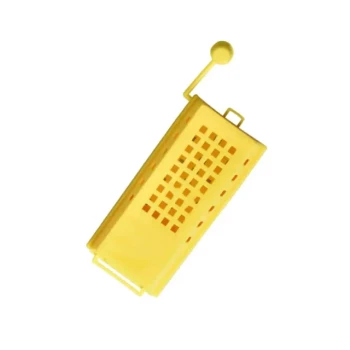
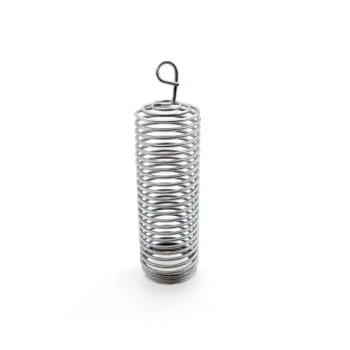
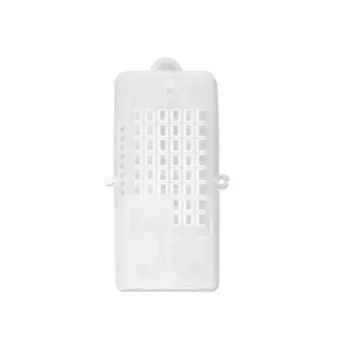
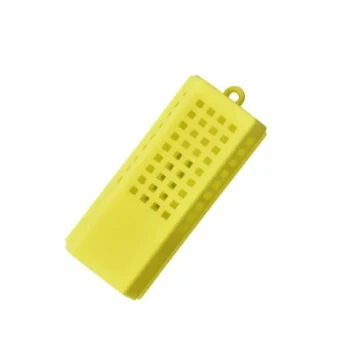
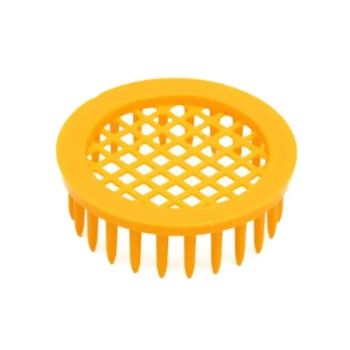
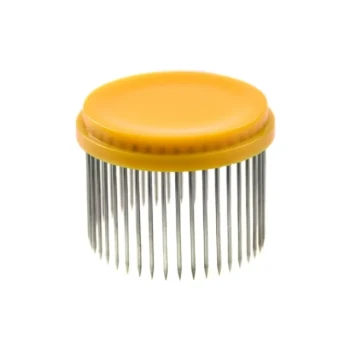
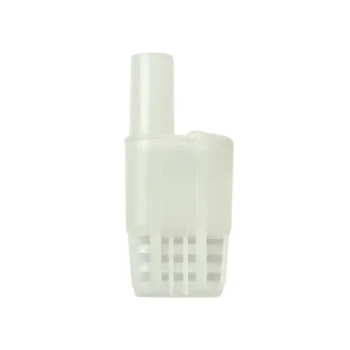
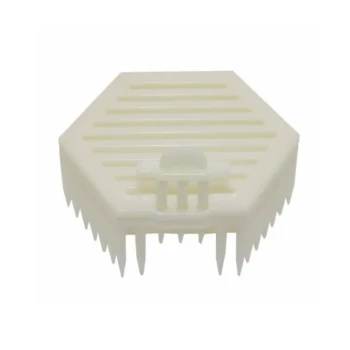
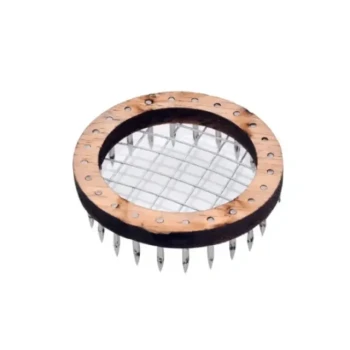
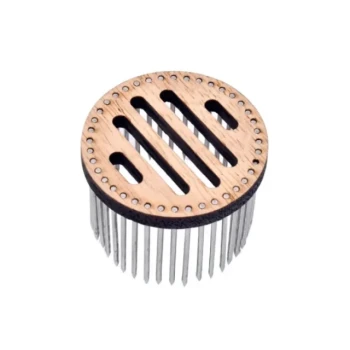
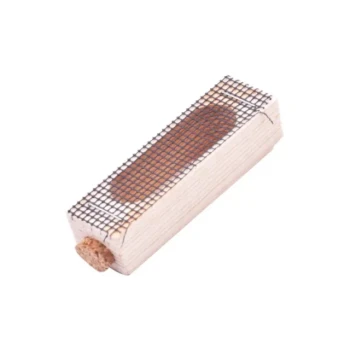
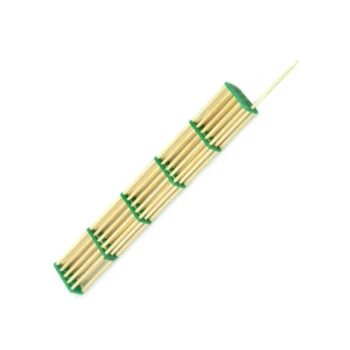
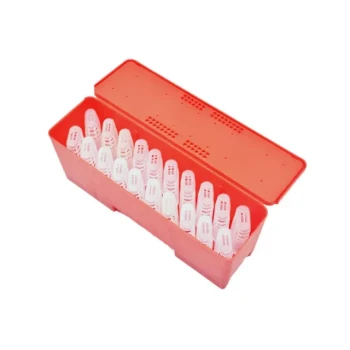
The history of Scalvini Queen Cages dates back to the early 1900s in Italy. Invented by beekeeper Giovanni Scalvini, these devices were originally designed to solve the critical challenge of safely isolating and transporting queen bees. While the earliest iterations relied on wood and wire mesh, the tool has evolved over the last century to utilize modern, durable materials while maintaining its core functionality.
Core Takeaway Born from the practical needs of early 20th-century beekeeping, the Scalvini Queen Cage established a standard for queen isolation and ventilation. The design has successfully transitioned from handcrafted wood and wire to precision-molded plastic, ensuring its continued relevance in modern queen rearing and transportation.
The Origins and Evolution of the Design
The Innovation of Giovanni Scalvini
In the early 1900s, Italian beekeeper Giovanni Scalvini sought a more reliable method for managing queen bees. His goal was to create an environment that allowed for safe transport and isolation without compromising the queen's health.
The original cages were constructed using a combination of wood and wire mesh. This design was critical for ensuring adequate ventilation, a necessity for the queen's survival during transit or isolation within a hive.
The Shift in Materials
Over the decades, the manufacturing of these cages has shifted to reflect advancements in materials science. While the foundational design principles remain, contemporary versions are typically manufactured from durable plastic.
This transition has increased the longevity of the cages and standardized their dimensions. However, the lineage of the design is directly traceable to Scalvini's original wood-and-wire concepts.
Functional Mechanics and Rearing
Engineered for Development
Beyond simple transport, these devices—sometimes referred to as queen cups in the context of rearing—play a vital role in the development of honeybee colonies. They are engineered to house queen larvae, providing a cylindrical, controlled environment that promotes optimal growth.
The specific size and shape are distinct features of the Scalvini design. These dimensions are calculated to prevent overcrowding and protect the developing queen from aggressive interference by worker bees.
The Interaction Balance
A key feature of the Scalvini design is the inclusion of small, strategic openings. These apertures are large enough to allow worker bees to feed the queen or larvae but small enough to keep the queen securely contained.
This design facilitates essential social interaction and care within the hive. It ensures the queen receives nutrition and pheromonal contact without being exposed to the risks of direct release before the colony is ready to accept her.
Understanding the Trade-offs
Material Implications
While the shift to plastic offers superior durability and ease of cleaning, it departs from the natural texture of the original wood. Beekeepers prioritizing traditional methods may find the modern plastic versions lack the porous nature of wood, which can hold scents differently.
Specificity of Application
The Scalvini cage is a specialized tool. Its specific size and cylindrical shape are optimized for queen rearing and transport. Attempting to use these cages for purposes outside of their intended scope—such as long-term banking without proper support—may lead to suboptimal results compared to general-purpose cages.
Making the Right Choice for Your Goal
When incorporating Scalvini Queen Cages into your apiary management, consider your specific objectives:
- If your primary focus is historical authenticity: Acknowledge that while modern versions are plastic, the design principles honor the ventilation and isolation standards set by Giovanni Scalvini in the early 1900s.
- If your primary focus is queen rearing: Utilize these cages (or cups) to provide a protected environment that allows for worker feeding while preventing overcrowding during larval development.
- If your primary focus is durability: Opt for the contemporary plastic iterations, which withstand repeated use and cleaning better than the original wood and wire models.
The Scalvini Queen Cage remains a testament to how specific, well-engineered solutions can endure for over a century by adapting to new materials while solving the same fundamental problems.
Summary Table:
| Feature | Original Design (Early 1900s) | Modern Version |
|---|---|---|
| Inventor | Giovanni Scalvini (Italy) | (Based on Scalvini's Principles) |
| Primary Materials | Wood and Wire Mesh | Durable, Food-grade Plastic |
| Core Function | Isolation & Transport | Rearing, Protection & Transport |
| Key Advantage | High breathability & natural feel | Longevity, standardization & easy cleaning |
| Social Design | Strategic feeding apertures | Precision-molded worker access ports |
Scale Your Apiary Operations with HONESTBEE
At HONESTBEE, we understand the precision required for successful queen rearing and colony management. Whether you are a commercial apiary or a global distributor, we provide the full spectrum of high-quality beekeeping tools—from historical staples like Scalvini-style cages to advanced honey-filling machinery and essential consumables.
Why partner with HONESTBEE?
- Comprehensive Wholesale Offering: A one-stop shop for all beekeeping hardware and machinery.
- Industry Expertise: Tailored solutions for large-scale operations and niche retail needs.
- Quality Guarantee: Durable equipment designed to withstand the demands of professional beekeeping.
Ready to enhance your productivity and supply chain? Contact us today to discuss our wholesale pricing and how our specialized beekeeping portfolio can grow your business!
Related Products
- Professional Queen Cage with Sliding Gate and Feeder Plug
- Durable Galvanized Steel Spring Queen Bee Cage
- Professional Queen Bee Introduction and Transport Cage
- Professional Multi-Functional Queen Bee Cage
- Professional Multi-Compartment Queen Cage with Sliding Lid
People Also Ask
- Why are specialized queen bee cages used for the banking of mated queen bees? Maximize Commercial Apiary Storage Efficiency
- What is the mechanism of action for using temporary queen bee cages? Master Successful Queen Introduction
- How is a queen bee released from a queen cage? Ensure Safe Colony Integration & Hive Success
- What is the step-by-step process for installing a queen bee's cage onto a frame? Ensure Hive Acceptance Safely
- What technical precaution must be taken regarding the mesh or grill side of a queen bee cage? Ensure Queen Survival