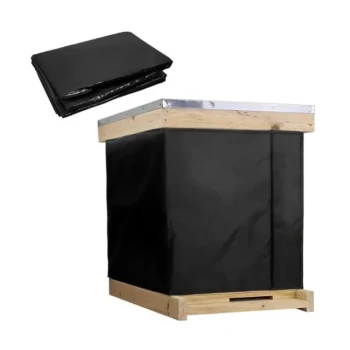
Winter hive covers act as a critical catalyst for spring vitality. By providing thermal insulation during cold months, covers significantly improve colony survival rates. This insulation directly correlates to larger surviving populations in the spring, which enables increased foraging capacity and higher yields of hive products later in the season.
While survival is the immediate goal of winter preparation, the true value of hive covers lies in the momentum they preserve. An insulated colony exits winter with the population density required to immediately capitalize on early nectar flows, setting the stage for maximum productivity.
The Mechanics of Population Growth
To understand why covers impact spring yields, one must look at how energy conservation translates into biological advantages.
Thermal Efficiency and Energy
The primary function of a winter cover is to retain the heat generated by the winter cluster. By reducing the rate of heat loss, bees consume less metabolic energy to maintain core hive temperatures. This preservation of energy reduces stress on the individual bees and the colony's food stores.
The Spring Head Start
Colonies housed in insulated hives tend to emerge from winter with significantly larger populations. Because fewer bees die from cold stress or exhaustion, the colony retains a critical mass of workers. This allows the queen to expand the brood nest more rapidly as soon as the season turns.
Foraging Capacity
A larger population immediately translates to a stronger workforce. With more available workers, the colony can send out a higher number of foragers. This increased capacity leads to a more abundant collection of nectar and pollen, directly resulting in higher honey production.
Environmental Synergy
While covers provide retention, the external environment provides the source of heat and stimulation. The effectiveness of a cover is often amplified by proper hive placement.
Leveraging Solar Gain
Positioning hives in full sunlight with an eastern exposure complements the use of covers. Facing east allows the morning sun to warm the hive and stimulate bee activity earlier in the day. This maximizes the foraging window, allowing the bees to work longer hours.
Biological Pest Control
Sunlight serves a dual purpose: warmth and defense. Small Hive Beetles (SHB) prefer shaded environments, so keeping hives in full sun acts as a natural deterrent. Furthermore, maintaining short grass around the hive prevents pests from using vegetation as a bridge to access the colony.
Understanding the Trade-offs
While winter covers are generally beneficial, they must be used with a clear understanding of potential risks to ensure they do not become detrimental.
The Moisture Risk
Insulation keeps heat in, but it can also trap moisture produced by the bees' respiration. If a cover seals the hive too tightly without adequate ventilation, condensation can form and drip back onto the cluster, which is often fatal.
Managing Temperature Spikes
There is a balance between keeping a hive warm and making it too warm on sunny winter days. If the internal temperature rises artificially high, bees may become active when no food is available outside. This can lead to the rapid depletion of winter food stores before spring truly arrives.
Making the Right Choice for Your Goal
Selecting the right winter strategy depends on balancing thermal protection with environmental factors.
- If your primary focus is maximizing honey production: Prioritize high-quality insulation to ensure a large, robust population that is ready to forage aggressively at the start of the season.
- If your primary focus is colony health and pest management: Combine winter covers with full sun exposure and aggressive vegetation maintenance to deter Small Hive Beetles and reduce moisture buildup.
Ultimately, winter protection is an investment in spring momentum, converting potential energy savings into tangible harvest gains.
Summary Table:
| Feature | Impact on Colony | Key Benefit |
|---|---|---|
| Thermal Insulation | Reduces metabolic energy consumption | Higher winter survival rates |
| Population Retention | Maintains a critical mass of workers | Rapid brood nest expansion in spring |
| Enhanced Foraging | Larger workforce available early season | Increased nectar collection & honey production |
| Solar Synergy | Eastern exposure & covers work together | Maximized daily foraging window |
| Pest Deterrence | Combines with sunlight to deter SHB | Improved overall hive health |
Maximize Your Apiary's Spring Potential with HONESTBEE
At HONESTBEE, we understand that winter survival is only the beginning. As a leading partner for commercial apiaries and distributors, we provide the professional-grade tools and insulation solutions necessary to transform winter protection into spring momentum.
Our comprehensive wholesale catalog offers everything from specialized hive-making machinery to essential consumables and honey-themed cultural merchandise. Whether you are scaling up production or supplying the next generation of beekeepers, our expert-backed equipment ensures your colonies emerge robust and ready for a record-breaking harvest.
Ready to elevate your beekeeping business?
Contact HONESTBEE today to explore our wholesale offerings and secure the equipment your operation deserves.
Related Products
- Professional Insulated Winter Hive Wrap for Beekeeping
- Inner Beehive Cover for Beekeeping Bee Hive Inner Cover
- Telescopic Beehive Outer Cover Lid Roof with Galvanised Sheeting for Langstroth Hive and Beehive Outer Cover
- Solid Bottom Board Australian Pine Wood Langstroth Bottom Board for Wholesale
- Langstroth Solid Bottom Board for Beekeeping
People Also Ask
- What are the steps to properly wrap a beehive for winter? Ensure Your Colony Survives the Cold
- When is the best time to wrap a beehive for winter? A Guide to Perfect Winterization Timing
- How do professional insulation wraps provide protection for bee colonies? Optimize Winter Survival & Energy Efficiency
- What are the technical benefits of using winter wraps for beehive insulation? Boost Colony Survival & Hive Health
- What are the benefits of using insulated covers for hives? Ensure Colony Survival and Health