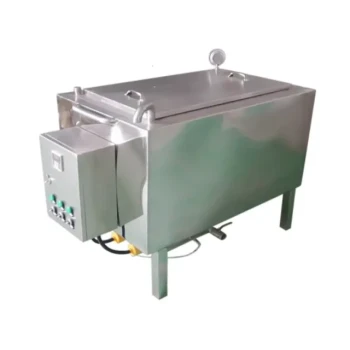
Integrated electronic control instruments are the central nervous system of effective thermal treatment. They precisely coordinate the operation of heating elements and circulation fans to lock in a specific target temperature, such as 42°C. By actively managing these variables, these instruments prevent dangerous fluctuations that can lead to treatment failure or colony loss.
Thermal treatment operates on a razor-thin margin between killing parasitic mites and harming the bees. Electronic control instruments provide the necessary stability to maintain this balance, ensuring heat penetrates capped brood cells without exposing the colony to lethal temperature spikes.
The Mechanics of Precision
Coordinating Heat and Airflow
The primary function of integrated control is the synchronization of two critical components: the heater and the circulation fans.
If these operate independently, hot spots or cold zones can develop within the hive. Integrated instruments ensure they work in tandem to distribute thermal energy evenly.
Eliminating Temperature Drift
Without active electronic intervention, temperatures naturally fluctuate due to environmental variables.
Control instruments monitor conditions in real-time, making micro-adjustments to keep the environment stable. This prevents the temperature from drifting away from the efficacy zone required to treat the colony.
Why Stability is Non-Negotiable
Reaching the Capped Brood
The hardest target in thermal treatment is the parasitic mite hiding inside a capped brood cell.
To kill these mites, the heat must penetrate the wax capping and the brood itself. This requires a sustained, constant temperature over time, which is impossible to achieve if the heat source is fluctuating.
Preventing Colony Collapse
Bees have a specific thermal limit before they experience critical stress.
If the temperature spikes due to a lack of control, the colony may react by absconding (fleeing the hive). In worse scenarios, uncontrolled heat peaks result in mass mortality, killing the very colony you are trying to save.
Understanding the Trade-offs
Reliance on Sensor Accuracy
Integrated systems rely entirely on the data they receive from their sensors.
If a sensor is calibrated incorrectly or placed in a "dead zone" of airflow, the system may heat the hive aggressively based on false readings. The precision of the control is only as good as the accuracy of the input.
Complexity vs. Simplicity
Adding electronic integration increases the technical complexity of the equipment.
While this offers superior control, it introduces more potential points of failure compared to simpler, manual methods. Users must ensure their equipment is well-maintained to avoid electronic malfunctions during a treatment cycle.
Making the Right Choice for Your Goal
To ensure the safety and success of your thermal treatments, consider these priorities:
- If your primary focus is Efficacy: Prioritize systems that demonstrate the ability to hold a steady 42°C to ensure mites within capped brood are effectively neutralized.
- If your primary focus is Colony Safety: Select instruments with rapid-response control loops that detect and prevent heat spikes before they trigger absconding or mortality.
Precision is not a luxury in thermal treatment; it is the difference between a healthy hive and a lost colony.
Summary Table:
| Feature | Function in Thermal Treatment | Impact on Colony Health |
|---|---|---|
| Heat & Airflow Sync | Coordinates heaters and fans to eliminate hot/cold zones | Ensures uniform heat distribution without lethal spikes |
| Real-time Monitoring | Makes micro-adjustments to prevent temperature drift | Maintains the 42°C efficacy zone needed to kill mites |
| Capped Brood Penetration | Sustains constant heat over a specific duration | Effectively neutralizes parasitic mites inside wax cells |
| Rapid-Response Loops | Automatically cuts power if heat thresholds are breached | Prevents hive absconding and mass bee mortality |
Maximize Your Apiary Productivity with HONESTBEE Precision Equipment
Success in commercial beekeeping demands more than just tools; it requires industrial-grade reliability and precision. HONESTBEE specializes in supporting commercial apiaries and distributors with a comprehensive wholesale range of professional beekeeping machinery and consumables.
From advanced hive-making and honey-filling machines to specialized thermal treatment components, our equipment is designed to eliminate the risks of manual inconsistency. Whether you are looking to upgrade your extraction facility or source essential hardware for distribution, we provide the technical edge your business needs.
Ready to scale your operations with the industry's most reliable equipment?
Contact HONESTBEE Today for a Wholesale Consultation
References
- Georgios Goras, Andreas Thrasyvoulou. Hyperthermia -a non-chemical control strategy against varroa. DOI: 10.12681/jhvms.15869
This article is also based on technical information from HonestBee Knowledge Base .
Related Products
- 12V Bee Mite Removal Evaporator Oxalic Acid Vaporizer for Bee Fumigation Treatment 180W Atomization
- Digital Display Electric Honey Uncapping Knife for Beekeeping and Decapping
- Queen Bee Artificial Insemination Instrument Equipment for Instrumental Insemination
- HONESTBEE Adjustable Voltage Wire Embedder with Digital Display
- Electric Bee Smoker European Style Bee Hive Smoker for Beekeeping
People Also Ask
- What should be done after applying the vapor? A Step-by-Step Guide to Sealing Your Hive
- What are the main advantages of using oxalic acid vaporization for Varroa mite control? Achieve 90%+ Efficacy Safely
- How can oxalic acid vaporization be used effectively in a hive that contains brood? Master Multi-Stage Mite Control
- What is the process of using an oxalic acid vaporizer? A Step-by-Step Guide to Safe Varroa Control
- Why is it necessary to control varroa mite infestations? Protect Your Colony with Oxalic Acid Vaporizers