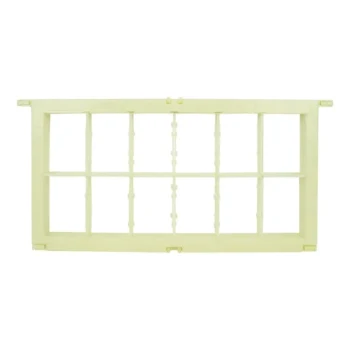
Longitudinal locking mechanisms are the critical structural components that maintain the integrity of shallow beekeeping half-frames. By utilizing alignment structures such as bosses and grooves, these mechanisms ensure that the two halves of the frame remain securely fastened together. This prevents the frame from separating during handling or processing, acting as the primary safeguard against mechanical failure.
Core Takeaway The fundamental purpose of these mechanisms is to convert a multi-part assembly into a rigid, unified structure. They are essential for resisting the physical stresses of centrifugal extraction and maintaining the precise tension required for a healthy beeswax foundation.
The Mechanics of Frame Stability
The Role of Alignment Structures
The system relies on physical alignment structures, typically comprised of bosses (protrusions) and mating grooves.
When the frame halves are pressed together, these features interlock to create a secure connection. This mechanical interference prevents the halves from shifting laterally or pulling apart.
Preventing Accidental Separation
Once the frame is closed, the locking mechanism ensures it remains closed until intentionally disengaged.
This is vital during hive inspections, where frames are frequently lifted, tilted, and manipulated. Without this lock, the weight of the comb and bees could cause the frame to split open in the beekeeper's hands.
Protecting the Workflow
Withstanding Extraction Forces
The most stress a frame endures occurs during honey extraction, particularly in centrifugal extractors.
The spinning process generates significant outward force. A longitudinal locking mechanism prevents the frame components from separating under this load, which would otherwise result in catastrophic equipment failure or damage to the harvest.
Stability During Processing
Beyond extraction, general processing tasks often require moving frames between stations.
The locks ensure that the frame retains its shape and solidity throughout the entire workflow, reducing the risk of accidental opening during transport or cleaning.
Preserving the Foundation
Maintaining Necessary Tension
For bees to build straight, uniform comb, the beeswax foundation must be held taut.
The locking mechanism creates a rigid perimeter that holds the foundation firmly in place. This maintains the tension required to prevent the foundation from sagging or warping.
Ensuring Precise Centering
Proper comb construction depends on the foundation being equidistant from the frame edges.
The alignment structures serve a dual purpose: locking the frame and centering the foundation. This prevents the wax sheet from shifting, ensuring the bees draw out comb that is aligned correctly within the hive.
Understanding the Trade-offs
The Necessity of Precision
While these mechanisms provide security, they rely entirely on precise alignment during assembly.
If the bosses and grooves are not perfectly aligned before closing, the mechanism may not engage fully. This false sense of security can lead to failure when stress is applied later.
Dependency on Material Integrity
The locking force is only as strong as the material of the bosses and grooves.
Over time, repeated opening and closing can wear down these contact points. If the locking features degrade, the frame loses its ability to hold tension, rendering it unsuitable for centrifugal processing even if it appears visually intact.
Making the Right Choice for Your Goal
When evaluating frame designs or assembling your equipment, consider your specific operational needs:
- If your primary focus is extraction efficiency: Prioritize frames with robust locking bosses to ensure they withstand high-speed centrifugal forces without separating.
- If your primary focus is comb quality: Ensure the locking mechanism engages tightly to maintain high tension and perfect centering of the beeswax foundation.
Ultimately, the reliability of a shallow half-frame is defined by the security of its longitudinal lock.
Summary Table:
| Key Function | Primary Benefit | Importance for Operation |
|---|---|---|
| Structural Alignment | Uses bosses and grooves to prevent lateral shifting. | Ensures frame integrity during manual handling. |
| Centrifugal Resistance | Keeps halves joined under high-speed spinning. | Prevents equipment failure during honey extraction. |
| Tension Maintenance | Holds beeswax foundation taut and centered. | Promotes straight and uniform comb construction. |
| Operational Safety | Prevents accidental opening during inspections. | Protects the honey harvest and the beekeeper. |
Maximize Your Apiary Efficiency with HONESTBEE
At HONESTBEE, we understand that commercial beekeeping requires equipment that can withstand the rigors of high-volume processing. Our comprehensive wholesale catalog offers everything from precision-engineered beekeeping tools and machinery to specialized honey-filling and hive-making machines.
Whether you are a commercial apiary focusing on extraction efficiency or a distributor seeking high-quality consumables and honey-themed cultural merchandise, we provide the industrial-grade solutions you need. Partner with us to access professional-grade hardware designed for durability and performance.
Ready to scale your beekeeping business?
Contact Us Today to Explore Wholesale Opportunities
References
- I P Voiku. THE DEVICE OF THE SHALLOW FRAME (HALF-FRAME) WITH QUICK FITTING OF A BEESWAX FOUNDATION AND ITS ADVANTAGE. DOI: 10.17770/etr2019vol1.4104
This article is also based on technical information from HonestBee Knowledge Base .
Related Products
- Professional Wooden Requeening Frame for Beekeeping
- Wooden Bee Hive Frames for Beekeeping and Wholesale
- Professional Sectional Comb Honey Frame with 250g Cassette System for Beekeeping
- Plastic Bee Frame Beekeeping Hive Frames for Wholesale
- Ergonomic Plastic Frame Spacer Tool for Rapid Hive Management Beekeeping
People Also Ask
- What are the primary functions of beekeeping frames? Boost Efficiency with Professional Hive Management
- What are the best practices for assembling beekeeping frames? Pro Tips for Maximum Durability & Efficiency
- How are deep, medium, and shallow frames typically used in beekeeping? Optimize Your Hive Setup
- What are the characteristics of wooden frames in beekeeping? Unlock Natural Flexibility & Cost-Effectiveness
- What are the common specifications for wooden beekeeping frames used in colony expansion? Your Complete Guide