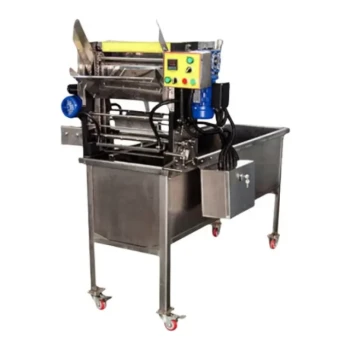
Modern labeling and coding machines serve as the critical compliance bridge in the commercial honey supply chain. They are technically essential for marking packaging with specific production batches, expiration dates, and origin information, ensuring that the product meets mandatory food safety regulations. By automating this process, producers eliminate the inconsistencies of manual labor and secure the data accuracy required to protect brand reputation.
Core Takeaway Automated coding systems do more than print dates; they validate the product for the formal market. By ensuring full lifecycle traceability and regulatory compliance, these machines transform honey from a raw commodity into a trusted, retail-ready brand that can withstand consumer and safety scrutiny.
The Strategic Role of Coding in Distribution
Ensuring Regulatory Compliance
Compliance with food safety regulations is the baseline requirement for any commercial operation. Modern coding machines apply precise, legible data regarding expiration dates and production origins directly onto packaging.
Without this automated validation, honey products cannot legally enter formal distribution chains. This adherence to standards is not optional; it is the fundamental license to operate in a regulated market.
Enabling Full Lifecycle Traceability
The primary technical advantage of modern coding is the ability to track a product from the hive to the consumer. Automated systems mark specific production batches, creating a permanent audit trail.
This traceability allows companies to pinpoint the exact history of a jar should a quality issue arise. It serves as a defensive mechanism, mitigating risks to brand reputation by ensuring missing or inaccurate information never reaches the shelf.
Unlocking Formal Retail Markets
Supplementary data indicates that professional labeling is the prerequisite for moving from informal, low-price markets to high-premium commercial channels. Retailers and e-commerce platforms require standardized packaging that meets national bureau certifications.
By delivering consistent, professional identification, these machines allow producers to transition from subsistence operations to commercial enterprises. They signal to retailers that the product is safe, consistent, and managed with industrial rigor.
Building Consumer Trust
Trust is built on transparency. Modern labeling ensures that ingredient lists and brand information are presented clearly and consistently.
This visual professionalism assures consumers that the product has not been tampered with and meets hygiene standards. It directly supports the ability to charge brand premiums, as consumers perceive a higher value in products with traceable, professional packaging.
Understanding the Operational Trade-offs
The Risk of Manual Processes
While manual labeling may seem cost-effective for small batches, it introduces significant commercial risk. Manual processes differ from automated systems by introducing human error, inconsistent placement, and a lack of standardized data.
References suggest that relying on manual labor can compromise the "hygienic safety" and consistency required for global trade. The trade-off for avoiding automation is often exclusion from large-scale market supply chains.
Investment vs. Market Access
Implementing modern coding technology requires upfront capital and operational integration. However, the alternative—inaccurate or missing information—can lead to regulatory fines or total product recall.
The investment in machinery is effectively an investment in market insurance. It trades the low cost of manual entry for the high reliability required to scale into standardized distribution.
Making the Right Choice for Your Goal
To select the right labeling strategy, assess your current business stage and immediate objectives.
- If your primary focus is Regulatory Compliance: Prioritize coding systems that ensure high-definition legibility for expiration dates and batch numbers to satisfy food safety audits.
- If your primary focus is Brand Expansion: Invest in labeling automation that enhances visual appeal and consistency, which is required to gain shelf space in formal retail outlets and premium supermarkets.
Ultimately, modern labeling machines are not just packaging tools; they are the validation mechanism that certifies your honey as safe, traceable, and ready for the global market.
Summary Table:
| Key Feature | Commercial Benefit | Impact on Distribution |
|---|---|---|
| Automated Batch Coding | Ensures 100% regulatory compliance | Prevents legal delays and fines |
| Full Traceability | Pinpoints product history from hive to shelf | Minimizes brand risk during recalls |
| Professional Labeling | Enhances visual brand authority | Unlocks premium retail and export markets |
| Data Accuracy | Eliminates manual human error | Guarantees consistency across large batches |
Scale Your Honey Business with HONESTBEE Professional Solutions
Transitioning from small-scale production to a dominant market presence requires more than just quality honey—it demands industrial rigor. HONESTBEE empowers commercial apiaries and distributors with the tools needed to dominate the global market.
We provide a comprehensive wholesale suite, including:
- High-Precision Labeling & Coding Machinery: Ensure your products meet every safety standard with perfect legibility.
- Complete Processing Lines: From hive-making to honey-filling machines, we automate your path to growth.
- Industrial Consumables & Hardware: A full spectrum of beekeeping tools and equipment designed for durability.
Don't let manual processes limit your brand's potential. Partner with HONESTBEE to transform your honey into a trusted, retail-ready brand. Contact us today to explore our wholesale solutions!
References
- Luís Antonio Saavedra-Jiménez, Vicente Homero González Álvarez. Características y necesidades tecnológicas de los apicultores de la región centro-sur de Jalisco. DOI: 10.15174/au.2022.3493
This article is also based on technical information from HonestBee Knowledge Base .
Related Products
- Honey Stick Filler Vertical Paste Sachet Packing Machine for Honey Sachets
- Manual Honey Filling Machine Bottling Machine for Honey
- Fully Automatic Honey Filling Packaging Machine for Processing Line
- Honey Concentrating and Filtering Dehumidifier Machine 2T Capacity for Honey
- Automatic Honey Frame Uncapper Machine for Beekeeping
People Also Ask
- How do honey stick and honey sachet machines differ? Choose the Right Packaging for Your Honey
- What are the main functions of a honey sachet packing machine? Boost Efficiency with Automated Precision
- What are the advantages of honey sachet packing machines? Boost Efficiency & Unlock New Markets
- What types of filling and packing machines are available for different scales of honey production? Expert Solutions
- What is a honey stick packing machine? Master the Operational Process for Efficient Packaging