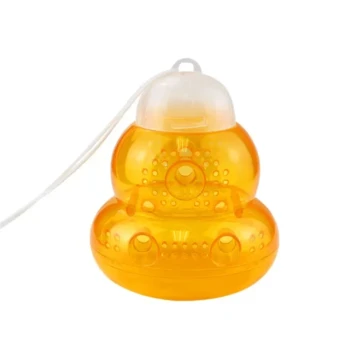
The primary industrial value of Environmental Monitoring Equipment is precision synchronization. It correlates physical environmental factors, specifically temperature fluctuations, with the peak activity periods of honeybee foraging. By identifying these specific windows, the equipment provides the technical data necessary to time the release of bees, ensuring pollination occurs exactly when nectar production and crop demand are at their highest.
By transforming environmental conditions into actionable data, this technology shifts pollination from a passive reliance on nature to an actively managed, optimized industrial process.
Deciphering the Environmental Connection
Tracking Physical Factors
The core function of this equipment is to monitor the physical environment surrounding the crops.
It specifically tracks variables such as temperature fluctuations, which act as biological triggers for insect behavior.
Identifying Foraging Peaks
By analyzing this environmental data, the equipment reveals specific patterns in bee activity.
It identifies exact times during the day when honeybee foraging reaches its maximum intensity, filtering out periods of low activity.
Optimizing Pollination Operations
Data-Driven Release Timing
The insights provided by the equipment offer concrete technical guidance for beekeepers and farmers.
Operators no longer need to guess; they can determine the optimal timing for releasing bees based on current environmental realities.
Synchronization with Crop Needs
The ultimate goal is to match the workforce (the bees) with the work (the crops).
This technology ensures that pollination services are provided during periods of highest nectar production, maximizing the biological efficiency of the process.
Understanding the Trade-offs
Dependence on Accurate Calibration
The value of the data is only as good as the equipment's accuracy.
If sensors are poorly calibrated or placed incorrectly, they may suggest release times that do not actually align with local microclimates.
The Complexity of Variables
While temperature is a primary factor, it is often just one piece of the puzzle.
Operators must ensure they are interpreting the data correctly to avoid releasing bees during a temperature peak that might otherwise be unsuitable due to other factors not currently monitored.
Maximizing Efficiency in Your Operations
To leverage this technology effectively, align your strategy with your specific production goals:
- If your primary focus is maximizing crop yield: Synchronize bee release times strictly with the data-identified peaks in nectar production to ensure every foraging flight counts.
- If your primary focus is operational scheduling: Use the environmental trends to predict foraging windows in advance, allowing for more efficient allocation of labor and resources.
Data-driven pollination is the key to turning environmental variability into a predictable asset for agricultural success.
Summary Table:
| Key Feature | Industrial Application Value |
|---|---|
| Physical Tracking | Monitors temperature fluctuations as biological triggers for foraging. |
| Peak Identification | Pinpoints exact daily windows of maximum honeybee foraging intensity. |
| Data-Driven Release | Eliminates guesswork in timing bee release for beekeepers and farmers. |
| Biological Efficiency | Matches peak nectar production with bee activity to maximize crop yields. |
| Operational Planning | Predicts foraging windows to optimize labor and resource allocation. |
Elevate Your Beekeeping Operations with HONESTBEE
Transition from passive nature-reliance to an actively managed, high-yield process. At HONESTBEE, we specialize in empowering commercial apiaries and distributors with the tools needed for industrial success. From advanced monitoring insights to our comprehensive range of beekeeping tools, honey-filling machinery, and hive-making equipment, we provide the full spectrum of hardware and consumables required for modern agriculture.
Ready to optimize your pollination timing and scale your wholesale supply?
Contact HONESTBEE Today to discover how our specialized equipment and industry-leading expertise can transform your productivity.
References
- Madhusudan Man Singh. Foraging Behaviour of the Himalayan Honeybee (<i>Apis cerana</i> F.) on Flowers of <i>Fagopyrum esculentum</i> M. and its Impact on Grain Quality and Yield. DOI: 10.3126/eco.v15i0.1940
This article is also based on technical information from HonestBee Knowledge Base .
Related Products
- Precision Honey Refractometer Instrument for Quality Assessment
- Langstroth Screen Bottom Board for Beekeeping Wholesale
- Digital Honey Refractometer for Precision Measurement of Optimal Honey Quality
- Australian Pine Wood Langstroth Screen Bottom Board for Wholesale
- 8 Frame and 10 Frame Propolis Trap Collector Screen for Propolis Collection
People Also Ask
- How do professional scientific instruments contribute to honey quality testing? Ensure Purity and Market Compliance
- What should be considered regarding the measurement range of a honey refractometer? Ensure Peak Honey Quality
- What is the correct temperature for a honey sample before taking a refractometer reading? Tips for Accurate Measurement
- How should a honey refractometer be cleaned for reliable results? Essential Maintenance for Precision
- What substances can be used to calibrate a honey refractometer? Essential Solutions for Accurate Moisture Readings