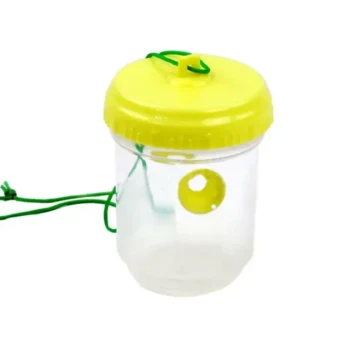
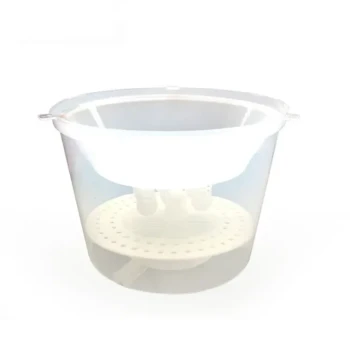
Professional pollen traps operate on a mechanical stripping principle designed to diversify hive output. Installed at the hive entrance, these devices force returning foragers to navigate a grid with precise pore sizes. This physical barrier dislodges pollen pellets from the bees' hind legs, causing the pollen to fall into a collection container while allowing the bee to enter the hive unharmed.
Core Insight: Pollen traps are not just harvesting tools; they are essential instruments for scaling a beekeeping enterprise. They allow for the systematic collection of high-value raw materials and environmental data without disrupting the colony's normal development.
The Mechanical Principle: Precision Separation
The Physical Grid
The core mechanism of a professional trap is a calibrated grid. As foraging bees return to the hive, they must pass through holes specifically sized to accommodate the bee’s body but not the pollen loads attached to their hind legs.
The Dislodging Process
As the bee squeezes through the pore, the grid acts as a mechanical scraper. It physically strips the pollen pellets off the legs. Gravity then takes over, dropping the fresh pollen into a secure collection drawer or box located beneath the entryway.
Non-Destructive Collection
Crucially, this process is non-destructive. The design allows bees to enter and exit normally. It systematically separates the product (pollen) from the producer (the bee) without injuring the insect or requiring lethal sampling methods.
The Purpose: From Production to Research
Commercial Diversification
For beekeeping enterprises, the primary purpose is economic resilience. Relying solely on honey can result in inconsistent supply issues. Pollen traps allow businesses to offer high-value bee pollen, transforming a single-product operation into a diversified commercial model.
Environmental Analysis
Researchers and professional beekeepers use traps to capture a direct representation of the environment. Because bees forage in the immediate landscape, the collected pollen serves as a sample for analyzing local floral resources, diversity, and plant availability.
Nutritional and Chemical Profiling
Traps provide the physical foundation for advanced scientific analysis. The bulk raw samples collected are necessary for verifying botanical purity, classifying species, and analyzing specific compounds like lipids, fatty acids, and volatile organic compounds (VOCs).
Understanding the Operational Trade-offs
Managing Colony Resources
While the references note that traps allow for monitoring "without interfering with the normal development of the bee colony," the device fundamentally removes a portion of the hive's food source.
The Necessity of Standardization
Using these traps is part of converting beekeeping from an art to a technical workflow. However, this requires standardized equipment. Implementing these tools increases the output-to-time ratio, but it demands a shift toward uniform hive management to ensure consistent results across the apiary.
Making the Right Choice for Your Goal
Whether you are running a business or a study, the utility of the pollen trap depends on your objective.
- If your primary focus is Commercial Growth: Use pollen traps to diversify your revenue stream by harvesting high-value raw pollen to mitigate the risks of inconsistent honey production.
- If your primary focus is Scientific Research: Utilize the traps to obtain bulk, non-destructive samples for analyzing local biodiversity, nutritional composition (lipids/fatty acids), and environmental purity.
Standardizing your operation with professional pollen traps empowers you to scale your output while gaining precise control over hive productivity and data.
Summary Table:
| Feature | Mechanical Principle / Purpose | Benefit for Beekeepers |
|---|---|---|
| Mechanism | Calibrated grid & mechanical stripping | Efficiently dislodges pollen pellets without harming bees. |
| Design | Non-destructive gravity collection | Maintains colony health while securing high-value raw materials. |
| Economic Goal | Commercial Diversification | Reduces reliance on honey by adding pollen to the product line. |
| Research Goal | Environmental & Chemical Analysis | Provides bulk samples for floral diversity and purity testing. |
Elevate Your Commercial Apiary with HONESTBEE
Are you looking to diversify your revenue and standardize your hive productivity? At HONESTBEE, we specialize in empowering commercial apiaries and distributors with professional-grade beekeeping equipment. Our comprehensive wholesale offering includes precision-engineered pollen traps, specialized honey-filling machines, and high-quality hive-making hardware designed for scale.
Whether you need industrial-scale machinery or essential consumables, we provide the tools necessary to transform your operation into a high-output enterprise. Contact us today to explore our full spectrum of beekeeping solutions and see how our expertise can add value to your business.
References
- Ahmet Emir Şahin, Süleyman Alparslan. An Online Survey to Determine Breeding Activities and Main Issues in Turkey s Beekeeping Enterprises. DOI: 10.51458/bstd.2021.20
This article is also based on technical information from HonestBee Knowledge Base .
Related Products
- Removable Plastic Pollen Trap With Ventilated Tray for Bees Pollen Collector
- 30 cm Plastic Entrance Hole Bee Pollen Trap and Collector
- Plastic Bee Pollen Trap Strips Comb Catcher Collector
- High-Efficiency Diamond Maze Bee Escape for Clearing Supers
- 8 Frame and 10 Frame Propolis Trap Collector Screen for Propolis Collection
People Also Ask
- What are the design principles and advantages of pollen traps in the collection of bee pollen? Boost Your Apiary Yield
- What is the function of professional pollen traps in evaluating honey plants? Quantifying Pollination and Crop Potential
- What functions do pollen traps serve for bee bread production? Optimize Your Raw Material Collection
- What maintenance and pest prevention measures should be taken for pollen traps? Protect Your Hive and Harvest Quality
- How does the use of pollen traps in honeybee hives enhance crop fertilization? Boost Your Yield Through Induced Activity