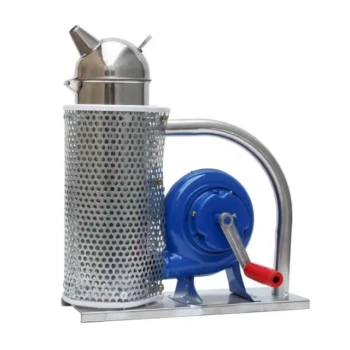
A beekeeping smoker controls aggression by simultaneously disrupting the colony's communication network and triggering a deep-seated survival instinct. The mechanism relies on generating cool smoke to mask alarm pheromones while forcing the bees into a docile feeding state in preparation for potential hive evacuation.
Core Takeaway The smoker acts as both a sensory blockade and a behavioral trigger. It chemically obscures the "danger" signals sent by guard bees and overrides defensive behaviors by inducing the colony to gorge on honey, shifting their priority from attacking the intruder to resource preservation.
The Biological Mechanisms of Smoke
Disruption of Chemical Communication
Honeybees rely heavily on olfactory signals to coordinate colony defense. When a threat is perceived, individual bees release alarm pheromones to alert the rest of the hive.
Smoke acts as a physical and chemical masking agent. The thick particulate matter obscures these volatile pheromones, effectively cutting the communication line between the guard bees and the interior colony. Without this chemical signal transmission, the collective defensive response is suppressed.
The Survival Feeding Response
Beyond masking signals, smoke taps into an evolutionary survival instinct associated with forest fires. The presence of smoke tricks the bees into believing a hive relocation may be imminent.
In response, bees instinctively begin to consume honey reserves to fuel a potential migration. This gorging shifts their behavioral state from active defense to feeding. The result is a colony that is physically weighed down and mentally prioritized on resource gathering rather than stinging.
Operational Impact on the Colony
Neutralizing Guard Bee Signals
The initial puff of smoke at the hive entrance specifically targets the guard bees. By neutralizing their ability to broadcast alarm pheromones, the beekeeper prevents the rapid escalation of aggression before the hive is even opened.
Masking Previous Stings
If a sting occurs, the site of the sting releases a concentrated pheromone marker that invites other bees to attack the same spot. A smoker is an essential tool for "spot-treating" these areas.
Applying smoke directly to the site of a sting masks this specific target pheromone. This prevents a localized defensive reaction from cascading into a mass attack on the operator.
Understanding the Trade-offs
The Necessity of "Cool" Smoke
Not all smoke is beneficial; the temperature is critical. Professional smokers are designed to generate cool smoke, which is effective at calming bees without harming them.
Hot smoke can singe wings or bodies, causing injury and actually increasing agitation rather than reducing it. The goal is sensory disruption, not physical trauma.
Clean Gear vs. Smoke Efficacy
Smoke cannot compensate for poor sanitation. Leather gloves or suits that are not cleaned regularly retain old alarm pheromones from previous inspections.
If your gear smells like a threat, smoke will be less effective at masking it. Proper hygiene of protective equipment is a necessary companion to the use of a smoker.
Making the Right Choice for Your Goal
To maximize the effectiveness of your smoker, apply these principles based on your specific objective:
- If your primary focus is Avoiding Stings: Pre-smoke the entrance to neutralize guard bees, and immediately smoke any area where a sting occurs to mask the target pheromone.
- If your primary focus is Deep Hive Inspection: Apply cool smoke periodically to maintain the "feeding instinct" throughout the duration of the inspection, keeping the colony in a docile state.
- If your primary focus is Colony Health: Ensure your fuel produces cool, clean smoke to prevent physical injury or excessive stress to the bees during maintenance.
Mastering the smoker is not just about suppressing the bees; it is about communicating safety to the colony to ensure a controlled and harmless interaction.
Summary Table:
| Mechanism | Primary Action | Impact on Bee Behavior |
|---|---|---|
| Pheromone Masking | Obscures alarm scents | Prevents defensive communication among guards |
| Survival Instinct | Triggers honey gorging | Shifts priority from defense to resource preservation |
| Spot Treatment | Neutralizes sting markers | Prevents localized mass attacks on the beekeeper |
| Cool Smoke Control | Sensory disruption | Calms the colony without causing physical injury |
Elevate Your Apiary Operations with HONESTBEE
At HONESTBEE, we understand that professional beekeeping requires precision and the right equipment. Whether you are managing a commercial apiary or supplying the industry as a distributor, our comprehensive wholesale range is designed to meet your every need. From high-efficiency cool-smoke beekeeping smokers to advanced honey-filling machines and hive-making hardware, we provide the tools that ensure both safety and productivity.
Why partner with HONESTBEE?
- Full Spectrum Supply: Access everything from essential industry consumables to specialized machinery.
- Built for Professionals: Our equipment is engineered for durability and the specific demands of large-scale operations.
- Cultural Impact: We also offer honey-themed merchandise to help you expand your brand presence.
Ready to scale your beekeeping business with a reliable global partner? Contact us today to explore our wholesale catalog!
References
- Daniela Zárate, James C. Nieh. Seasonal variation in defense behavior in European and scutellata-hybrid honey bees (Apis mellifera) in Southern California. DOI: 10.1038/s41598-023-38153-2
This article is also based on technical information from HonestBee Knowledge Base .
Related Products
- Miniature Stainless Steel Bee Smoker for Beekeeping
- Stainless Steel Honey Bee Smoker Hive and Honeycomb Smoker for Beekeeping
- Professional Bee Smoker with Elongated Spout and Durable Bellows for Beekeeping
- Electric Bee Smoker European Style Bee Hive Smoker for Beekeeping
- Galvanized Beekeeping Smoker for Honey Bee and Apiculture
People Also Ask
- What are bee smokers made out of? Choose the Right Material for Your Apiary
- What is a beekeeping smoker and what are its components? A Guide to Essential Hive Management
- What is the primary function of a beekeeping smoker in the context of observing honeybee development? Expert Hive Guide
- How does smoke from a beekeeping smoker affect honeybees? Master Hive Control with Science
- What is the primary function and mechanism of beekeeping smokers? Enhance Hive Safety and Harvesting Efficiency