Evaluating honey-producing potential requires the use of standardized multi-frame beehives to establish a stable, commercially realistic honeybee population. By deploying hives with at least five frames, researchers ensure sufficient foraging pressure to accurately measure how attractive specific flora are to bees, how often they visit, and how long they stay. This controlled setup transforms a simple pasture into a precise data-gathering environment, essential for calculating nectar yield and optimizing apiary migration strategies.
Placing standardized, multi-frame hives eliminates biological and environmental variables, providing a consistent baseline to objectively quantify nectar sources and ensure that honey yield data is attributable to the pasture's quality rather than equipment differences.
Simulating Commercial Reality
Establishing Stable Populations
A minimum of five frames ensures a large enough colony to mimic the behavior of a professional apiary. This density creates "foraging pressure," forcing bees to interact with all available nectar sources and revealing the true potential of the local flora.
Eliminating Biological Variables
Standardizing the number of frames ensures that the initial strength of every experimental colony is identical. This allows you to observe how external factors, such as temperature and floral phenology, influence foraging without the interference of varying colony sizes.
Uniform Physical Environments
Standard hives provide a consistent internal volume and thermal insulation performance. By removing equipment-related variables, any observed differences in honey yield can be directly attributed to the genetic quality of the bees or the nectar richness of the pasture.
Precision Monitoring and Quantifiable Data
Categorizing Nectar Sources
Technicians use these hives as "monitoring nodes" to observe the frequency of bee traffic and the types of materials collected. This data is critical for classifying surrounding plants as primary, secondary, or minor nectar sources, which informs long-term sourcing decisions.
Measuring Production Traits
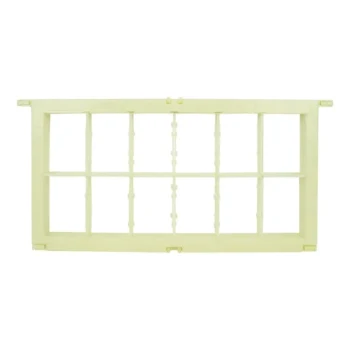
Standard frames serve as a physical reference for quantifying brood area, honey reserves, and pollen stores. By subdividing the frame area into percentages, professionals can precisely compare phenotypic traits across different regions and generations.
Evaluating Wax Secretion Capacity
Introducing standard frames with foundation allows beekeepers to measure the weight of completed combs. This provides a quantitative assessment of the colony’s expansion efficiency and wax secretion, which are core indicators of a pasture’s long-term production value.
Understanding the Trade-offs
Logistical Complexity
Deploying and maintaining multi-frame hives is more resource-intensive than using simple observation boxes. This requires a robust supply chain and efficient fulfillment to ensure equipment arrives at trial sites during narrow flowering windows.
Maintenance and Inspection Requirements
High-population hives require frequent professional oversight to prevent swarming and manage hive health. Without dedicated technical expertise and rapid-response support, the data collected can become skewed by colony-level stressors.
Equipment Standardization
Using non-standard or varying hive designs across different geographical locations makes it impossible to compare data accurately. Professional-grade consistency is required to ensure that monitoring results remain highly comparable across seasons.
Maximizing Your Evaluation Strategy
How to Apply This to Your Project
Ensuring your evaluation sites are equipped with the right tools is the first step toward reliable honey production data. Leveraging professional sourcing and industry expertise can significantly reduce the risks associated with equipment failure or data inconsistency.
- If your primary focus is rapid market entry: Prioritize sourcing standardized hives from a partner with ultra-fast delivery and a full-spectrum product portfolio to meet seasonal flowering deadlines.
- If your primary focus is data accuracy for breeding: Utilize hives with uniform frame counts and insulation properties to isolate genetic performance from environmental equipment variables.
- If your primary focus is long-term apiary optimization: Focus on standardized frames that support centrifugal extraction, allowing you to reuse combs and shorten the production cycle for better ROI.
A rigorous evaluation process, backed by standardized equipment and expert technical insight, is the foundation of a profitable and scalable beekeeping operation.
Summary Table:
| Evaluation Factor | Function | Strategic Impact |
|---|---|---|
| Stable Population | Mimics foraging pressure | Accurate nectar source classification |
| Standardized Frames | Eliminates equipment variables | Objective cross-regional data comparison |
| Controlled Volume | Provides uniform insulation | Isolates environmental & genetic factors |
| Quantifiable Metrics | Measures brood & wax yield | Predicts long-term apiary profitability |
Scale Your Beekeeping Wholesale Business with HONESTBEE
Are you looking to supply your clients with professional-grade equipment that guarantees results? HONESTBEE is the ultimate one-stop sourcing partner for distributors, wholesalers, and B2B resellers. From high-precision hive-making and honey-filling machines to a full spectrum of standardized beekeeping tools and consumables, we ensure your inventory meets the highest industry standards and maximizes profit margins.
Why Partner with HONESTBEE?
- Comprehensive Portfolio: Full access to professional hardware, machinery, and honey-themed merchandise.
- Rapid Fulfillment: Ultra-fast delivery and efficient order fulfillment to meet seasonal flowering windows.
- Expertise & Reliability: Benefit from our deep industry expertise and dedicated customer service for your OEM/ODM needs.
Ready to elevate your supply chain? Contact us today to explore our comprehensive wholesale offerings!
References
- Rıdvan UÇAR, Erdal Çaçan. Evaluation of selected medicinal and aromatic plants for use as bee pasture under the ecological conditions of Bingöl. DOI: 10.20289/zfdergi.1615673
This article is also based on technical information from HonestBee Knowledge Base .
Related Products
- Multi-Function Plier-Style Frame Grip Hive Tool
- Wooden Bee Hive Frames for Beekeeping and Wholesale
- Assembled Wooden Bee Frames with Plastic Foundation for Durability and Convenience by HONESTBEE
- HONESTBEE Wired and Assembled Wooden Bee Frames Foundation for a Thriving Hive
- Plastic Bee Frame Beekeeping Hive Frames for Wholesale
People Also Ask
- What are the benefits of a multi-functional hive tool? Streamline Your Apiary Workflow with One Tool
- What advantages do multi-functional hive tools offer? Maximize Your Apiary Efficiency and Workflow
- What tools are used in beekeeping? A Complete Guide to Essential Beekeeping Equipment
- What is the importance of using the right tools in honey production? Boost Quality, Yield & Profitability
- How do standardized beekeeping tools ensure data validity? Unlocking Scientific Accuracy in Biomonitoring