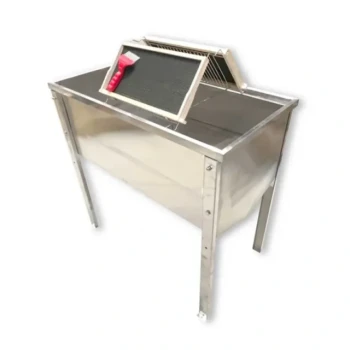
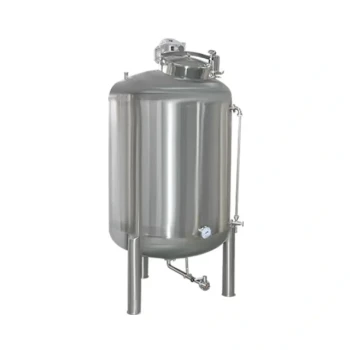
The operating mechanism of industrial extraction tanks centers on controlled mass transfer and selective dissolution. Specifically, these tanks utilize mechanical agitation and precise thermal regulation to suspend propolis in a solvent—typically 70% ethanol—facilitating the release of bioactive compounds like phenolics and flavonoids while excluding insoluble beeswax and impurities.
The Core Takeaway Industrial extraction is not merely mixing; it is a standardized process of selective dissolution. By strictly controlling solvent polarity, mechanical shear force, and temperature, operators maximize the yield of active ingredients while neutralizing the natural variability inherent in raw propolis.
The Role of the Solvent System
The Function of 70% Ethanol
The primary mechanism relies on the polarity of the solvent. High-concentration ethanol (typically 70% to 96%) is selected because it efficiently dissolves lipid-soluble resins and the majority of bioactive polyphenols.
Selective Extraction
Ethanol at a 70% concentration offers an ideal polarity range. It effectively extracts both non-polar and polar compounds simultaneously, ensuring the full spectrum of active ingredients is captured.
Antimicrobial Protection
Beyond dissolution, this specific concentration provides a sterile environment. It prevents microbial contamination from affecting the sample quality during the extraction duration.
Mechanical Dynamics and Mass Transfer
Importance of Surface Area
Before entering the tank, raw propolis is often frozen and pulverized into fine particles. This significantly increases the surface area, which is a prerequisite for the tank's agitation system to work effectively.
Forced Convection via Agitation
Industrial stirring equipment provides continuous kinetic energy to the mixture. This mechanical power ensures that the crushed propolis powder remains in full suspension rather than settling at the bottom.
Accelerating Diffusion
The stirring creates physical shear force and forced convection. This accelerates the diffusion rate of solutes (active ingredients) moving from the solid matrix into the liquid solvent phase.
Operational Control and Standardization
Temperature Regulation
The process typically occurs at controlled temperatures, often avoiding high heat. This prevents the degradation of heat-sensitive active ingredients, preserving the biological activity of the final product.
Managing Raw Material Variability
Propolis chemical composition varies significantly based on geographical origin. Standardized tank operations allow for precise adjustments to solvent ratios and extraction times to counteract these natural fluctuations.
Impurity Separation
Once the active substances are dissolved, the mechanism facilitates the separation of waste. The equipment allows for the filtration of excess beeswax and insoluble impurities, meeting strict soluble matter content standards.
Understanding the Trade-offs
Heat vs. Quality
While adding heat can speed up extraction, it poses a risk to quality. High-speed mixing without applied heat is often preferred to protect sensitive compounds like flavonoids, even if it requires more mechanical energy.
Standardization vs. Yield
Non-standardized methods can lead to drastic fluctuations in toxicity levels (LD50 values) and biological activity. Prioritizing a standardized mechanical process is critical for safety, even if it adds complexity to the operation.
Ethanol Concentration Balance
Adjusting the ethanol-to-water ratio changes which compounds are enriched. A processor must balance the concentration carefully; too high may miss water-soluble compounds, while too low may fail to dissolve the resins.
Making the Right Choice for Your Goal
To optimize your extraction process, align your operational parameters with your specific end-product requirements:
- If your primary focus is Pharmaceutical Consistency: Prioritize precise temperature control and standardized agitation speeds to ensure uniform chemical composition and stable LD50 values.
- If your primary focus is Extraction Efficiency: Maximize the surface area of the raw material via grinding before the tank stage to enhance the effectiveness of the mechanical stirring.
- If your primary focus is Bioactive Preservation: utilize high-speed mixing at room temperature to generate shear force without introducing thermal degradation.
Mastering the interplay between mechanical shear and solvent polarity is the key to transforming variable raw propolis into a reliable industrial product.
Summary Table:
| Extraction Parameter | Primary Mechanism | Key Objective |
|---|---|---|
| Solvent Selection | 70-96% Ethanol Polarity | Selective dissolution of resins & polyphenols |
| Mechanical Agitation | Forced Convection & Shear Force | Accelerating solute diffusion and preventing settling |
| Material Preparation | Surface Area Maximization | Enhancing contact between solvent and solid matrix |
| Thermal Regulation | Controlled Low Heat | Preserving heat-sensitive bioactives (flavonoids) |
| Process Control | Standardized Filtration | Separation of beeswax and insoluble impurities |
Maximize Your Propolis Yield with HONESTBEE Precision Equipment
Transitioning from raw propolis to a standardized industrial extract requires more than just mixing—it requires engineering precision. HONESTBEE specializes in empowering commercial apiaries and global distributors with the high-performance machinery needed to scale production without sacrificing biological activity.
From industrial-grade extraction tanks and honey-filling machines to specialized hive-making hardware, our comprehensive wholesale catalog is designed to support every stage of your beekeeping business. Whether you are upgrading your processing facility or expanding your product portfolio, our team provides the technical expertise and durable tools necessary for success.
Ready to elevate your extraction efficiency? Contact us today to discuss our wholesale equipment solutions and how we can support your growth.
References
- Artem Antoniv, Dina Lisohurska. COMPARISON OF INTERNATIONAL REQUIREMENTS FOR QUALITY AND SAFETY OF BEEKEEPING PRODUCTS. DOI: 10.64378/iriush.journals.2025.1.1
This article is also based on technical information from HonestBee Knowledge Base .
Related Products
- Stainless Steel Uncapping Tank with Stand and Strainer
- Stainless Steel Honey Press Wax Press with Tank
- Heavy Duty Stainless Steel Honey Processing Machine Decrystallizing Tank
- Professional Honey Storage Tank with Agitation System
- Plastic Honey Uncapping Tub Tank for Beekeeping
People Also Ask
- What is an uncapping tank used for in honey harvesting? Maximize Your Honey Yield and Minimize Waste
- What are the functional advantages of using a dedicated uncapping tank during honey processing? Maximize Your Honey Yield
- What size uncapping tank do I need? Find the Perfect Fit for Your Apiary
- What are the features of the processing tanks offered? Engineered for Purity and Efficiency
- What types of stainless steel processing tanks are used for honey? Essential Equipment for Quality Honey Production