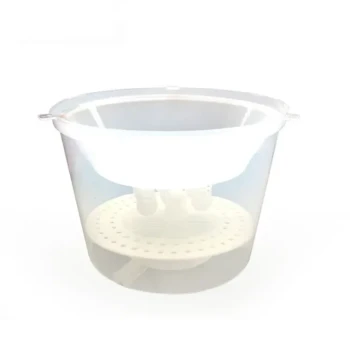
The operating principle of a pollen trap relies on a precise mechanical barrier. Installed at the entrance of a beehive, the device forces returning foraging bees to pass through a specialized grid or perforated plate. As the bees squeeze through these specific aperture sizes, the physical constriction strips the pollen pellets from their hind legs, causing the pollen to fall into a collection box below.
The pollen trap automates the harvesting of nutritional byproducts by utilizing a physical interception method, allowing beekeepers to gather high-value pollen and monitor foraging intensity without significantly disrupting the colony's growth.
The Mechanics of Interception
The Physical Barrier Principle
The core mechanism is a grid or perforated plate placed directly in the flight path of entering bees.
This barrier does not stop the bee but restricts the width of the passage.
Precision Aperture Sizing
To function correctly, the holes in the grid are engineered to specific dimensions, typically measuring 4.0 to 4.5 mm in diameter.
This size is large enough to allow the worker bee to pass through but too narrow to accommodate the pollen loads attached to their hind legs.
Gravity-Fed Collection
As the bee forces its way through the mesh, the pollen pellets are mechanically scraped off.
Gravity then takes over, ensuring the dislodged pellets fall into a separate collection tray or box located beneath the grid, inaccessible to the bees.
Strategic Utility
Commercial Production
This automated stripping process enables the efficient harvesting of fresh, raw pollen.
It turns a standard biological process into a viable method for collecting high-value nutritional byproducts for human consumption or animal feed.
Environmental Monitoring
Beyond production, the trap acts as a diagnostic tool for plant origin analysis.
By collecting samples from returning foragers, researchers can evaluate the richness of surrounding floral sources and determine the colony's foraging intensity.
Understanding the Trade-offs
Balancing Harvest with Colony Health
While the primary reference notes that traps are designed to avoid significantly disrupting the colony, the device effectively removes a portion of the hive's protein source.
Continuous use without breaks can potentially stress the colony if local pollen sources are scarce.
Physical Stress Factors
The process of squeezing through a grid adds a physical barrier to the bees' daily workflow.
While generally safe, ensuring the aperture size is correct is critical to prevent injury to the bees while maintaining collection efficiency.
Making the Right Choice for Your Goal
When deploying pollen traps, your operational strategy should dictate how you manage the equipment:
- If your primary focus is Commercial Production: Rotate the traps on and off periodically to ensure the colony retains enough protein for its own brood rearing and development.
- If your primary focus is Research or Monitoring: Use the trap for short, scheduled intervals to capture a snapshot of the current floral diversity and foraging intensity in the area.
Mastering the pollen trap is about balancing the efficiency of mechanical collection with the biological needs of your hive.
Summary Table:
| Feature | Specification/Mechanism | Benefit for Beekeepers |
|---|---|---|
| Core Mechanism | Mechanical grid/perforated plate | Automates pollen stripping without manual labor |
| Aperture Size | 4.0mm - 4.5mm diameter | Ensures bee safety while maximizing collection yield |
| Collection Method | Gravity-fed tray system | Keeps pollen clean and separate from the hive interior |
| Primary Use | Commercial production & Research | High-value byproduct harvesting and floral monitoring |
| Colony Management | Rotational deployment | Maintains hive health by balancing protein retention |
Scale Your Byproduct Production with HONESTBEE
Maximize your apiary's profitability by integrating professional-grade pollen collection technology. HONESTBEE specializes in supporting commercial apiaries and global distributors with a comprehensive wholesale portfolio. Whether you need precision-engineered pollen traps, industrial honey-filling machines, or durable hive-making equipment, we provide the tools necessary for high-efficiency beekeeping.
Ready to enhance your equipment lineup or stock your distribution business with premium beekeeping consumables? Contact us today to discuss your wholesale needs and discover how our specialized hardware can streamline your operations.
References
- Delfy Lensari, Jun Harbi. Honeybee Cultivation Training Apis Mellifera with Forest Farmers Group (KTH) Wana Lestari, Rejo Sari Village, Megang Sakti District, Musi Rawas Regency. DOI: 10.32502/altifani.v5i1.268
This article is also based on technical information from HonestBee Knowledge Base .
Related Products
- Removable Plastic Pollen Trap With Ventilated Tray for Bees Pollen Collector
- 30 cm Plastic Entrance Hole Bee Pollen Trap and Collector
- Plastic Bee Pollen Trap Strips Comb Catcher Collector
- High-Efficiency Diamond Maze Bee Escape for Clearing Supers
- Professional Bucket Style Wasp and Moth Pheromone Trap
People Also Ask
- What are the design principles and advantages of pollen traps in the collection of bee pollen? Boost Your Apiary Yield
- What is the function of professional pollen traps in evaluating honey plants? Quantifying Pollination and Crop Potential
- What functions do pollen traps serve for bee bread production? Optimize Your Raw Material Collection
- What maintenance and pest prevention measures should be taken for pollen traps? Protect Your Hive and Harvest Quality
- How does the use of pollen traps in honeybee hives enhance crop fertilization? Boost Your Yield Through Induced Activity