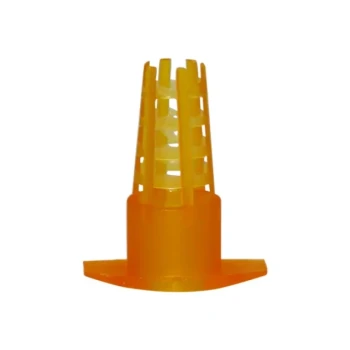
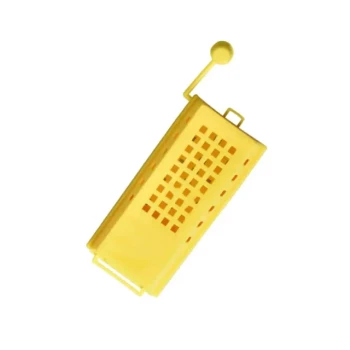
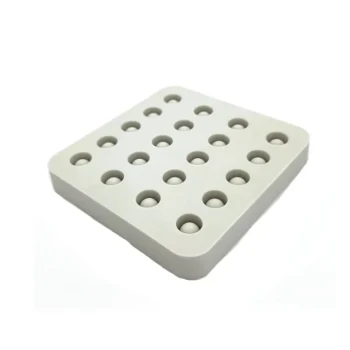
Plastic queen cell containers operate through biophysical mimicry. They are engineered to replicate the precise physical environment and structural characteristics of a natural queen bee’s emergence site. By housing capped queen larvae in a vessel that triggers the colony’s natural instincts, these containers deceive worker bees into recognizing the introduced larvae as their own, significantly lowering rejection rates for external interventions.
The core function of these containers is to bridge the gap between artificial intervention and natural biology. By satisfying the colony's instinctual recognition patterns, they convert a manual grafting process into a biologically accepted event, enabling the systematic control of genetic lineage.
The Biological Mechanism
Simulating Natural Cues
The primary mechanism of the plastic container is the simulation of "biophysical characteristics."
The container is not merely a holder; it provides a structural context that mimics a natural queen cell. When a capped larva is placed inside, the physical cues signal to the worker bees that this is a valid, developing queen that belongs to the colony.
Leveraging Instinct to Lower Rejection
Bees are naturally defensive against foreign objects or external interventions.
Plastic queen cells bypass this defense by utilizing the bees' own instincts. Because the container effectively mimics the natural growth environment, it induces the workers to accept the larva, treating the artificial manipulation as a natural internal process.
Operational Efficiency and Standardization
Geometric Consistency for Mass Production
Unlike handmade wax cups, plastic containers offer rigorous standardization.
They typically feature uniform geometric dimensions, often around 8-9mm in diameter. This uniformity is critical for large-scale batch operations, ensuring that every developing queen has an identical spatial environment.
Durability and Handling
A significant mechanical advantage of plastic over wax is physical resilience.
High-quality plastic cups do not deform during handling, transportation, or installation onto rearing frames. This rigidity protects the delicate larvae from physical damage during the transfer process.
Reusability and Hygiene
Plastic containers are designed for repeated cycles of use.
They are easy to clean and disinfect, which is essential for maintaining a disease-free environment. This reusability simplifies the workflow, allowing beekeepers to maintain a consistent stock of rearing equipment without constant fabrication.
Understanding the Trade-offs
The Necessity of Precision Tools
While plastic cups standardize the environment, they do not automate the skill required for transfer.
Successful use relies heavily on the pairing of these cups with precision grafting needles. The "mechanism" fails if the larva is physically damaged during the move; the cup cannot compensate for poor grafting technique.
Material vs. Nature
Plastic is durable, but it is not organic.
While wax cups are single-use and fragile, they are chemically closer to the hive's natural construction. To ensure the "biophysical simulation" of plastic works, the cups must be kept scrupulously clean and potentially primed to ensure they do not carry foreign scents that could override the visual and structural mimicry.
Making the Right Choice for Your Goal
To effectively utilize plastic queen cell containers, align their specific advantages with your apiary's objectives:
- If your primary focus is genetic consistency: Utilize the standardized geometry of plastic cups to eliminate environmental variables, ensuring every queen develops under identical physical conditions.
- If your primary focus is operational scale: Leverage the durability and reusability of plastic to facilitate high-volume batch processing without the risk of cup deformation or constant replacement.
By integrating these tools, you transform queen rearing from a variable art into a controlled, replicable science.
Summary Table:
| Feature | Mechanical/Biological Advantage | Impact on Queen Rearing |
|---|---|---|
| Biophysical Mimicry | Replicates natural cell structure and cues | Lowers worker bee rejection rates |
| Geometric Consistency | Uniform 8-9mm diameter dimensions | Ensures standardized development in mass production |
| Structural Rigidity | Durable high-quality plastic material | Prevents larvae damage during handling and transport |
| Hygienic Design | Easy to clean and disinfect for reuse | Minimizes disease transmission across rearing cycles |
| Operational Scaling | Compatible with rearing frames and grafting tools | Facilitates high-volume, repeatable batch processing |
Maximize Your Apiary’s Genetic Potential with HONESTBEE
Transition from variable art to replicable science with the industry's most reliable queen rearing tools. HONESTBEE specializes in supporting commercial apiaries and distributors with a comprehensive wholesale portfolio. From high-precision plastic queen cell containers and grafting needles to advanced honey-filling machinery and hive-making equipment, we provide the full spectrum of hardware and consumables your business needs to scale.
Whether you are expanding your commercial queen production or stocking your distribution network, our expertise ensures you get professional-grade tools that deliver results.
Ready to elevate your beekeeping operations? Contact us today to explore our wholesale solutions
References
- Juliusz Galiński. Beekeepers' beecomings and the agency of a bee. DOI: 10.23858/ep66.2022.3061
This article is also based on technical information from HonestBee Knowledge Base .
Related Products
- JZBZ Type Wide Base Plastic Queen Cell Cups for Base Mounting and Queen Rearing
- Durable Plastic Push In Queen Bee Cage
- Clear Black Plain Polystyrene Queen Bee Grafting Cell Cups No Lug for Bee Queen Cup
- Professional Multi-Compartment Queen Cage with Sliding Lid
- Professional Plastic Queen Excluder for Modern Beekeeping
People Also Ask
- What are the primary advantages of using plastic queen cell cups? The Industrial Choice for High-Efficiency Apiaries
- What technical advantages do commercial plastic queen cell cups offer? Scale Your Queen Rearing for Maximum Efficiency
- What is the function of standardized plastic Queen Cell Cups? Boost Efficiency in Commercial Larval Grafting
- Why are standardized plastic queen cell cups preferred? Boost Commercial Queen Rearing Efficiency
- Why are standardized plastic queen cell cups typically used in large-scale queen bee production? Boosting Apiary Output