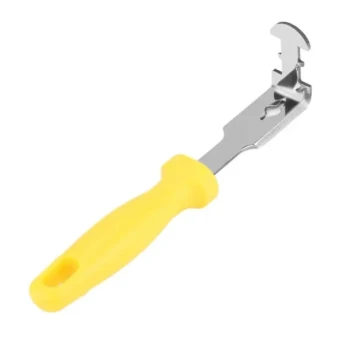
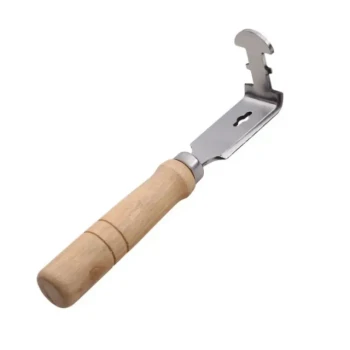
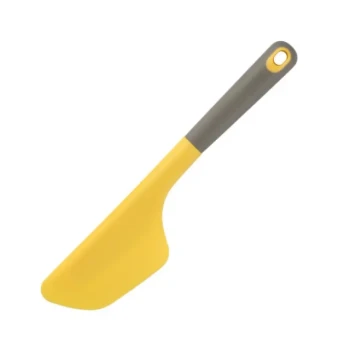
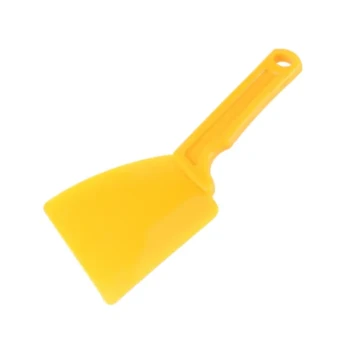
Manual scrapers serve as the foundational implement for the physical extraction of propolis in apiculture. Their primary function is to mechanically pry and remove resinous deposits from hive covers, frames, and inner walls. However, this method is fundamentally limited by its lack of precision, which invariably introduces contaminants like wood chips and soil, resulting in a crude product with low purity.
While manual scraping is the most direct method for harvesting propolis, it sacrifices quality for simplicity. By scraping directly against hive components, you inevitably collect unwanted debris alongside the resin, rendering the harvest unsuitable for high-grade applications without significant refinement.
The Mechanics of Manual Extraction
Physical Removal
The scraper is a blunt instrument designed for force. It is used to dislodge propolis that bees have used to seal cracks or coat surfaces within the hive.
Targeted Areas
Operators typically focus on specific high-deposit areas. These include the inner walls of the hive box, the tops of frames, and the undersides of covers.
Operational Simplicity
The primary advantage of this method is the low barrier to entry. It requires no specialized installation of traps or mats inside the hive prior to collection.
Critical Limitations and Impurities
The Contamination Issue
The most significant drawback of using a manual scraper is the introduction of foreign matter. Because the propolis is often stuck firmly to wooden components, the scraping action often gouges the underlying material.
Common Contaminants
The resulting harvest is rarely pure resin. It typically contains a mixture of wood chips, soil particles, and beeswax debris dislodged during the scraping process.
Resulting Product Grade
Due to these impurities, scraped propolis is classified as "crude." It is generally considered lower quality compared to propolis harvested from specialized traps or mats.
Understanding the Trade-offs
Simplicity vs. Purity
You must weigh the ease of the operation against the cost of processing. While scraping is immediate, the time saved in the field is often lost later during the filtration and purification stages needed to remove the debris.
Mechanical Stress
Scraping requires physical force applied to the hive components. Over time, this can lead to wear and tear on frames and boxes, unlike passive collection methods that use removable mats.
Making the Right Choice for Your Harvest
If you are deciding on a harvesting protocol, consider the end-use of your product to determine if scraping is appropriate.
- If your primary focus is bulk, crude collection: The manual scraper is an effective, low-cost tool for gathering raw material that will undergo heavy industrial processing.
- If your primary focus is high-purity medicinal grade: You should avoid manual scrapers in favor of specialized mats or traps that prevent contact with wood and debris.
Ultimately, while the manual scraper is a reliable tool for basic maintenance, it is too imprecise for producing the clean, high-value propolis required by the modern market.
Summary Table:
| Feature | Manual Scraping Details |
|---|---|
| Primary Function | Mechanical removal of resin from hive covers, frames, and walls |
| Key Advantage | Operational simplicity with low barrier to entry; no pre-installation |
| Main Limitation | High contamination risk (wood chips, soil, beeswax) |
| Resulting Grade | Crude / Low-purity; requires significant refinement |
| Impact on Hive | Potential mechanical stress and wear on wooden components |
Elevate Your Propolis Production with HONESTBEE
Are you a commercial apiary or distributor looking to move beyond crude collection to high-purity harvesting? HONESTBEE provides the professional-grade tools and machinery you need to optimize your yield and product quality.
From specialized propolis collection mats that eliminate contamination to high-capacity honey-filling and hive-making machines, we supply the full spectrum of equipment designed for industrial success. Don't let manual limitations hold back your business growth.
Contact HONESTBEE today for wholesale solutions and expert guidance!
References
- Daniel S. Pereira, Daniel Casimiro da Silveira. Históricos e principais usos da própolis apícola. DOI: 10.30969/acsa.v11i2.652
This article is also based on technical information from HonestBee Knowledge Base .
Related Products
- 8 Frame and 10 Frame Propolis Trap Collector Screen for Propolis Collection
- Heavy Duty Stainless Steel Frame Cleaner with Plastic Handle
- Professional Stainless Steel Frame Cleaner with Ergonomic Wood Handle
- Professional Dual Action Queen Excluder Scraper for Beekeeping
- Professional Wide Blade Honey Scraper for Beekeeping and Honey Processing
People Also Ask
- Why is a specific wooden frame required when installing a propolis screen? Optimize Your Propolis Harvest Efficiency
- What are the advantages of using propolis collector screens? Elevate Your Harvest to Pharmaceutical Purity
- How does the mesh size of a propolis collection screen influence the efficiency of propolis harvesting? Optimize Yields!
- How do commercial-grade plastic screens compare to custom fine-mesh screens? Maximize Your Propolis Yield & ROI
- What are the technical advantages of using specialized propolis collection screens? Maximize Purity and Efficiency