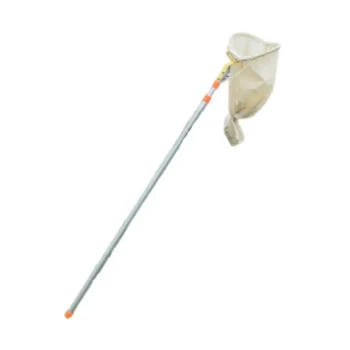
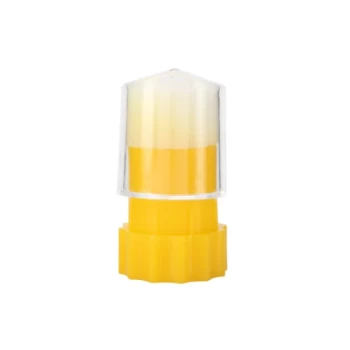
A Hinged Pollen Catcher functions as a non-destructive sampling interface installed directly at the entrance of a beehive. Its primary mechanical role is to gently dislodge and collect pollen pellets from the legs of returning foraging bees without causing injury to the insects.
By harvesting these materials, the device captures a physical record of the environment the bees have visited. In biomonitoring processes, this allows researchers to acquire geographically representative samples that are essential for analyzing local pollution levels.
The Hinged Pollen Catcher effectively transforms a beehive into a passive environmental monitoring station. By securing pollen samples without harming the colony, it enables the precise quantification of heavy metals and pollutants present in local plant and air systems.
The Role in Environmental Biomonitoring
Ensuring Geographically Representative Sampling
The core value of the Hinged Pollen Catcher lies in its ability to capture data that is specific to a location. Because bees forage within a defined radius of their hive, the pollen they collect acts as a localized "snapshot" of the environment.
The catcher ensures that the samples analyzed in the lab directly reflect the conditions of the immediate area. This makes it an indispensable tool for mapping environmental health and identifying pollution hotspots with high spatial resolution.
Facilitating Heavy Metal Analysis
Once collected by the device, the pollen pellets serve as the primary medium for chemical analysis. The central objective in this context is often the detection of heavy metals.
Plants absorb contaminants from the air and soil, which are then transferred to their pollen. By intercepting this pollen before it enters the hive's food stores, the Hinged Pollen Catcher provides researchers with the raw material needed to measure the concentration of these toxic elements.
Preserving Colony Welfare
A critical design feature of this specific tool is its non-destructive nature. The primary reference emphasizes that the device collects samples without causing harm to the bees.
This is vital for long-term biomonitoring. To maintain a consistent data stream, the "workforce" (the bee colony) must remain healthy and active. A device that injured bees would degrade the colony's population, eventually compromising the reliability of the monitoring data.
Understanding the Trade-offs
Sample Integrity vs. Environmental Exposure
While the Hinged Pollen Catcher is effective at acquisition, the quality of the data depends on how the sample is handled after collection.
Pollen is a biological material that can degrade. While the catcher secures the sample, external factors like moisture or extreme sunlight can compromise the chemical composition of the pellets.
In broader biomonitoring contexts, equipment is often paired with protective measures (such as shielding found in bottom-mounted traps) to ensure the biological components remain intact for laboratory analysis. The user must ensure the catchers are checked frequently to prevent environmental degradation of the evidence.
Leveraging Biomonitoring Data
How to Apply This to Your Project
The use of a Hinged Pollen Catcher is rarely about the pollen itself; it is about the data the pollen holds. Here is how to align the tool with your specific objectives:
- If your primary focus is Environmental Analysis: Prioritize the regular collection of samples to monitor heavy metal fluctuations in the local plant and air systems.
- If your primary focus is Market Certification: Use the data derived from these samples to demonstrate that your honey production protects biodiversity and meets ethical standards for high-end consumers.
The Hinged Pollen Catcher bridges the gap between field activity and laboratory precision, providing the hard data necessary to validate environmental quality.
Summary Table:
| Feature | Function & Benefit in Biomonitoring |
|---|---|
| Mechanism | Gently dislodges pollen pellets from bee legs at the hive entrance. |
| Data Accuracy | Captures geographically representative samples within the foraging radius. |
| Pollution Detection | Provides raw material for heavy metal and contaminant analysis. |
| Colony Welfare | Non-destructive design ensures bee health and long-term data consistency. |
| Primary Goal | Transforms honeybee colonies into passive environmental monitoring stations. |
Elevate Your Apiary Operations with HONESTBEE
At HONESTBEE, we empower commercial apiaries and distributors with the professional-grade tools needed to lead in the modern beekeeping industry. Whether you are conducting sophisticated environmental biomonitoring or scaling up production, our comprehensive wholesale offering has you covered.
Our value to your business includes:
- Specialized Machinery: From industrial hive-making to precision honey-filling machines.
- Full-Spectrum Equipment: A complete range of beekeeping tools and essential consumables.
- Market Differentiation: Honey-themed cultural merchandise to enhance your brand appeal.
Ready to upgrade your equipment or stock your distribution network? Contact us today to discuss your wholesale needs and let HONESTBEE provide the hardware for your success.
References
- A. T. Atarshchykova, Volodymyr Pоstоienkо. Monitoring of the content and migration of heavy metals in the soils–melliferous plants–bees–beekeeping products system in biocenoses of the combat areas. DOI: 10.15407/agrisp10.03.074
This article is also based on technical information from HonestBee Knowledge Base .
Related Products
- Plastic Bee Pollen Trap Strips Comb Catcher Collector
- Gourd Shaped Hanging Wasp Trap Professional Wasp Catcher
- 30 cm Plastic Entrance Hole Bee Pollen Trap and Collector
- Heavy-Duty Ergonomic Grip Galvanized Pollen Shovel
- Removable Plastic Pollen Trap With Ventilated Tray for Bees Pollen Collector
People Also Ask
- For what reasons do beekeepers collect bee pollen? Boost Hive Health and Unlock New Revenue Streams
- What are the design principles and advantages of pollen traps in the collection of bee pollen? Boost Your Apiary Yield
- What are the ideal weather conditions for installing a bee pollen trap? Ensure Colony Safety with Expert Timing
- Why is frequent harvesting of bee pollen from traps necessary for quality control? Ensure Freshness and Prevent Mold.
- What is the primary function of bee pollen traps? Optimize Your Pollen Harvest with Advanced Extraction Efficiency