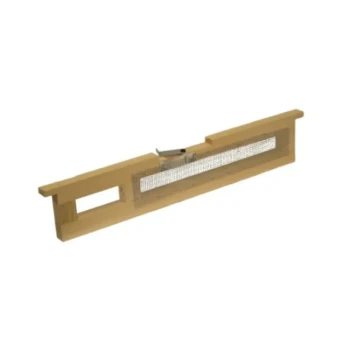
A standard wooden beehive acts as the fundamental physical carrier for urban beekeeping infrastructure. Its primary function is to provide a protected, enclosed space that allows bee populations and queen bees to breed, establish a stable colony, and facilitate the systematic collection of honey and pollen.
In dense urban environments, the beehive is more than a container; it is an efficiency tool designed to support artificial breeding and resource harvesting within the constraints of rooftops and narrow city spaces.
The Role of Physical Infrastructure
Establishing the Colony Foundation
At its core, the hive serves as a vessel for colony establishment. It provides the designated volume required for the queen to breed and for the population to expand safely.
Enabling Urban Deployment
Standard wooden hives are specifically designed for efficient deployment in space-restricted areas. Their structure allows beekeepers to utilize unconventional agricultural spaces, such as narrow alleyways or high-rise rooftops, without compromising colony health.
Operational Efficiency and Standardization
Facilitating Resource Collection
The design of a standard hive prioritizes the harvesting of byproducts. The internal structure supports the accumulation of honey and pollen, allowing for extraction that balances yield with the colony's nutritional needs.
Supporting Artificial Breeding
Beyond natural growth, these hives are engineered to support artificial breeding programs. This capability is essential in urban settings where natural nesting sites are scarce or nonexistent.
Ensuring Scientific Consistency
Standardized hives act as a control variable in urban ecology. By using hives with consistent physical dimensions and thermal properties, researchers can eliminate hardware differences as a variable, making data regarding colony density and urban carrying capacity scientifically comparable.
Understanding the Trade-offs
Managing Urban Micro-climates
While wooden hives provide a baseline habitat, they interact with the urban heat island effect. Wood offers natural insulation, but extreme temperature fluctuations on exposed rooftops may require additional ventilation or insulation strategies to maintain colony survival.
Maintenance and Durability
As an organic material, a wooden hive is subject to environmental degradation. In an urban infrastructure context, this requires a consistent maintenance schedule to prevent rot or structural failure, which differs from more synthetic, weather-resistant alternatives.
Making the Right Choice for Your Goal
To maximize the effectiveness of your urban apiary, align your hive management with your specific operational objectives.
- If your primary focus is Production: Prioritize hive placement in areas that allow for easy access for frequent honey and pollen harvesting without disrupting the surrounding urban traffic.
- If your primary focus is Research: Ensure all wooden hives are manufactured to identical industrial standards to guarantee that any variations in colony health are due to environmental factors, not hardware discrepancies.
- If your primary focus is Sustainability: Focus on the hive’s role as a breeding center to maintain stable population numbers against the pressures of the urban environment.
The standard wooden beehive remains the industry benchmark because it successfully bridges the gap between biological necessity and logistical urban reality.
Summary Table:
| Key Function | Primary Benefit in Urban Settings |
|---|---|
| Colony Foundation | Provides a secure, enclosed space for queen breeding and population growth. |
| Space Efficiency | Compact, stackable design ideal for rooftops, balconies, and narrow city spaces. |
| Resource Harvesting | Engineered for systematic collection of honey and pollen with minimal colony stress. |
| Scientific Consistency | Standardized dimensions allow for comparable data on urban colony health and density. |
| Thermal Regulation | Natural wood insulation helps mitigate the urban heat island effect for bees. |
Scale Your Apiary with HONESTBEE Professional Solutions
Whether you are managing a commercial honey production or distributing beekeeping supplies, HONESTBEE provides the industrial-grade infrastructure you need to succeed. From standard wooden hives and specialized hive-making machinery to honey-filling equipment and industry consumables, we deliver comprehensive wholesale solutions tailored to the needs of professional apiarists.
Why partner with HONESTBEE?
- Comprehensive Inventory: Access the full spectrum of beekeeping tools and hardware.
- Scalable Wholesale: High-quality equipment designed for commercial durability.
- Value-Added Merchandise: Expand your brand with our honey-themed cultural products.
Ready to enhance your urban beekeeping efficiency? Contact us today for wholesale pricing and expert support!
References
- Stephen Curley. Buzz: Urban Beekeeping and the Power of the BeeLisa JeanMoore and MaryKosut. New York: New York University Press, 2013.. DOI: 10.1111/jacc.12458
This article is also based on technical information from HonestBee Knowledge Base .
Related Products
- Wholesales Dadant Size Wooden Bee Hives for Beekeeping
- Wooden Bee Hive Frames for Beekeeping and Wholesale
- Assembled Wooden Bee Frames with Plastic Foundation for Durability and Convenience by HONESTBEE
- HONESTBEE Wired and Assembled Wooden Bee Frames Foundation for a Thriving Hive
- Professional Wooden Requeening Frame for Beekeeping
People Also Ask
- What are the strategic benefits of installing beekeeping hives at an elevation of 1 to 6 meters? Protect Your Assets
- What are the key advantages of modern improved beekeeping hives? Scale Your Honey Yield and Production Efficiency
- What is the proper way to store unused bee hives? Expert Stacking Tips for Equipment Longevity
- What are the 2 types of bee hives? Langstroth vs. Top-Bar for Your Apiary
- How does the design of improved beekeeping hives contribute to maintaining honey quality and purity? Enhancing Purity