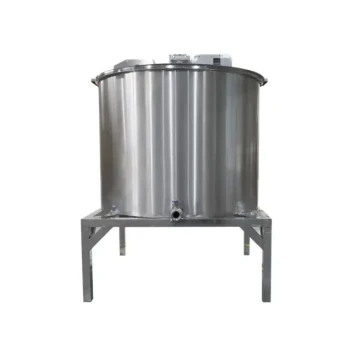
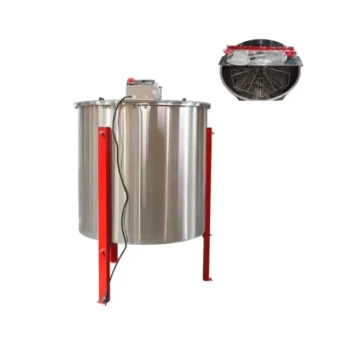
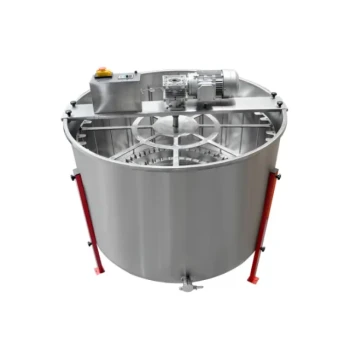
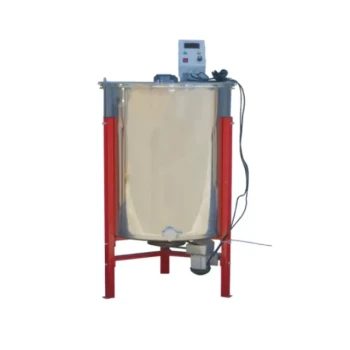
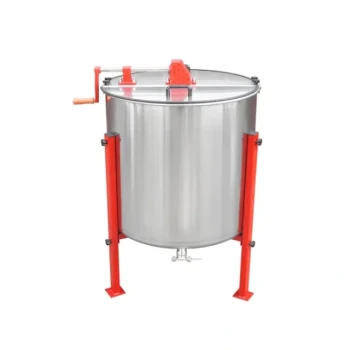
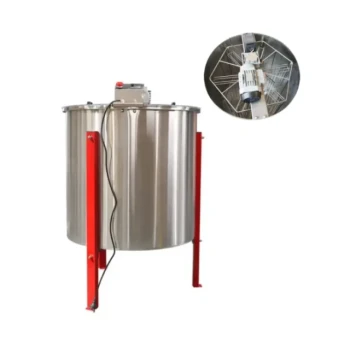
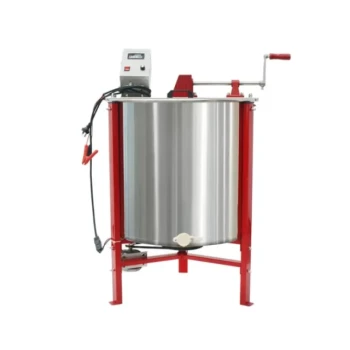
The primary function of an Industrial Honey Extractor is to mechanically separate mature honey from honeycombs using centrifugal force while preserving the physical structure of the comb. By spinning the frames at high speeds, the machine forces liquid honey out of the wax cells without crushing or damaging the comb, allowing the intact frames to be immediately returned to the hive for reuse.
The extractor's true value lies in biological conservation rather than simple harvesting. By protecting the honeycomb structure, the device eliminates the need for bees to rebuild wax, shifting the colony's energy focus from construction to pure honey production.
The Mechanics of Preservation
Utilizing Centrifugal Force
The core mechanism of the extractor is the generation of high-speed rotational force. Frames containing uncapped honey are placed within a spinning drum or basket.
As the device rotates, centrifugal force pulls the honey out of the wax cells and throws it against the inner wall of the extractor. This physical separation allows for a rapid harvest without the application of heat or destructive pressure.
Maintaining Structural Integrity
Traditional harvesting methods often involve crushing the comb to squeeze out the honey, which destroys the hive's infrastructure. The industrial extractor is specifically engineered to be non-destructive.
Because the wax foundation remains intact during the spin cycle, the comb retains its original shape and strength. This preservation is the critical factor that distinguishes modern industrial extraction from primitive harvesting techniques.
The Biological Impact on Production
Reducing Bee Energy Expenditure
Beeswax secretion is metabolically expensive for a honeybee colony. Bees consume significant amounts of honey and energy to secrete the wax scales needed to build new comb.
When an extractor is used, the emptied combs are returned to the hive. Because the bees do not need to secrete new wax to rebuild the infrastructure, they save vast amounts of energy that can be redirected toward other hive activities.
Increasing Production Efficiency
The most direct result of reusing combs is a shortened honey collection cycle. Since the storage vessels (the combs) are already built, the colony can immediately begin filling them with fresh nectar.
This efficiency is vital during short or intense flowering seasons. It maximizes the yield per colony by removing the "construction phase" bottleneck from the production timeline.
Understanding the Trade-offs
The Necessity of Pre-Processing
While the extractor is efficient, it cannot remove honey from capped cells on its own. The honeycombs must be "uncapped" (having the wax seal removed) before entering the machine.
If this step is skipped or performed poorly, the centrifugal force will not be sufficient to pull the honey through the wax capping, leading to retained honey and lower yields.
Purity vs. Filtration
The references note that centrifugal extraction improves honey clarity compared to crushing methods, which mix large amounts of wax into the honey. However, it does not eliminate impurities entirely.
While the extractor separates the bulk of the honey from the frame, subsequent settling or fine filtration is often still required to remove small wax particles to achieve the highest level of product clarity.
Making the Right Choice for Your Goal
To maximize the utility of an Industrial Honey Extractor, align your workflow with your production targets:
- If your primary focus is Volume: Prioritize the rapid return of wet, empty combs to the hive to catch the peak of the nectar flow.
- If your primary focus is Colony Health: Use the extractor to minimize the metabolic stress on bees, reducing the calories they must burn to produce wax.
The Industrial Honey Extractor is the bridge between mechanical efficiency and biological conservation, allowing the apiary to operate at a speed that nature alone cannot sustain.
Summary Table:
| Feature | Function & Impact |
|---|---|
| Primary Mechanism | Uses centrifugal force to separate honey from wax cells without crushing the comb. |
| Structural Benefit | Preserves the honeycombs, allowing for immediate reuse by the bee colony. |
| Biological Value | Saves bee energy by eliminating the need for wax secretion and hive rebuilding. |
| Efficiency Gain | Shortens the honey collection cycle and maximizes yield during peak nectar flows. |
| Post-Extraction | Produces higher clarity honey with less wax debris compared to traditional methods. |
Scaling Your Honey Production? Partner with HONESTBEE Today!
As a dedicated provider for commercial apiaries and distributors, HONESTBEE understands that efficiency is the backbone of a successful beekeeping business. We offer a comprehensive wholesale range, including high-capacity honey-filling machines, precision hive-making machinery, and industrial-grade beekeeping tools designed to optimize your workflow.
By choosing HONESTBEE, you gain access to:
- Professional-Grade Machinery: Robust extractors and automated equipment built for heavy-duty use.
- Full Spectrum Supply: From essential consumables to honey-themed cultural merchandise.
- Industry Expertise: Solutions tailored to reduce labor costs and increase your colony's output.
Ready to upgrade your extraction facility or stock your distribution line? Contact our team today to receive a custom quote and discover how our wholesale offerings can transform your business.
References
- Wongelu Endale Gobena. Improved Beekeeping Technologies as Intervention for Unemployed Youth Group. DOI: 10.7176/jbah/12-6-02
This article is also based on technical information from HonestBee Knowledge Base .
Related Products
- HONESTBEE 72 Frame Industrial Electric Honey Extractor for Beekeeping
- Commercial Electric 12 Frame Honey Extractor Spinner Motorized Honey Extractor
- 32 Frame Commercial Electric Honey Extractor for Beekeeping and Honey Production
- 8-Frame Electric Self-Reversing Honey Extractor Spinner for Commercial Honey Extraction Equipment
- electric honey extractor honey centrifuge 3 frame honey extractor stainless steel honey frame extractor
People Also Ask
- What is the importance of balancing honeycomb frames within a honey extractor? Ensure Stability and Protect Machinery
- How is honey separated from the frames after they are uncapped? Efficient Extraction Methods for High Yields
- What are the main benefits of using a honey extractor? Maximize Yields and Protect Your Honeycomb
- What are the recommended methods for removing honey from the honeycomb? Top Extraction Techniques for Maximum Efficiency
- How do manual honey extractors compare to electric honey extractors? Choosing the Right Tool for Your Apiary Growth