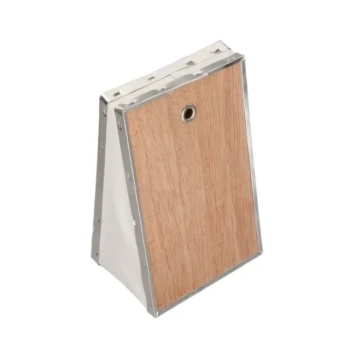
The primary function of an industrial smoker is to chemically disrupt the defensive communication network of a honeybee colony. By delivering controlled puffs of smoke, the device interferes with the transmission of alarm pheromones between worker bees, neutralizing their natural impulse to attack.
The smoker acts as a sensory blockade, masking the chemical signals that coordinate colony defense. This creates a temporary window of docility that is essential for both the safety of the operator during routine management and the manipulation of guard behavior during social parasitism research.
The Biological Mechanism of Action
Disrupting Chemical Signaling
Honeybees rely heavily on olfactory signals to communicate threats. When a hive is disturbed, guard bees release alarm pheromones to rally the colony for defense.
The smoke produced by an industrial smoker effectively masks these pheromones. Because the chemical "alarm" cannot be transmitted from bee to bee, the collective defensive response is inhibited.
Triggering Survival Instincts
Beyond masking pheromones, the presence of smoke often triggers a secondary survival instinct.
As noted in standard beekeeping practices, smoke can induce bees to gorge on honey in preparation for potential flight or abandonment of the hive. This physiological distraction further reduces their focus on stinging or defending the immediate area.
Application in Colony Management
Ensuring Operator Safety
For the beekeeper or technician, the smoker is a critical safety tool. By applying cool smoke, the operator can perform complex tasks—such as hive inspections, artificial swarming, or honey harvesting—with a significantly lower risk of aggression.
Minimizing Colony Stress
While it may seem counterintuitive, proper smoking actually reduces the overall stress response of the colony during handling.
By preventing the rapid escalation of alarm pheromones, the colony avoids a state of mass panic. This allows for a calmer transition during operations like transferring bees between traditional and improved hives.
The Role in Social Parasitism Research
Weakening Entrance Defenses
In the specific context of social parasitism research, the smoker serves a distinct strategic purpose: it suppresses the vigilance of guard bees at the hive entrance.
Under normal conditions, guards strictly police the entry, rejecting non-nestmates. The application of smoke temporarily degrades this guarding behavior, creating a vulnerability in the colony's perimeter.
Facilitating Parasitic Infiltration
Researchers utilize this temporary breach to study how social parasites invade host colonies.
By reducing the vigilance of the guards, parasitic worker bees can bypass the entrance defenses more easily. This allows scientists to observe the entry mechanisms and subsequent integration of parasites into the host hive without the immediate rejection that would occur in a fully alert colony.
Operational Limitations and Trade-offs
The Necessity of "Cool" Smoke
It is critical to note that the smoke must be "cool" to be effective and safe.
Hot smoke can singe the bees or cause excessive thermal stress, potentially triggering an erratic defensive response rather than calmness. The goal is sensory masking, not physical irritation.
The Temporary Nature of the Effect
The smoker does not permanently alter bee behavior; its effects are transient.
Once the smoke dissipates, the colony's ability to detect pheromones returns rapidly. Therefore, both management tasks and research manipulations must be timed precisely to occur within this window of reduced vigilance.
Making the Right Choice for Your Goal
Whether you are maintaining a commercial apiary or conducting behavioral research, the smoker is a tool of control.
- If your primary focus is Colony Management: Use the smoker to mask alarm pheromones, ensuring the safety of the technician and preventing the colony from entering a state of high-stress panic during inspections.
- If your primary focus is Social Parasitism Research: Utilize the smoker to systematically weaken entrance guarding behavior, creating a controlled opportunity for parasitic workers to breach the host hive's defenses.
Mastering the smoker is less about the volume of smoke produced and more about understanding the chemical communication you are interrupting.
Summary Table:
| Feature | Function in Management | Application in Research |
|---|---|---|
| Pheromone Masking | Neutralizes alarm signals to stop mass attacks | Weakens guard bee vigilance at hive entrances |
| Survival Instinct | Distracts bees by inducing honey gorging | Facilitates easier infiltration for non-nestmates |
| Operational Goal | Ensures operator safety and minimizes colony stress | Enables the study of parasitic entry mechanisms |
| Critical Factor | Requires "cool" smoke to prevent physical harm | Requires precise timing for transient effect windows |
Upgrade Your Apiary Efficiency with HONESTBEE
Maximize the safety and productivity of your commercial operations with high-performance equipment from HONESTBEE. As a premier provider for commercial apiaries and distributors, we offer a comprehensive wholesale range designed to meet every professional need. From precision industrial smokers and beekeeping tools to advanced honey-filling machines and specialized hardware, our portfolio ensures your team can manage colonies with minimal stress and maximum control.
Ready to scale your business? Contact us today to explore our wholesale solutions and discover how our industry-leading machinery and essential consumables can elevate your beekeeping success.
References
- Peter Neumann, Randall Hepburn. Behavioural basis for social parasitismof Cape honeybees (<i>Apis mellifera capensis</i>). DOI: 10.1051/apido:2002008
This article is also based on technical information from HonestBee Knowledge Base .
Related Products
- Stainless Steel Bee Hive Smoker Beekeeping Smoker for Wholesale
- Heavy-Duty Bee Smoker with Durable Plastic Bellows for Beekeeping
- Professional Bee Smoker with Elongated Spout and Durable Bellows for Beekeeping
- Stainless Steel Honey Bee Smoker Hive and Honeycomb Smoker for Beekeeping
- Galvanized Beekeeping Smoker for Honey Bee and Apiculture
People Also Ask
- What preparation is required before opening a bee hive? Essential Checklist for Safe Hive Inspection
- What are bee smokers made out of? Choose the Right Material for Your Apiary
- What is the operational mechanism of a beehive smoker? Master Bee Calm and Safety During Harvesting
- What is the proper technique for smoking a hive? Master Calm, Effective Hive Inspections
- What is the proper method for using a beehive smoker? Master the Art of Calming Your Colony Safely