The primary function of artificial queen cell cups is to simulate the natural environment required for queen bee development. These cups serve as standardized containers that hold transferred worker bee larvae, effectively triggering the nurse bees' instinct to secrete massive quantities of royal jelly to feed them. This simulation allows producers to capture this biological secretion in a systematic, harvestable format.
The Core Mechanism Artificial cups bridge the gap between biological behavior and industrial process. By mimicking the geometry of a natural queen cell, they induce the colony to treat ordinary larvae as royalty, transforming a rare biological event into a scalable production line.
The Mechanics of Induced Production
Simulating the Royal Environment
In nature, bees rear queens in specially shaped cells. Artificial cups replicate this specific physical structure.
By placing larvae of the appropriate age into these cups, producers trick the hive into believing it is rearing new queens. This structural mimicry is the foundational step in the modified Doolittle grafting method.
Triggering the Feeding Instinct
The cup acts as a catalyst for the nurse bees' behavior. Once a larva is grafted into the cup, it induces a strong nursing instinct in the worker bees.
Consequently, the bees secrete and accumulate large quantities of royal jelly within the cup to feed the larva. Without this specific container, the bees would not deposit the jelly in harvestable volumes.
A Standardized Collection Vessel
Beyond biology, the cup serves a critical logistical function as a collection pool.
It acts as the physical reservoir where the royal jelly is deposited and stored. This turns the liquid jelly into a stationary target that can be easily managed and extracted.
The Role of Standardization
Enabling Scalability
Natural queen cells are sporadic and irregularly placed. Artificial cups are standardized consumables that can be arranged in high numbers on grafting frames.
This arrangement allows for the precise control of yield and enables the transition from small-scale beekeeping to mass industrial production.
Facilitating Extraction
The uniform shape of artificial cups is essential for the harvesting stage.
Whether made of plastic or wax, the standardized dimensions allow for efficient mechanical or semi-mechanical extraction of the jelly and cleaning of the larvae.
Understanding the Trade-offs: Materials Matter
The Affinity of Wax
Wax cups offer the highest level of biological mimicry.
Because they share the material properties of the natural hive, they often result in a higher acceptance rate of the grafted larvae by worker bees. However, they are generally single-use and harder to sanitize.
The Efficiency of Plastic
Industrial plastic cups are durable and reusable.
They are often made of food-grade materials, which prevents contamination and facilitates easier cleaning and extraction. However, they may require coating or priming to achieve the same acceptance rates as wax.
Making the Right Choice for Your Goal
While the function remains the same, the choice of cup material impacts your workflow.
- If your primary focus is Maximum Acceptance: Prioritize wax cups, as their material affinity minimizes the risk of worker bees rejecting the grafted larvae.
- If your primary focus is Hygiene and Efficiency: Prioritize food-grade plastic cups, which offer durability, easier cleaning, and a lower risk of product contamination.
The artificial queen cell cup is the essential tool that converts the honeybee's survival instinct into a stable, harvestable resource.
Summary Table:
| Feature | Wax Queen Cell Cups | Plastic Queen Cell Cups |
|---|---|---|
| Biological Mimicry | High - Natural hive material | Moderate - Requires priming |
| Acceptance Rate | Superior acceptance by bees | Good with proper management |
| Durability | Single-use / Fragile | Reusable / Highly durable |
| Hygiene | Harder to sanitize | Easy to clean (Food-grade) |
| Primary Function | Simulates natural queen cells | Standardized collection vessel |
| Best Use Case | Maximum biological acceptance | Industrial efficiency & hygiene |
Scale Your Royal Jelly Production with HONESTBEE
At HONESTBEE, we understand the precision required for successful commercial beekeeping. As a dedicated partner to commercial apiaries and distributors, we provide a comprehensive wholesale range of high-quality artificial queen cell cups and specialized royal jelly extraction tools. From food-grade plastic consumables to advanced honey-filling machinery and hive-making equipment, our portfolio is designed to enhance your operational efficiency and yield.
Ready to elevate your apiary's output? Contact us today to discuss our wholesale offerings and custom solutions!
References
- H. Mahfouz. Effect of Different Honey Bee, Apis mellifera L. Colonies Strength on the Quantity of the Produced Royal Jelly. DOI: 10.21608/jppp.2016.51184
This article is also based on technical information from HonestBee Knowledge Base .
Related Products
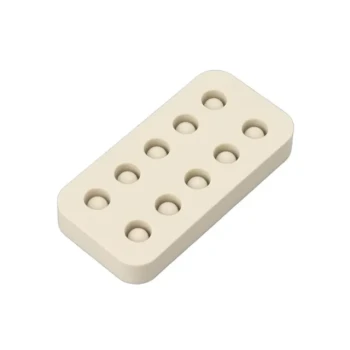
- 10-Cell Silicone Beeswax Bee Queen Cups Forming Mold
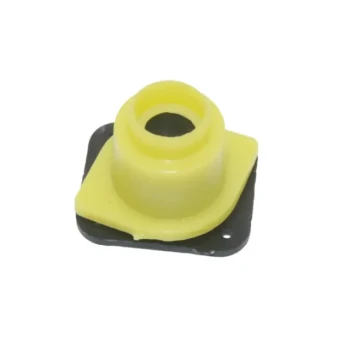
- JZBZ Type Wide Base Plastic Queen Cell Cups for Base Mounting and Queen Rearing
- Clear Black Plain Polystyrene Queen Bee Grafting Cell Cups No Lug for Bee Queen Cup
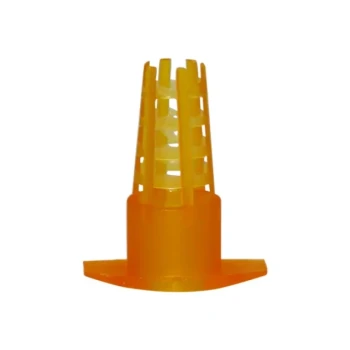
- Brown Nicot Queen Cell Cups for Breeding Queen Bees Beekeeping
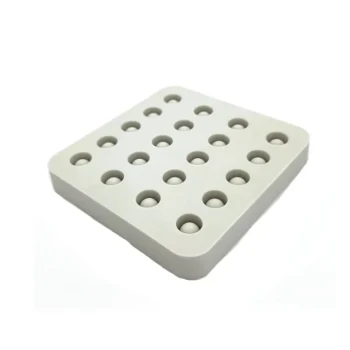
- High-Efficiency 20-Cell Silicone Mold for Beeswax Bee Queen Cup Production
People Also Ask
- How do beeswax queen cell cups function? Optimize Queen Rearing with Biological Mimicry
- What is the biological function of beeswax queen cell cups? Boost Acceptance in Artificial Queen Rearing
- What role do specialized queen rearing tools play in developing mite-resistant honeybee stock? Master Genetic Selection
- What materials are used to make artificial queen cell cups for grafting? Beeswax vs. Plastic Guide
- What roles do specialized queen cell cups play in royal jelly production? Optimize Your Hive's Secretion and Yield