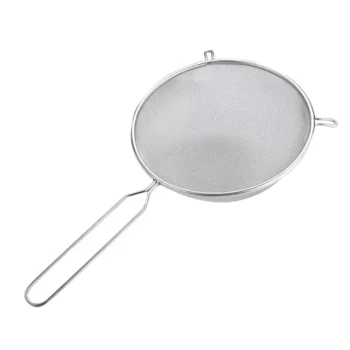
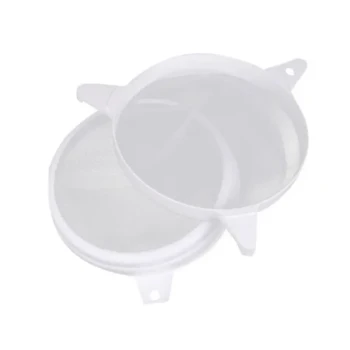
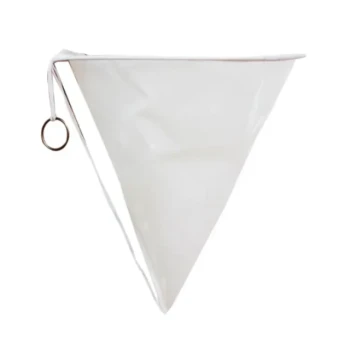
The primary function of high-mesh screens and professional filter cloths is the efficient physical removal of impurities to ensure hygiene and stability. These tools filter out bee fragments, wax debris, and suspended particles, significantly enhancing the clarity and viscosity of the honey. By eliminating residual organic matter, they also mitigate the risk of microbial fermentation, ensuring the final product meets the rigorous safety standards required for commercial sale.
Professional filtration is the critical step that transforms raw harvest into a stable commodity, balancing high visual purity with the preservation of natural biological properties.
The Technical Objectives of Filtration
Removal of Physical Contaminants
The immediate goal of using stainless steel mesh screens and specialized cloths is decontamination. Raw honey often contains macro-impurities such as bee larvae, wax fragments, and dust. Professional equipment utilizes precise pore sizes to intercept these solids without subjecting the honey to heat or chemical treatments that could degrade its quality.
Prevention of Microbial Spoilage
A deeper, often overlooked function of filtration is biological stabilization. Organic debris left in honey acts as a breeding ground for yeast and bacteria. By thoroughly removing this organic matter, you significantly reduce the risk of microbial fermentation, extending the product's shelf life and ensuring food safety compliance.
Enhancement of Visual Clarity
High-precision filtering is essential for achieving the transparency and color consistency demanded by the modern food industry. Immediate filtration after harvest prevents the cloudy appearance associated with suspended particles. This results in a product that meets high-end market standards for visual appeal.
Stability and Consistency
Inhibition of Abnormal Crystallization
Impurities in honey serve as "nucleation sites"—surfaces where sugar crystals can begin to form. By removing fine particles and dust, professional filtration slows down and regulates the crystallization process. This prevents rapid, abnormal granulation, ensuring the honey maintains a smooth texture for a longer period.
Standardization of Viscosity
The primary reference notes that this process enhances viscosity. In a processing context, this means achieving a uniform flow and texture. By removing random solid debris, the honey achieves a consistent physical state, which is crucial for efficient bottling and consumer satisfaction.
Understanding the Trade-offs
The Purity vs. Pollen Balance
While the goal is to remove impurities, a critical technical challenge is preserving natural pollen. Pollen is essential for identifying the botanical source of the honey and proving its authenticity.
High-quality professional filtration (using double-layer mesh or specific micron ratings) is designed to retain these microscopic pollen grains while removing larger contaminants. Over-filtration or using incorrect mesh sizes can strip the honey of its unique identity, reducing it to a generic sweetener.
Making the Right Choice for Your Goal
To select the correct filtration strategy, assess your end-market requirements:
- If your primary focus is mass-market commercial sale: Prioritize high-precision filtration to maximize clarity, prevent fermentation, and ensure strict hygiene compliance.
- If your primary focus is distinct botanical or "raw" honey: Use multi-stage filtration that removes wax and bee parts but explicitly retains natural pollen grains to preserve the honey's origin profile.
Professional filtration is not just about cleaning; it is about stabilizing your product for the market without sacrificing its natural integrity.
Summary Table:
| Feature | Function in Honey Processing | Benefit to Producer |
|---|---|---|
| Physical Removal | Filters bee fragments, wax, and dust | Enhances visual clarity and hygiene |
| Biological Stability | Eliminates organic nucleation sites | Prevents fermentation and spoilage |
| Texture Control | Inhibits abnormal crystallization | Maintains smooth viscosity and flow |
| Selective Filtration | Retains natural pollen grains | Preserves botanical origin and authenticity |
Elevate Your Honey Quality with HONESTBEE Professional Filtration Solutions
At HONESTBEE, we understand that the right filtration equipment is the bridge between a raw harvest and a premium commercial product. We specialize in supporting commercial apiaries and distributors with a comprehensive wholesale range of high-precision stainless steel mesh screens, professional filter cloths, and automated honey-filling machinery.
Whether you need to maximize clarity for the mass market or preserve delicate pollen profiles for boutique "raw" honey, our industrial-grade tools ensure your product meets the highest safety and aesthetic standards. Partner with us to scale your production and enhance your market appeal.
Contact HONESTBEE Today for Wholesale Pricing & Equipment Solutions
References
- Dekamo Fiseha. Assessment on Postharvest Handling Practices of Honey in Chena District, Southwestern Ethiopia. DOI: 10.7176/fsqm/89-04
This article is also based on technical information from HonestBee Knowledge Base .
Related Products
- Nylon Honey Strainer Square Filter Cloth for Honey Filters
- Conical Nylon Honey Strainer Filter Bag for Beekeeping and Honey Filtration
- Professional Stainless Steel Honey Filter with Support Handle
- Professional Honey Filter with Tripod Support Stand
- Electric Double Wall Honey Filtering Machine Purifier Equipment for Honey Processing Plant
People Also Ask
- What is the significance of using professional filter cloths or sieves in honey processing? Ensure Purity and Quality
- What is the simple straining method for processing honey? A Cost-Effective Guide to Pure Extraction
- What cloth for straining honey? The Best Materials for Clean, High-Quality Honey
- What size mesh to strain honey? A Guide to the Standard Double-Sieve Method
- Why is specialized filter cloth preferred over the traditional squeezing method for wild honey? Achieve Higher Purity