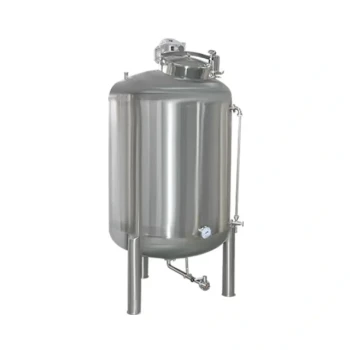
The primary function of large-scale surface heat exchange systems in industrial honey processing is to uniformly reduce the viscosity of the product to facilitate filtration and bottling. By employing indirect heating with minimal temperature differences, these systems ensure the honey becomes fluid enough to process without subjecting it to damaging thermal spikes.
The core value of this technology lies in balancing rheology with biology: it liquefies the honey for operational efficiency while strictly maintaining the thermal limits required to preserve natural flavor and appearance.
The Mechanics of Processing Flow
Overcoming Viscosity
Honey is naturally viscous, creating significant resistance during industrial movement. The first goal of the heat exchange system is to lower this viscosity through thermal energy.
By heating the honey, the system transforms it into a fluid state that can pass through filtration membranes and bottling lines efficiently.
Achieving Uniform Distribution
Heating thick liquids is notoriously difficult because heat does not travel quickly through dense mediums. Surface heat exchangers are specifically designed to solve this by maximizing the contact area between the honey and the heat source.
This design ensures that heat is distributed evenly throughout the entire batch, rather than just the edges, preventing cold spots that would clog filtration systems.
Preserving Quality Through Thermal Precision
Indirect Heating with Minimal Deltas
To protect the product, these systems utilize indirect heating methods where the temperature difference between the heat source and the honey is kept to a minimum.
Instead of shocking the honey with a high-temperature source, the system gently raises the temperature. This approach is critical for maintaining the integrity of the honey's complex chemical structure.
Preventing Localized Overheating
A common failure in honey processing is localized overheating, where portions of the honey near the heat source burn while the center remains cool.
Large-scale surface exchangers mitigate this risk through precise temperature control. This prevents the "hot spots" that lead to permanent quality degradation.
Understanding the Trade-offs: Quality vs. Intensity
The Risk of Caramelization
The most significant risk in heating honey is caramelization. If the temperature is too high or applied unevenly, the sugars in the honey break down.
This reaction leads to an irreversible darkening of the honey’s color, which can lower its commercial grade.
Protecting Sensory Attributes
Beyond color, high heat destroys the volatile compounds responsible for honey’s unique taste.
By utilizing controlled, large-surface heat exchange, you avoid the loss of natural flavor that occurs with aggressive heating methods. The system prioritizes the retention of sensory profile over rapid, high-intensity heating.
Making the Right Choice for Your Goal
These systems are essential for facilities balancing high throughput with premium product standards.
- If your primary focus is Operational Efficiency: Utilize these systems to lower viscosity uniformly, ensuring smooth flow through filtration and preventing bottlenecks in bottling lines.
- If your primary focus is Product Quality: Rely on the system's precise temperature control to prevent caramelization and darkening, preserving the honey's natural flavor profile.
Effective industrial honey processing relies not just on heating, but on the precise control of how that heat is applied.
Summary Table:
| Feature | Function in Honey Processing | Benefit to Quality & Efficiency |
|---|---|---|
| Viscosity Reduction | Lowers resistance for easier flow | Facilitates rapid filtration and smooth bottling |
| Uniform Distribution | Maximizes surface contact area | Prevents cold spots and system clogging |
| Indirect Heating | Maintains minimal temperature deltas | Protects chemical integrity and natural enzymes |
| Precision Control | Eliminates localized hot spots | Prevents caramelization and irreversible darkening |
| Sensory Preservation | Protects volatile flavor compounds | Retains premium taste profile and commercial grade |
Elevate Your Honey Production with HONESTBEE Solutions
Are you looking to scale your apiary operations or optimize your distribution facility? HONESTBEE specializes in supporting commercial apiaries and distributors with high-performance beekeeping tools and industrial machinery.
Our comprehensive wholesale range includes everything from honey-filling machines designed for thermal precision to specialized hive-making hardware and essential industry consumables. By partnering with us, you gain access to equipment that balances operational throughput with the biological integrity of your honey, ensuring your product stays premium from hive to bottle.
Ready to upgrade your processing line? Contact us today to explore our wholesale equipment solutions!
References
- Slim Blidi, C. Calokerinos Antony. Effect of Thermal Treatment on the Quality of Honey Samples from Crete. DOI: 10.22606/afse.2017.11001
This article is also based on technical information from HonestBee Knowledge Base .
Related Products
- Double Wall Honey Heating Stirring Homogenizer Mixing Machine with Various Capacity
- Professional Thermostatic Conical Honey Melter
- Honey Concentrating Vacuum Heating Thickening Machine Dehumidifier for Honey
- HONESTBEE Commercial Upright Honey Melter
- 0.5T Capacity Honey Dehumidifier Dryer with Vacuum Heating and Thickening Filtering Machine
People Also Ask
- What impact do homogenizers or oscillating equipment have on honey microbial detection? Ensure Testing Accuracy
- Why is thorough mechanical stirring and homogenization emphasized in honey processing? Ensure Sample Accuracy
- How do heating equipment and homogenizers liquefy crystallized honey? Expert Guide to Professional Honey Processing
- How does the honey mixer handle different types of honey? Master Viscosity for Perfect Blends
- What are the main components of the honey mixer? Engineered for Gentle, Efficient Honey Processing