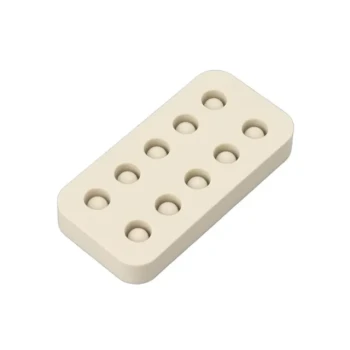
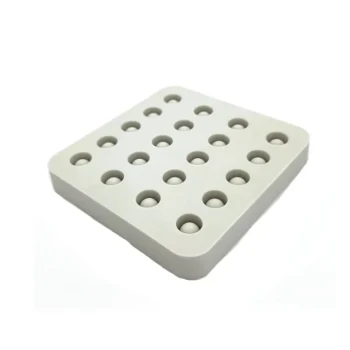
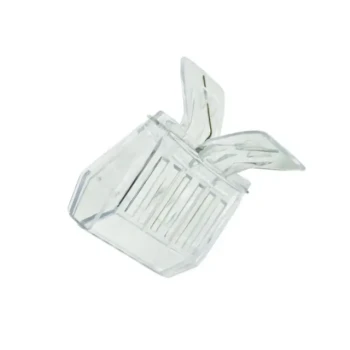
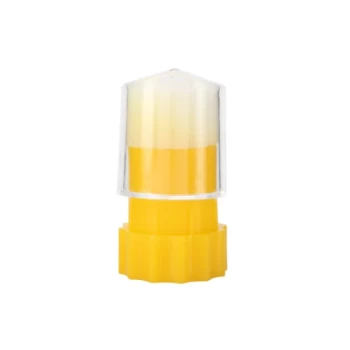
Queen Cups serve as the artificial foundation for rearing new queens, acting as a surrogate for the natural queen cell base. In the Doolittle method, these cups function as a "physical trigger" that compels nurse bees to accept grafted larvae as potential royalty. By holding the larvae in a specific orientation and geometry, the cups induce the colony to secrete royal jelly and build out fully developed queen cells.
The core function of the Queen Cup is to simulate the precise environmental conditions of a natural queen cell, effectively tricking the hive into raising ordinary worker larvae as queens to enable mass production.
The Mechanics of Simulation
Mimicking Natural Geometry
In a natural hive, queen cells are distinct from worker or drone cells due to their larger size and unique orientation. Artificial Queen Cups are designed with dimensions larger than standard cells and are positioned with a downward-facing orientation. This specific geometry signals to the colony that the inhabitant is not a worker, but a royal candidate requiring special attention.
Triggering the Nursing Instinct
The primary biological function of the cup is to guide nurse bees to alter their feeding behavior. Once a 1-to-2-day-old worker larva is grafted into the cup, the structure acts as an artificial guiding device. It induces the bees to secrete copious amounts of royal jelly, which is the physiological trigger that directs the larva's development from a worker into a queen.
Providing a Stable Grafting Substrate
The Doolittle method relies on the manual transfer of larvae, known as grafting. The Queen Cup serves as the foundational container for this delicate operation. It provides a standardized, secure vessel that protects the fragile larva during transfer and allows the beekeeper to place it precisely within the rearing frame.
Enabling Scalability in Breeding
Facilitating Mass Production
Natural hives rarely produce large numbers of queens simultaneously unless they are swarming or replacing a failing queen. Queen Cups allow breeders to bypass this limitation by introducing dozens of cups at once. This transforms queen rearing from a biological accident into a controlled, large-scale production process.
Standardization for Transport
Because Queen Cups are uniform manufactured items (whether wax or plastic), they ensure that every resulting queen cell has a consistent base. This standardization is vital for subsequent transport operations. It allows the mature queen cells to be easily moved into mating nucs or incubators without damaging the developing pupa.
Understanding the Trade-offs
Material Impact on Acceptance
While Queen Cups are essential, their presence is initially foreign to the hive. The material and shape of the cup are critical factors that directly influence the acceptance rate. If the cup does not closely simulate a natural texture or smell, nurse bees may reject the grafted larva or clean it out immediately.
Wax vs. Plastic
Wax cups generally offer higher immediate acceptance because they are made from natural hive materials, but they are fragile and often single-use. Plastic cups offer durability and perfect standardization for large-scale operations, but they may require "priming" with royal jelly or sugar water to trick the bees into accepting the artificial surface.
Making the Right Choice for Your Goal
To maximize your success with the Doolittle method, choose your approach based on your production scale:
- If your primary focus is Maximum Acceptance Rates: Prioritize wax cups or coat plastic cups in beeswax, as the natural scent and texture significantly reduce the risk of nurse bees rejecting the grafted larvae.
- If your primary focus is Efficiency and Scale: Utilize standardized plastic Queen Cups, as their durability and uniform shape facilitate faster grafting, easier cleaning, and reuse over multiple breeding cycles.
Ultimately, the Queen Cup is the critical interface between the beekeeper's intent and the colony's instinct, turning a biological possibility into a scalable reality.
Summary Table:
| Feature | Function in Doolittle Method | Impact on Queen Rearing |
|---|---|---|
| Physical Geometry | Mimics downward-facing natural queen cells | Signals the colony to treat larvae as royal candidates |
| Grafting Substrate | Provides a secure vessel for larvae transfer | Protects fragile larvae during the manual grafting process |
| Biological Trigger | Induces royal jelly secretion | Directs larval development from worker to queen phenotype |
| Standardization | Uniform size and shape (Wax or Plastic) | Facilitates mass production and easy transport to mating nucs |
Elevate Your Apiary’s Production with HONESTBEE
As a dedicated partner to commercial apiaries and global distributors, HONESTBEE understands that precision in queen rearing is the backbone of a successful beekeeping operation. We provide a comprehensive wholesale range of high-quality beekeeping tools, machinery, and consumables, including standardized Queen Cups and specialized hive-making equipment designed for durability and high acceptance rates.
Whether you are scaling your breeding program or supplying local beekeepers, our portfolio offers the hardware and expertise needed to transform biological potential into a profitable reality. Contact us today to discuss our wholesale offerings and discover how our honey-production solutions can optimize your business efficiency.
References
- Mohamed Ahmed Abdel Hameed Khaled. Pollen power and colony prosperity: A comprehensive analysis of pollen amino acid profiles and their impact on honeybee colony performance and queen quality across seasons. DOI: 10.4314/ejppri.v8i3.1
This article is also based on technical information from HonestBee Knowledge Base .
Related Products
- Brown Nicot Queen Cell Cups for Breeding Queen Bees Beekeeping
- JZBZ Type Wide Base Plastic Queen Cell Cups for Base Mounting and Queen Rearing
- 10-Cell Silicone Beeswax Bee Queen Cups Forming Mold
- Clear Black Plain Polystyrene Queen Bee Grafting Cell Cups No Lug for Bee Queen Cup
- JZBZ Push-In Queen Cell Cups for Beekeeping
People Also Ask
- What role do specialized queen rearing tools play in developing mite-resistant honeybee stock? Master Genetic Selection
- What materials are used to make artificial queen cell cups for grafting? Beeswax vs. Plastic Guide
- What roles do specialized queen cell cups play in royal jelly production? Optimize Your Hive's Secretion and Yield
- How does the standardized depth of queen cell cups affect larval acceptance? Boost Success with 6mm Precision
- Why is a diluted royal jelly solution applied to queen cell cups? Boost Acceptance in Artificial Grafting