Standardized beehive boxes function primarily as industrial infrastructure designed to provide a controlled habitat for bee populations. By replacing traditional wild harvesting methods with a systematic approach, these boxes enable efficient honey collection, rigorous health monitoring, and the cost-effective scaling of beekeeping operations. They serve as the critical link between raw biological potential and managed agricultural output.
Standardized hives are not merely containers; they are the physical foundation of modern apiary science. They transform beekeeping from a foraging activity into a scalable industry by ensuring hardware interchangeability, facilitating mechanized maintenance, and optimizing colony health for agricultural integration.
The Shift to Industrial Infrastructure
Transitioning from Wild Harvesting
The most immediate function of the standardized box is to move the industry away from reliance on wild trapping.
By establishing a controlled environment, beekeepers can manage populations systematically rather than opportunistically. This shift significantly reduces the unpredictable costs and risks associated with locating and capturing wild colonies.
Integration with Agriculture
Standardized boxes allow for the strategic placement of colonies within specific agricultural settings, such as pineapple plantations.
This mobility transforms the hive into a deployable asset for pollination services. It ensures that the necessary density of pollinators can be introduced exactly where and when crops require them.
Economic Viability at Scale
For operations managing over 150 hives, standardization is the key to economic survival.
It reduces unit production costs by streamlining workflows. Without this standardization, the labor required to manage individual, unique hives would make large-scale commercial beekeeping financially unsustainable.
The Mechanics of Efficiency
Component Interchangeability
The technical brilliance of these boxes lies in their unified dimensions.
Internal structures, such as frames and supers, can be swapped seamlessly between different hives. This allows for rapid artificial swarming and resource balancing without the need to modify equipment for each individual colony.
Enabling Mechanization
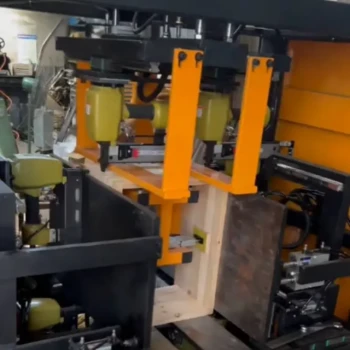
Standardized dimensions serve as the baseline for mechanized operations.
Manufacturing machinery ensures consistency, which allows handling equipment to process hives rapidly. This uniformity simplifies daily maintenance and makes rapid expansion of colony numbers logically and physically possible.
Non-Destructive Management
Unlike traditional methods, standardized framework hives allow for the removal of honey without destroying the colony.
Beekeepers can inspect brood rearing and food storage levels precisely. This capability is essential for scientific selection and maintaining the long-term health of the stock.
Optimizing the Biological Environment
Thermal and Moisture Management
High-quality standardized hives provide superior thermal insulation and moisture resistance.
This stability creates an optimized breeding environment. By minimizing environmental stress, the hive ensures that the bees maintain high physiological activity and foraging frequency.
Disease and Pest Control
The design facilitates regular, non-invasive inspections.
Beekeepers can monitor for pests and diseases efficiently. This proactive health monitoring is critical for maintaining the high population densities required for commercial production.
Understanding the Trade-offs
The Requirement for Precision
The benefits of standardization rely entirely on manufacturing precision.
If hives are produced with poor mechanical processing, the physical structure becomes unstable. This can induce stress responses in the bees, negating the benefits of the controlled habitat and potentially lowering yields.
Investment vs. Return
Implementing a standardized system requires an upfront commitment to specific machinery or high-quality suppliers.
Cutting corners on the quality of the box to save money is a common pitfall. A box that lacks proper insulation or dimensional consistency will disrupt the "modular management" philosophy, leading to operational bottlenecks later.
Making the Right Choice for Your Operation
To maximize the utility of standardized beehives, align your equipment choice with your specific operational goals.
- If your primary focus is Rapid Expansion: Prioritize dimensional consistency and frame interchangeability to facilitate efficient artificial swarming and mechanized handling.
- If your primary focus is Pollination Services: Prioritize high-quality thermal insulation and structural stability to minimize stress on bees during frequent relocation to new ecological networks.
Success in modern beekeeping is not just about the bees; it is about utilizing standardized infrastructure to create a predictable, scalable, and scientifically managed production system.
Summary Table:
| Key Function | Description | Impact on Large-Scale Operations |
|---|---|---|
| Interchangeability | Unified frame and box dimensions | Enables rapid swarming and seamless resource balancing |
| Mechanization | Consistency in hardware sizing | Facilitates the use of honey-filling and hive-making machinery |
| Colony Health | Non-destructive management | Allows for rigorous health monitoring and scientific stock selection |
| Climate Control | Thermal and moisture insulation | Reduces environmental stress and boosts bee foraging activity |
| Mobility | Systematic deployable design | Optimizes colonies for professional pollination services |
Scale Your Apiary with HONESTBEE Precision Equipment
Maximize your operational efficiency and ensure long-term colony health with HONESTBEE. As a premier partner for commercial apiaries and distributors, we provide a comprehensive wholesale range of beekeeping tools, high-performance machinery, and essential consumables.
From precision hive-making machines and automated honey-filling systems to specialized hardware and honey-themed cultural merchandise, our portfolio is designed to help you build a predictable, scalable, and scientifically managed production system.
Ready to upgrade your infrastructure? Contact us today to discover how our professional beekeeping solutions can drive your business growth!
References
- Ismail Mohd Mansor, M. Zakbah. BEEKEEPING IN PINEAPPLE SMALLHOLDINGS: A CASE OF APIS MELLIFERA. DOI: 10.17660/actahortic.2011.902.46
This article is also based on technical information from HonestBee Knowledge Base .
Related Products
- Australian Langstroth Beehive Boxes for Beekeeping Wholesales
- Portable Bee Mating Hive Boxes Mini Mating Nucs 8 Frames for Queen Rearing
- Metal Bee Hive Stand Bee Box Stand for Beekeeping
- Langstroth Honey Bee Box Hive Boxes for Different Depths
- Plastic Transporting Bee Packages and Nuc Boxes for Beekeeping
People Also Ask
- What are the differences between the three standard depths of Langstroth boxes? Choose the Best Size for Your Apiary
- What are the primary advantages of using standardized Langstroth boxes? Scale Your Commercial Beekeeping Operation
- What role do standardized Langstroth boxes play in commercial apiary management and honey bee research? | HONESTBEE Guide
- How many beehive boxes are needed when starting a new hive? A Guide to Proper Hive Setup
- What are the disadvantages of using a combination of deep and medium boxes? Avoid Costly Incompatibility Issues