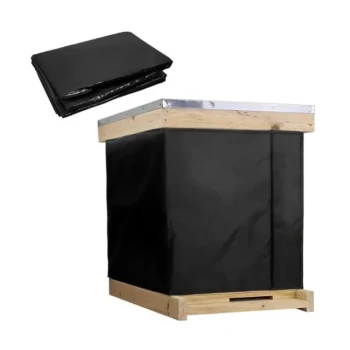
The primary function of a Winter Bee House is environmental stabilization. It serves as a windowless, climate-controlled storage facility designed to protect colonies during the cold season. By maintaining total darkness and regulating humidity and temperature, these structures suppress flight activity and shield bees from the metabolic costs of extreme weather.
Winter Bee Houses function as energy conservation chambers. By eliminating light triggers and temperature spikes, they prevent bees from wasting limited food stores on unnecessary activity, which is crucial for survival in high-latitude regions.
The Mechanics of Controlled Wintering
To understand the value of a Winter Bee House, you must understand the physiological challenges honeybees face during overwintering. These facilities are not merely shelters; they are active management tools.
Suppression of Flight Activity
The most distinct feature of a Winter Bee House is its lack of windows.
By maintaining a completely dark environment, the facility suppresses the bees' natural instinct to fly.
Flight activity during winter is often fatal or energetically expensive. Keeping the colony grounded ensures they remain in their cluster, preserving their physical endurance for spring.
Protection from Thermal Fluctuations
Honeybees are resilient to cold, but they are vulnerable to rapid temperature swings.
Winter Bee Houses provide stable temperature and humidity levels.
This stability protects the colony from the stress of constantly adjusting their metabolic rate to accommodate freezing nights or unseasonably warm days.
Energy Management and Colony Health
The ultimate goal of using these facilities is to manage the colony's limited energy budget.
Conserving Vital Food Stores
Overwintering success is a math problem: calories burned vs. calories stored.
Because the stable, dark environment minimizes activity, the colony consumes fewer resources.
This conservation is critical because, as noted in supplementary data regarding flightless periods, colonies in some regions must survive six to seven months without foraging.
The Link to Pre-Winter Feeding
While the house conserves energy, the energy must be there to begin with.
The efficiency of a Winter Bee House relies on proper preparation during the supplementary feeding phase.
Beekeepers must still utilize frame feeders or top-mounted tanks before moving hives indoors to ensure the bees have sufficient sucrose or medicated solutions to sustain thermoregulation.
Understanding the Trade-offs
While Winter Bee Houses offer higher survival rates, they introduce specific management complexities that must be acknowledged.
Dependency on Climate Control
Success is entirely dependent on the facility's ability to maintain specific parameters.
If the climate control fails—resulting in unexpected warming or light leaks—it can trigger premature activity within the confined space.
limited Observation
Unlike outdoor apiaries where entrance activity can be observed daily, colonies in storage are less accessible.
This makes the pre-winter assessment of food stores and health critical, as intervening once the hives are stacked in the dark facility is difficult.
Making the Right Choice for Your Goal
Deciding to utilize a Winter Bee House depends on your regional climate and management capacity.
- If your primary focus is maximum survival in high latitudes: Utilize a Winter Bee House to eliminate weather variables and conserve colony energy stores.
- If your primary focus is minimizing infrastructure costs: Focus on robust pre-winter feeding and insulated outdoor hive designs, accepting a higher risk of winter loss.
Success in wintering bees is not just about keeping them warm; it is about keeping them calm and conserving their finite energy.
Summary Table:
| Feature | Function in Winter Bee House | Impact on Colony |
|---|---|---|
| Light Control | Windowless, total darkness | Suppresses flight activity to save energy |
| Temperature | Stable, climate-controlled regulation | Prevents metabolic stress from thermal swings |
| Energy Management | Minimizes activity & movement | Reduces consumption of winter food stores |
| Environment | Controlled humidity levels | Protects bees from moisture-related stress |
| Protection | Physical shielding from elements | High survival rates in high-latitude regions |
Maximize Your Colony Survival Rates with HONESTBEE
Ensuring your honeybees survive the winter requires the right infrastructure and high-quality equipment. HONESTBEE specializes in supporting commercial apiaries and distributors with a comprehensive range of wholesale beekeeping solutions. From precision beekeeping machinery and hive-making equipment to essential consumables and specialized hardware, we provide everything you need to manage overwintering at scale.
Ready to enhance your apiary's efficiency and secure your spring yields? Contact us today to explore our wholesale tools and machinery tailored for industry professionals.
References
- Penelope Walker, Eva Crane. The History of Beekeeping in English Gardens. DOI: 10.2307/1587272
This article is also based on technical information from HonestBee Knowledge Base .
Related Products
- Professional Insulated Winter Hive Wrap for Beekeeping
- Professional Insulated Plastic Bee Hives
- Wholesales Dadant Size Wooden Bee Hives for Beekeeping
- Inner Beehive Cover for Beekeeping Bee Hive Inner Cover
- HONESTBEE Wired and Assembled Wooden Bee Frames Foundation for a Thriving Hive
People Also Ask
- What are the steps to properly wrap a beehive for winter? Ensure Your Colony Survives the Cold
- When is the best time to wrap a beehive for winter? A Guide to Perfect Winterization Timing
- How do professional insulation wraps provide protection for bee colonies? Optimize Winter Survival & Energy Efficiency
- What are the technical benefits of using winter wraps for beehive insulation? Boost Colony Survival & Hive Health
- What are the benefits of using insulated covers for hives? Ensure Colony Survival and Health