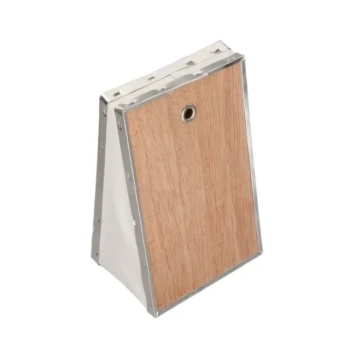
The primary purpose of using smoking equipment during the collection of forest honey from Apis dorsata is to generate a thick, dense smoke that physically disperses the bee colony from the honeycomb. By forcing these highly defensive wild bees to temporarily vacate the hive, the smoke significantly reduces the risk of stings and creates a safe, clear operating space for the harvester to cut the honeycomb.
Core Takeaway Apis dorsata are aggressive wild bees that cannot be managed without intervention; dense smoke is the essential mechanism that allows for "live honey extraction," protecting the operator while ensuring the colony is displaced rather than destroyed.
The Mechanics of Smoke Dispersal
Overcoming Defensive Behavior
Apis dorsata (the giant honey bee) is known for being a highly defensive species. The primary function of the smoking equipment is to neutralize this defensive instinct by generating a large volume of thick smoke.
When this dense smoke hits the colony, it triggers a survival response that causes the bees to leave the comb. This is not merely a distraction; it is a forced evacuation that clears the immediate area of threats.
Facilitating Live Extraction
Unlike destructive harvesting methods, smoking allows for live honey extraction. Because the bees are encouraged to fly away temporarily, the harvester can access the honey without killing the colony.
This ensures that the biological integrity of the bee population is maintained even during the harvest.
Operational Safety and Efficiency
Minimizing Risk of Injury
The most immediate practical benefit of using a large smoker is the reduction of sting risk. Without the application of smoke, the aggression level of Apis dorsata would make harvesting dangerous or impossible for the operator.
By clearing the bees, the harvester creates a buffer zone that protects them from the colony’s natural defense mechanisms.
Enabling Precision Cutting
Smoke does more than just protect the human; it reveals the target. With the bees dispersed, the harvester gains a clear view of the honeycomb structure.
This visibility is crucial for using tools like long-handled cutters to precisely sever the attachment point between the comb and the tree or structure. It ensures the honeycomb is collected efficiently without unnecessary damage to the brood cells or the substrate.
Critical Considerations and Limitations
The Necessity of Density
Not all smoke is effective against Apis dorsata. The equipment must be capable of generating dense, high-volume smoke.
Light or wispy smoke may fail to disperse a large, aggressive colony, leaving the harvester vulnerable to attack mid-operation.
The Temporary Nature of Dispersal
It is important to understand that smoke offers only a temporary window of opportunity. The bees vacate the hive for a short period, but they will eventually return.
Consequently, the harvesting process—cutting and collecting—must be executed swiftly and efficiently while the smoke is still effective.
Making the Right Choice for Your Goal
To ensure a safe and successful harvest from Apis dorsata, apply the following principles:
- If your primary focus is operator safety: Ensure your smoking equipment is large enough to generate a continuous, dense cloud to fully disperse the defensive worker bees.
- If your primary focus is colony conservation: Use the smoke to achieve "live extraction," allowing the bees to vacate temporarily rather than resorting to destructive removal methods.
- If your primary focus is harvest efficiency: Use smoke to clear the visual field, allowing for precise cutting that prevents damage to the honeycomb structure.
Mastering the use of smoke is the single most critical factor in transforming a dangerous encounter with wild bees into a controlled, sustainable harvest.
Summary Table:
| Feature | Purpose in Apis dorsata Harvesting |
|---|---|
| Smoke Volume | Must be thick and dense to physically displace aggressive wild colonies. |
| Operator Safety | Neutralizes defensive instincts and creates a buffer zone to minimize sting risks. |
| Live Extraction | Allows bees to vacate temporarily, preventing colony destruction during harvest. |
| Visibility | Clears the honeycomb surface for precise cutting and efficient honey collection. |
| Biological Impact | Maintains the integrity of the wild bee population for future seasons. |
Maximize Your Honey Yield with Professional-Grade Equipment
Are you a commercial apiary or a distributor looking to upgrade your beekeeping operations? At HONESTBEE, we specialize in the full spectrum of beekeeping technology. From high-capacity smokers designed for the toughest wild environments to specialized honey-filling machines and commercial-grade hardware, we provide the tools you need for a safe and profitable harvest.
Partner with HONESTBEE to access:
- Comprehensive Wholesale Inventory: Everything from essential consumables to heavy machinery.
- Specialized Engineering: Hive-making and honey-processing equipment tailored for industrial efficiency.
- Industry Expertise: Reliable solutions for large-scale distributors and professional beekeepers.
Contact our expert team today to discover how our wholesale offerings can optimize your business and enhance your supply chain!
References
- Rini Pujiarti, Dwiko Budi Permadi. Quality of Three Forest Honey Types from Baduy Tribe, Lebak District, Banten Province. DOI: 10.22146/jik.v15i2.1529
This article is also based on technical information from HonestBee Knowledge Base .
Related Products
- Stainless Steel Honey Bee Smoker Hive and Honeycomb Smoker for Beekeeping
- Professional Replacement Bee Smoker Bellows for Beekeeping Equipment
- European Stainless Steel Bee Smoker for Honey Bee Hive
- Galvanized Beekeeping Smoker for Honey Bee and Apiculture
- Heavy Duty Manual Bee Smoker Blower for Beekeeping
People Also Ask
- What are bee smokers made out of? Choose the Right Material for Your Apiary
- What type of bee smoker is recommended for a beginner? Top Picks for Easy Hive Management
- Why is a stainless steel bee smoker considered indispensable? Master Hive Management with Cool Smoke Technology
- How do bee smokers and colored light sources work together to assist in night-time honey harvesting? Expert Strategies
- How should a beekeeper use a smoker when approaching a hive? A Guide to Calm, Safe Inspections