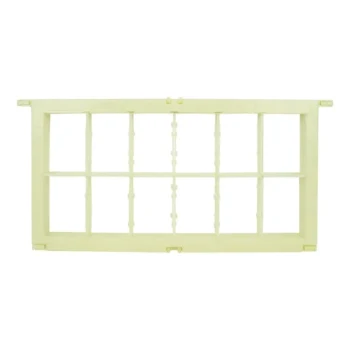
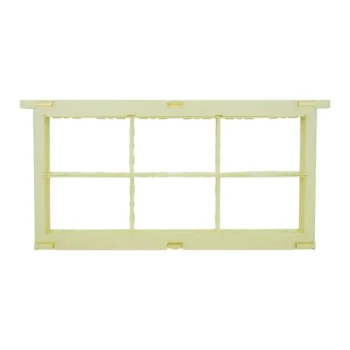
The foundation of precision beekeeping. Artificial honeycomb frames are primarily used to establish a uniform physical baseline across bee colonies, eliminating the structural variations inherent in naturally built combs. By providing a standardized matrix, these frames ensure that experimental comparisons regarding honey yield, brood area, and colony health are scientifically rigorous and statistically significant.
Artificial honeycomb frames transform unpredictable biological environments into standardized data units, allowing researchers and commercial operators to isolate variables and maximize extraction efficiency through mechanical automation.
Eliminating Variable Bias in Research
Establishing a Uniform Baseline
Artificial frames remove the "noise" created by irregular natural comb shapes and varying cell sizes. This allows for a uniform baseline across different treatment groups, ensuring that any observed changes in colony behavior are due to experimental factors rather than physical architecture.
Enabling Quantitative Evaluation
Standardized frames serve as a fixed metric for assessing colony strength and productivity. By measuring the number of frames covered by bees or the total area of sealed brood, researchers can quantitatively compare developmental rates and wax-building capacity across diverse honeybee varieties.
Precise Larval Management
When paired with specialized breeding cages, these frames allow for the precise control of larval age. This hardware combination is essential for high-level biological research, such as aging studies, where experimental and control groups must share a consistent genetic background and development timeline.
Maximizing Operational and Mechanical Efficiency
Integration with Automated Harvesting
A primary advantage for commercial operations is the compatibility of standardized frames with mechanical honey extractors. This structural consistency facilitates automated harvesting, which significantly increases extraction speed and reduces labor costs compared to traditional methods.
Facilitating Cross-Colony Transfers
Standardized designs allow for the seamless transfer of experimental samples, such as specific brood areas, between different hives. This is critical for studies on Varroa Sensitive Hygiene (VSH), as it ensures all test groups are exposed to a balanced initial parasite population for accurate comparison.
Consistency in Resource Reserves
Using fixed-number frame configurations ensures that the initial biomass and nutritional reserves of every colony are identical. This eliminates interference from internal resource differences, allowing for clear insights into how external stressors like pesticides or pathogens impact the hive's microbiome.
Navigating the Trade-offs of Artificial Foundations
Material Selection and Colony Acceptance
While artificial frames provide structural benefits, the choice of material—such as plastic versus wax-coated foundation—can impact colony acceptance rates. Distributors must ensure they source high-quality materials that bees will readily draw out to avoid stalling colony growth.
Maintenance and Contamination Risks
Artificial frames require diligent management to prevent the buildup of pathogens or chemical residues over multiple seasons. Without a rigorous replacement cycle, the benefits of standardization can be offset by a decline in overall colony vitality and brood health.
Selecting the Right Equipment for Your Portfolio
Strategic Advice for Distributors and Wholesalers
Effective beekeeping at scale requires more than just hardware; it requires a comprehensive product portfolio that meets specific experimental and commercial standards. Providing your clients with the right tools ensures they achieve the precision and efficiency their operations demand.
- If your primary focus is supporting high-precision research: Prioritize sourcing standardized frames and specialized breeding cages that offer the highest levels of structural consistency and larval age control.
- If your primary focus is commercial honey production: Emphasize frames designed for maximum durability and compatibility with high-speed mechanical extraction equipment to boost your clients' ROI.
- If your primary focus is supply chain reliability: Partner with providers who offer deep industry expertise and ultra-fast delivery to ensure your inventory remains responsive to seasonal colony management needs.
By integrating these standardized components into a one-stop sourcing model, you empower your clients to achieve consistent, professional results through superior technical foundations.
Summary Table:
| Feature | Primary Purpose | Commercial & Research Benefit |
|---|---|---|
| Uniform Matrix | Eliminates structural noise | Enables accurate comparisons of yield and colony health |
| Fixed Metric | Quantitative evaluation | Provides precise data for larval management and biomass |
| Standard Design | Mechanical compatibility | Maximizes extraction speed and reduces labor costs |
| Modular Build | Seamless hive transfers | Facilitates parasite studies and colony balancing |
Partner with HONESTBEE for Scalable Beekeeping Success
Are you a distributor or B2B reseller looking to provide your clients with industry-leading precision? HONESTBEE offers a one-stop sourcing solution for commercial apiaries, providing a comprehensive portfolio of high-quality beekeeping tools, hive-making machinery, and automated honey-filling systems.
Why Global Distributors Choose HONESTBEE:
- Comprehensive Sourcing: Access a full spectrum of hardware and consumables in one place.
- Rapid Fulfillment: Benefit from our ultra-fast delivery and efficient order processing to keep your inventory responsive.
- Deep Industry Expertise: Our professional team ensures all products meet rigorous commercial and experimental standards.
- OEM/ODM Capabilities: Enhance your market position with customized solutions designed for high profit margins.
Contact our team today to optimize your supply chain!
References
- Wubalem Alebachew Amera, Abiyu Tadele Alene. Effect of various supplements on productive performance of honey bees, in the south Wollo Zone, Ethiopia. DOI: 10.1371/journal.pone.0303579
This article is also based on technical information from HonestBee Knowledge Base .
Related Products
- Heart-Shaped Comb Honey Frame and Honeycomb Cassette
- Plastic Honey Comb Frames Cassette Box for Honey
- Professional Sectional Comb Honey Frame with 250g Cassette System for Beekeeping
- Professional 500g Sectional Comb Honey Frame System for Beekeeping
- Assembled Wooden Bee Frames with Beeswax Foundation Ready to Use by HONESTBEE
People Also Ask
- How are honeybee combs utilized for non-destructive colony monitoring? Master Population Density Tracking
- What is a honeycomb frame? The Key to Modern, Sustainable Beekeeping
- What is the technical purpose of exchanging honeycomb frames? Master Apiary Equalization for Growth
- What frame to use for honeycomb? Choose the Right System for Pure, Edible Comb
- What is the significance of sampling honeycomb frames and hive bottoms? A Guide to Scientific Sanitation Monitoring