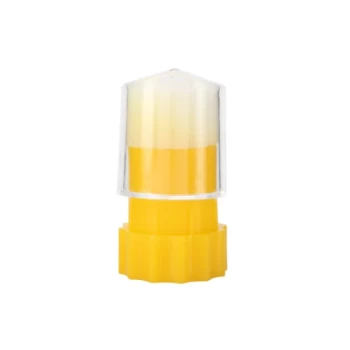
The primary function of specialized marking paint is to apply a highly visible color to the thorax of the queen bee, enabling immediate identification and status confirmation during hive inspections. This visual aid is essential for efficiently tracking queen loss rates caused by swarming or death, as well as evaluating the direct correlation between a queen's egg-laying behavior and the development of colony strength.
By marking the queen, beekeepers transform a complex search task into a rapid visual verification, securing critical data on colony continuity, reproductive health, and population dynamics.
Enhancing Hive Management Efficiency
Rapid Visual Identification
In a colony containing thousands of bees, locating a single queen can be time-consuming and disruptive.
Applying specialized paint to the thorax makes the queen instantly distinguishable from worker bees and drones. This allows personnel to confirm her presence quickly, minimizing the time the hive is open and reducing stress on the colony.
confirming Queen Status
Routine inspections require more than just finding the queen; you must confirm she is the same queen you expect to be there.
The presence of the mark confirms that the original queen is still active. Conversely, finding an unmarked queen is immediate evidence that the colony has undergone natural replacement (supersedure) or a swarming event where the original queen was lost.
Tracking Population and Performance
Monitoring Queen Loss Rates
Marking is a vital tool for gathering data on mortality and loss, particularly during active pollination periods.
Beekeepers use these markings to calculate loss rates due to swarming or abnormal death. Without a mark, it is nearly impossible to distinguish between a surviving original queen and a newly emerged replacement, leading to inaccurate mortality data.
Evaluating Colony Strength
The mark facilitates the ongoing assessment of a queen's productivity.
By easily locating the queen, beekeepers can correlate her specific egg-laying behavior with the overall strength and growth of the colony. This helps in making management decisions regarding which genetic lines are performing best and which colonies require intervention.
Understanding the Trade-offs
Application Risks
While marking is beneficial, the process involves physical handling of the queen.
Improper handling during the painting process can damage the queen's delicate legs or wings. There is also a risk of the paint spreading to sensory organs or the spiracles (breathing tubes), which can harm or kill the queen.
Durability and Recognition
Paint is not a permanent guarantee of identification.
Over time, the paint can wear off due to the grooming behavior of worker bees, or the mark may become obscured. Beekeepers must verify that the lack of a mark is due to a new queen rather than simply faded paint.
Making the Right Choice for Your Goal
To effectively utilize marking paint in your management strategy, consider your specific objectives:
- If your primary focus is inspection speed: Prioritize high-contrast, fluorescent colors that stand out immediately against the comb to minimize hive disruption.
- If your primary focus is long-term population tracking: Implement a standardized color-coding system (often based on the year) to track the exact age and lineage of the queen alongside her survival rates.
Effective colony management relies on data, and a simple dot of paint is often the most reliable data point in the hive.
Summary Table:
| Feature | Primary Function | Management Benefit |
|---|---|---|
| Identification | Instant thorax visualization | Reduces hive inspection time and colony stress |
| Status Tracking | Confirmation of original queen | Identifies swarming, supersedure, or queen loss |
| Performance | Correlating egg-laying to growth | Data-driven assessment of genetic line productivity |
| Data Accuracy | Age & lineage verification | Precision tracking of queen mortality and replacement |
Scale Your Apiary Operations with HONESTBEE
Maintaining healthy colonies starts with precise management tools. HONESTBEE specializes in supporting commercial apiaries and global distributors with a comprehensive range of professional beekeeping equipment. From high-visibility queen marking supplies to advanced hive-making and honey-filling machinery, we provide the hardware and consumables necessary for high-volume success.
Whether you are managing thousands of hives or stocking your distribution warehouse, our portfolio offers the reliability your business demands. Contact us today to explore our wholesale offerings and industry solutions.
References
- C. Dufour, Pierre Giovenazzo. The impact of lowbush blueberry (Vaccinium angustifolium Ait.) and cranberry (Vaccinium macrocarpon Ait.) pollination on honey bee (Apis mellifera L.) colony health status. DOI: 10.1371/journal.pone.0227970
This article is also based on technical information from HonestBee Knowledge Base .
Related Products
- Queen Bee Marking Pen POSCA Queen Marking Pens for Beekeeping Bee Markers
- Queen Bee Marking Pen UNI Medium Point for Queen and Bee Marking
- One Hand Yellow Queen Marking Catcher Tube Cage Beekeeper Tool Accessory for Queen Bee
- Queen Bee Catcher Plastic Bee Marker Bottle with Piston Marking Tube
- Queen Bee Marking Tube Cage Bottle Catcher Holder with Clear Plastic Plunger Marker
People Also Ask
- What role do specialized marking pens and color-coding systems play in honeybee tracking? Enhance Research Precision
- Why are specialized marking pens used for stingless bee queens? Essential Tools for Large-Scale Breeding Success
- How should a new paint pen be primed before marking a queen bee? Essential Tips for Safe & Clear Markings
- How should a queen bee marking pen tip be properly primed? Master the Art of Safe Queen Marking
- What specifications are required for a high-quality queen bee marking pen? Ensure Safety and Precision for Your Colony