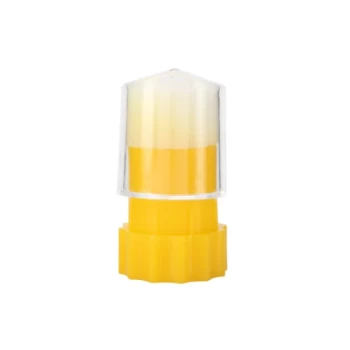
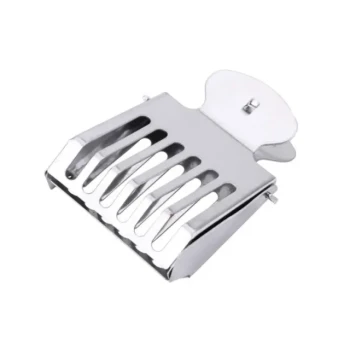
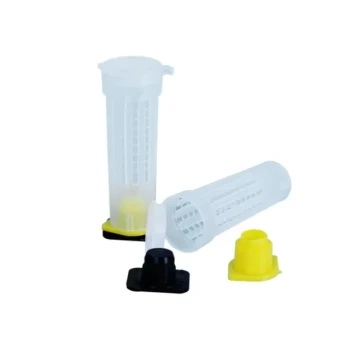
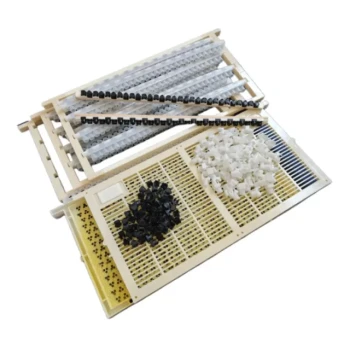
A queen bee marking kit is a specialized set of tools designed to safely apply a durable, visible identifier—typically a colored dot of paint or a numbered disk—to the thorax of a queen bee. Its primary function is to provide immediate visual contrast against thousands of worker bees, drastically reducing the time and effort required to locate her during routine hive inspections. Beyond simple identification, this marking serves as a data point for tracking the queen's age, genetic origin, and the colony's stability.
The true value of a marking kit extends beyond visibility; it acts as a diagnostic baseline for the hive, allowing beekeepers to instantly recognize if a colony has swarmed or replaced its queen while maintaining accurate records of genetic lineage.
Enhancing Efficiency and Safety
The most immediate impact of using a marking kit is the optimization of the beekeeper's workflow.
Rapid Visual Identification
A hive contains thousands of bees, making the queen difficult to spot with the naked eye.
Applying a bright, contrasting color to the queen's thorax makes her stand out instantly. This significantly simplifies the task of locating her among the worker population.
Reducing Colony Disturbance
The longer a hive remains open during inspection, the more stressed the colony becomes.
By shortening the time required to find the queen, you minimize the duration of the inspection. This reduces the overall disturbance to the colony's temperature and social structure.
Facilitating Safe Management
Knowing the queen's exact location is critical when moving frames or transferring resources between hives.
Marking allows beekeepers to quickly isolate the queen, ensuring she is not accidentally injured or transferred to a different box during maintenance.
Tracking Colony Dynamics
Marking serves as a vital record-keeping tool that informs the beekeeper about the biological status of the colony.
Determining Age and Origin
Beekeepers often use specific color codes (such as the international color standard) to indicate the year a queen hatched.
This allows for immediate verification of the queen's age without consulting written records. It also helps identify the source of the queen if the apiary manages stock from different origins.
Detecting Swarming and Supersedure
A marked queen serves as "proof of identity" for the colony's leader.
If a beekeeper opens a hive and finds an unmarked queen where a marked one previously existed, it indicates a major event. The colony has likely swarmed or superseded (replaced) the original queen.
Monitoring Swarm Status
This distinction is vital for swarm monitoring.
Recognizing that a queen has been replaced helps the beekeeper understand the current reproductive status of the hive and the potential temperament of the new genetics.
Genetic Lineage and Pedigree
For advanced management and breeding, marking kits provide granular data essential for long-term planning.
Establishing Pedigree Chains
Specialized kits often include numbered disks rather than simple paint dots.
This provides a unique physical identification code for every tested queen. Technicians can use this to track individual performance over several years.
Connecting Generations
Accurate identification ensures that a reliable pedigree chain is established.
This connects specific queens to their worker bee offspring, allowing breeders to make data-driven decisions regarding genetic traits and performance testing.
Understanding the Risks and Limitations
While marking is highly beneficial, the process involves direct handling of the most valuable bee in the hive.
Handling Risks
Using marking cages or pens requires physical manipulation of the queen.
Improper technique can result in physical injury to the queen, such as damaged legs or wings. Extreme care must be taken to avoid crushing her thorax.
Application Errors
The marking material must be applied precisely to the thorax.
Paint applied too liberally can clog the queen's spiracles (breathing tubes) or sensory organs. Furthermore, if the paint is not durable, the mark may wear off, leading to false assumptions about queen replacement.
Making the Right Choice for Your Goal
The type of marking protocol you adopt should align with your specific management objectives.
- If your primary focus is routine management: Use standard color-coded paint pens to track queen age and speed up weekly inspections.
- If your primary focus is breeding and genetics: Utilize numbered disks to maintain a strict pedigree and track specific performance traits across generations.
- If your primary focus is swarm control: Prioritize marking all queens early in the season to instantly detect supersedure or swarming events during subsequent checks.
By turning the queen into a tracked data point, a marking kit transforms hive management from a guessing game into a precise science.
Summary Table:
| Feature | Primary Function | Key Benefit for Beekeepers |
|---|---|---|
| Color-Coded Paint | Age & Origin Identification | Rapidly identify queen age using international standards. |
| Numbered Disks | Unique Individual Tracking | Essential for genetic lineage and pedigree records. |
| Visual Contrast | Faster Location | Reduces hive open-time and minimizes colony stress. |
| Physical Isolation | Safety During Maintenance | Prevents accidental injury during frame manipulation. |
| Identity Proof | Swarm/Supersedure Detection | Instantly recognize if a colony has replaced its queen. |
Maximize Your Apiary Productivity with HONESTBEE
Efficient queen management is the backbone of a successful commercial operation. At HONESTBEE, we empower commercial apiaries and distributors with high-quality beekeeping tools, specialized machinery, and essential consumables designed for scale.
From precision queen marking kits to advanced honey-filling machines and custom hive-making equipment, our comprehensive wholesale catalog ensures your business has the competitive edge. Partner with us to streamline your workflow and secure the best genetics for your colonies.
Ready to scale your beekeeping business? Contact HONESTBEE Today
Related Products
- Plastic Long Marker Device for Catching and Marking Bees Queen Bee Marking Tube and Cage
- One Hand Yellow Queen Marking Catcher Tube Cage Beekeeper Tool Accessory for Queen Bee
- Queen Bee Marking Tube Cage Bottle Catcher Holder with Clear Plastic Plunger Marker
- Queen Bee Marking Pen POSCA Queen Marking Pens for Beekeeping Bee Markers
- Queen Bee Marking Pen UNI Medium Point for Queen and Bee Marking
People Also Ask
- Where on the queen bee's body should the mark be applied? Master the Art of Safe Queen Identification
- What are the primary objectives for marking a queen bee? Master Hive Management and Data Tracking
- Why is the physical marking of a queen bee important? Ensure Precise Colony Replacement Cycle Tracking
- How do you capture and immobilize a bee for marking? Master Safe Queen Handling for Your Apiary
- What are the different methods for applying a mark to a queen bee? Master Safe and Effective Queen Marking Techniques