Marking a queen bee is a procedure that balances delicate handling with precise application. To perform this correctly, you must securely immobilize the queen, apply a single dot of paint to the center of her thorax, and hold her until the paint is dry to ensure the hive does not reject her.
The Core Objective Marking a queen is not merely about identification; it is a management tool to track the queen's age and verify her presence. The priority during this process is always the safety of the queen over the speed of the application.
Preparation and Practice
Gaining Confidence with Drones
Before handling the queen, it is advisable to practice on drones. Drones are stingless and larger, making them the perfect candidates to refine your capturing and holding technique without risking the colony's future.
Priming the Paint
Whether using enamel paint or a non-toxic, water-based paint pen, you must prepare the material before capturing the queen. Shake the pen or container well and test it on a hard surface to ensure the flow is consistent.
Controlling the Amount
You need a small, solid dot, not a pool of liquid. Test the applicator to ensure you can apply a quick dab without excess paint running, which could prove fatal to the queen.
Securing the Queen
The Manual Method
The primary technique involves manual handling. Carefully grasp the queen by her wings between your forefinger and thumb, lifting her from the frame.
Transitioning the Hold
Allow her legs to hang suspended. Place the forefinger of your other hand (nail side down) beneath her so she can rest her legs on it.
Locking the Position
Use your thumb to gently trap at least two of her legs against your forefinger. Apply just enough pressure to hold her still, then release her wings so her thorax is exposed and stable.
Alternative Tooling
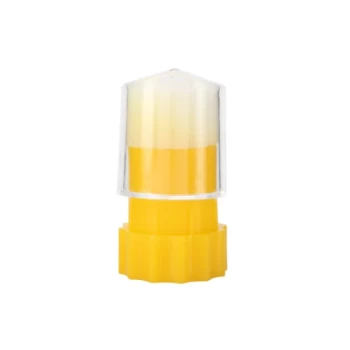
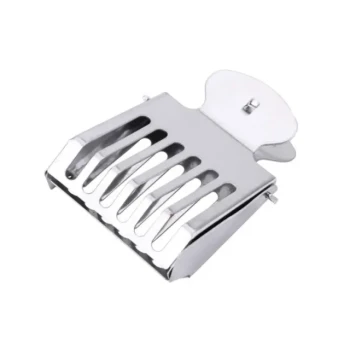
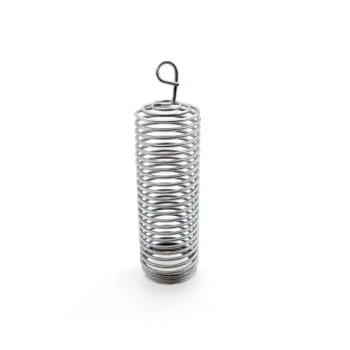
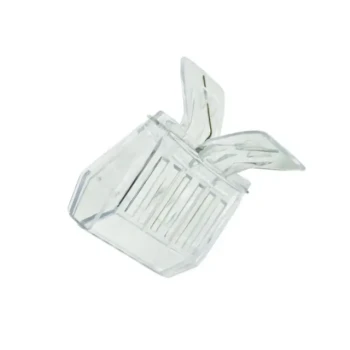
If you are uncomfortable holding the queen by hand, use a push-in marking cage or marking tube. These tools immobilize the queen against the comb or within a tube, stabilizing her mobility for a clean application without direct finger contact.
Applying the Mark
Precision Placement
Once the queen is immobile, daub the paint onto the center of her thorax only. This is the hard section between the head and the abdomen where the wings attach.
Drying Time
Do not release the queen immediately. Hold her gently for 30 seconds to one minute. This allows the paint to dry completely, preventing attendant bees from cleaning the mark off immediately upon her return.
Releasing the Queen
Once the paint is dry, gently return her to the frame she was taken from. Ensure she walks onto the comb safely before closing the hive.
Critical Precautions and Pitfalls
Avoid Sensory Organs
Accuracy is non-negotiable. You must ensure paint does not touch her antennae, eyes, or wings. Obstructing her sensory organs or flight capability can lead to the hive rejecting or superseding her.
The Risk of Rejection
If the queen is returned with wet paint or a foreign scent that overwhelms her pheromones, the colony may ball (attack) her. Ensuring the paint is dry mitigates this risk significantly.
Handling Pressure
When trapping the legs or using a plunger cage, use minimal pressure. Crushing the queen's abdomen or legs is a common error that can cause permanent injury or death.
Making the Right Choice for Your Goal
- If your primary focus is safety and you are a beginner: Use a push-in marking cage or tube to minimize direct handling risks while you learn.
- If your primary focus is efficiency and speed: Master the manual "wing-to-leg" transfer technique to mark queens quickly without extra equipment.
Success in marking a queen comes from patience, not dexterity; never rush the drying process.
Summary Table:
| Stage | Key Action | Critical Note |
|---|---|---|
| Preparation | Prime paint & practice on drones | Ensure paint flow is consistent and not runny |
| Securing | Hold by wings, then lock legs | Use minimal pressure to avoid crushing the abdomen |
| Application | Dab paint on center of thorax | Avoid eyes, antennae, and wings at all costs |
| Drying | Hold for 30–60 seconds | Prevents bees from cleaning off paint or rejecting her |
| Release | Return gently to the same frame | Verify she walks onto the comb safely |
Elevate Your Apiary Management with HONESTBEE
Efficient queen management starts with the right tools. At HONESTBEE, we specialize in supporting commercial apiaries and distributors with a comprehensive range of professional-grade beekeeping equipment. From precision marking tools and protective gear to advanced honey-filling machinery and specialized hive-making hardware, our wholesale portfolio is designed to enhance your operational efficiency.
Whether you are scaling your honey production or supplying the next generation of beekeepers, our industry consumables and cultural merchandise provide the quality your business deserves. Contact us today to explore our wholesale offerings and discover how our expertise can streamline your beekeeping operations.
Related Products
- Queen Bee Marking Pen POSCA Queen Marking Pens for Beekeeping Bee Markers
- Plastic Long Marker Device for Catching and Marking Bees Queen Bee Marking Tube and Cage
- Queen Bee Marking Tube Cage Bottle Catcher Holder with Clear Plastic Plunger Marker
- One Hand Yellow Queen Marking Catcher Tube Cage Beekeeper Tool Accessory for Queen Bee
- Queen Bee Marking Pen UNI Medium Point for Queen and Bee Marking
People Also Ask
- What role do specialized marking pens and color-coding systems play in honeybee tracking? Enhance Research Precision
- Why are specialized marking pens used for stingless bee queens? Essential Tools for Large-Scale Breeding Success
- How should a new paint pen be primed before marking a queen bee? Essential Tips for Safe & Clear Markings
- How should a queen bee marking pen tip be properly primed? Master the Art of Safe Queen Marking
- What specifications are required for a high-quality queen bee marking pen? Ensure Safety and Precision for Your Colony