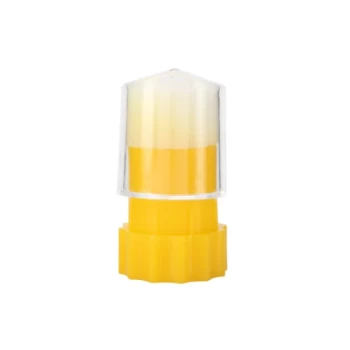
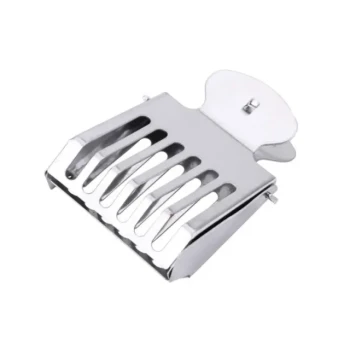
A combined marking process significantly amplifies visual detection by extending the colored surface area beyond the thorax to include the wings and abdomen. This multi-point technique creates a high-contrast visual footprint that is far easier to identify than a traditional single-point mark, especially in challenging hive conditions.
By significantly increasing the colored surface area, this method drastically reduces the labor and time required to locate the queen without compromising her flight or egg-laying functions.
The Mechanics of Enhanced Visibility
The core technical advantage of marking the thorax, wings, and abdomen lies in the geometric increase of the visual target.
Expanding the Visual Footprint
Traditional marking relies on a small dot confined to the thorax. By extending the marking to the wings and abdomen, you create a broader visual focus. This larger surface area ensures the queen does not blend in with the thousands of worker bees surrounding her.
Contrast in Challenging Environments
Locating a queen can be particularly difficult on dark honeycomb or within exceptionally strong, populous colonies. The combined marking process utilizes high-contrast colors across multiple body segments to negate natural camouflage. This ensures the queen remains distinguishable regardless of the background surface or density of the hive.
Operational Efficiency and Biological Safety
While the primary goal is visibility, the downstream effect is a measurable improvement in colony management efficiency.
Reducing Management Labor
Routine management relies on the ability to quickly assess the queen's presence and health. Because the multi-point mark is so distinct, it substantially reduces the time beekeepers spend searching for the queen. This efficiency minimizes the duration the hive remains open, reducing stress on the colony.
Non-Invasive Functionality
Despite the extensive coverage of paint, this specific combined technique is designed to be non-invasive. The primary reference notes that when applied correctly, it does not interfere with the queen's critical biological functions. She retains full capacity for flight and egg-laying, ensuring colony productivity is unaffected.
Understanding the Trade-offs
While the combined method offers superior visibility, it is important to contextualize it against standard practices.
Coverage vs. Standard Protocol
Standard beekeeping literature often emphasizes marking the thorax only to avoid accidentally gluing wings or clogging spiracles (breathing tubes). The combined method deviates from this by intentionally marking the wings and abdomen.
Precision Application
Because this method involves multiple body parts, it requires a confident application technique to ensure the "non-invasive" claim holds true. The goal is to increase visibility without restricting movement, requiring a balance that differs from the single-dot precision of traditional methods.
Making the Right Choice for Your Goal
The decision to use a combined marking strategy depends on your specific management environment and experience level.
- If your primary focus is rapid identification in dense colonies: Prioritize the combined marking method to maximize contrast and minimize search time on dark comb.
- If your primary focus is standard inventory or age tracking: Stick to the traditional single-point thorax mark, which provides sufficient data for confirmation of age and supersedure without requiring multi-point application.
Ultimately, the combined marking process is a tool for efficiency, trading a more complex application for a significantly faster location time during inspections.
Summary Table:
| Feature | Single-Point Thorax Marking | Combined Marking (Thorax, Wings, Abdomen) |
|---|---|---|
| Visual Footprint | Minimal; small dot target | Maximum; high-contrast geometric target |
| Identification Speed | Slower; easy to hide in dense clusters | Rapid; easily spotted on dark combs |
| Labor Efficiency | Standard | High; reduces hive-open time |
| Camouflage Resistance | Moderate | Superior; negates natural hive blending |
| Application Complexity | Low; single drop | High; requires precision across segments |
Elevate Your Apiary Management with HONESTBEE
Maximizing hive efficiency starts with the right tools. At HONESTBEE, we specialize in supporting commercial apiaries and distributors by providing a comprehensive range of high-quality beekeeping machinery and essentials. Whether you need precision tools for queen management or industrial-scale honey-filling machines and hive-making equipment, our wholesale portfolio is designed to enhance your productivity.
Partner with HONESTBEE to scale your operations. From specialized hardware to essential industry consumables, we deliver the value and reliability your business demands. Contact our expert team today to discuss your wholesale needs!
References
- Slobodan Dolašević, Zoran Stanimirović. A New Technique for Marking Queen Bees (Apis mellifera) for Better Visibility and Easier Spotting. DOI: 10.3390/agriculture15060645
This article is also based on technical information from HonestBee Knowledge Base .
Related Products
- Queen Bee Marking Pen UNI Medium Point for Queen and Bee Marking
- Queen Bee Marking Pen POSCA Queen Marking Pens for Beekeeping Bee Markers
- One Hand Yellow Queen Marking Catcher Tube Cage Beekeeper Tool Accessory for Queen Bee
- Plastic Long Marker Device for Catching and Marking Bees Queen Bee Marking Tube and Cage
- Queen Bee Marking Tube Cage Bottle Catcher Holder with Clear Plastic Plunger Marker
People Also Ask
- How should a new paint pen be primed before marking a queen bee? Essential Tips for Safe & Clear Markings
- How should a queen bee marking pen tip be properly primed? Master the Art of Safe Queen Marking
- What specifications are required for a high-quality queen bee marking pen? Ensure Safety and Precision for Your Colony
- What role do specialized marking pens and color-coding systems play in honeybee tracking? Enhance Research Precision
- Where on the queen bee's body should the mark be applied? Master the Art of Safe Queen Identification