Applying non-toxic adhesives is a vital secondary defense in thermal hive management. When you treat a beehive with heat, applying a substance like Vaseline to the bottom board or collection drawer serves a specific purpose: to trap mites that have been dislodged by the heat but are not yet dead. This ensures that stunned parasites are physically unable to climb back into the hive to re-infest the colony.
While thermal treatment is highly effective at causing mites to detach from bees, it does not guarantee immediate mortality for every single parasite. The adhesive acts as a critical failsafe, capturing surviving mites to prevent re-infestation and slowing the evolution of heat-resistant mite populations.
The Mechanics of Mite Containment
The Gap Between Detachment and Death
Thermal treatments work by creating an environment that is hostile to Varroa mites.
Often, the heat causes the mite to lose its grip on the host bee before the heat actually kills the parasite.
These mites fall to the bottom of the hive, stunned but potentially still alive.
Preventing Physical Re-infestation
Without a sticky barrier, a fallen mite can recover as it cools down.
Once recovered, the mite can simply crawl back up into the brood nest or latch onto a passing bee.
A layer of non-toxic adhesive, such as Vaseline, creates an inescapable trap that converts a "drop" into a confirmed kill.
Long-Term Evolutionary Benefits
Mitigating Heat Resistance
One of the most profound reasons for using adhesives is to influence natural selection.
Mites that survive a thermal cycle are, by definition, the most heat-tolerant individuals in that population.
If these survivors are allowed to climb back up and reproduce, they pass those heat-resistant traits to the next generation.
Preserving Treatment Efficacy
By trapping and eliminating these "strong" survivors, you prevent them from breeding.
This breaks the cycle of resistance, ensuring that thermal treatments remain an effective tool for your apiary in the long run.
Operational Considerations
The Necessity of Uniform Coverage
For this method to work, the adhesive barrier must be complete.
Any gaps on the bottom board or drawer provide a potential escape route for a recovering mite.
Monitoring and Maintenance
Adhesives trap debris and pollen alongside mites.
Regular cleaning and re-application are necessary to maintain a sticky surface that effectively captures parasites.
Making the Right Choice for Your Colony
To get the most out of your thermal treatments, apply this strategy based on your specific objectives:
- If your primary focus is immediate colony relief: Use the adhesive to ensure that every mite dislodged by the heat is permanently removed from the bee population.
- If your primary focus is long-term genetic management: Use the adhesive to aggressively eliminate heat-tolerant survivors, preventing the development of resistant mite strains.
By combining thermal shock with a physical trap, you transform a temporary setback for the mite into a permanent solution for the hive.
Summary Table:
| Feature | Function in Thermal Treatment | Impact on Hive Health |
|---|---|---|
| Mite Trapping | Captures stunned mites dislodged by heat | Prevents parasites from re-climbing into the brood |
| Adhesive Barrier | Creates a physical, inescapable trap | Ensures temporary detachment becomes a permanent kill |
| Resistance Control | Eliminates heat-tolerant survivors | Prevents the evolution of heat-resistant mite strains |
| Maintenance | Requires regular cleaning/re-application | Keeps the treatment area effective and monitoring-ready |
Maximize Your Apiary Productivity with HONESTBEE
At HONESTBEE, we understand that large-scale beekeeping demands precision and reliability. Whether you are managing commercial apiaries or supplying the industry as a distributor, our comprehensive wholesale solutions are designed to scale with you. From advanced beekeeping machinery and hive-making equipment to high-quality honey-filling machines and essential consumables, we provide the tools necessary for efficient colony management and mite control.
Why partner with HONESTBEE?
- Full Spectrum Supply: Access everything from specialized hardware to honey-themed cultural merchandise.
- Commercial-Grade Quality: Durable equipment engineered for high-volume operations.
- Expert Support: We help you integrate the best practices in thermal treatment and hive maintenance.
Ready to elevate your beekeeping operation with industry-leading equipment? Contact us today to explore our wholesale catalog!
References
- Georgios Goras, Andreas Thrasyvoulou. Hyperthermia -a non-chemical control strategy against varroa. DOI: 10.12681/jhvms.15869
This article is also based on technical information from HonestBee Knowledge Base .
Related Products
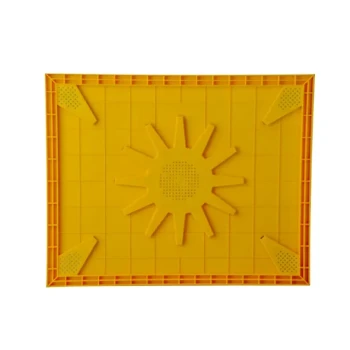
- Langstroth Solid Bottom Board for Beekeeping
- Solid Bottom Board Australian Pine Wood Langstroth Bottom Board for Wholesale
- Langstroth Screen Bottom Board for Beekeeping Wholesale
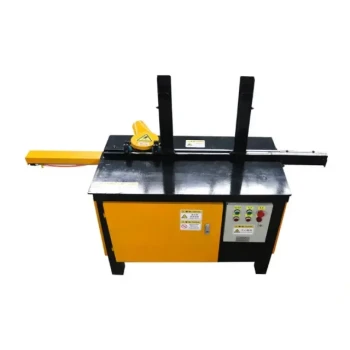
- HONESTBEE Top Bar & Bottom Bar Forming Machine | Bee Frame Machine
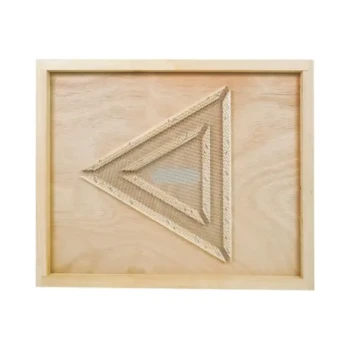
- HONESTBEE Wooden Bee Escape Board with Triangle Mesh Design for Beekeeping
People Also Ask
- What are the functions of solid bottom boards for a beehive? Essential Thermal Protection and Winter Survival Tips
- What is the purpose of a solid bottom board for bee hives? Enhance Hive Health and Winter Survival
- How does climate influence the choice between a solid and screened bottom board? Optimize Your Hive for Local Weather
- What is the primary function of a bottom board in a modern modified beehive system? Essential Foundation Guide
- What are the characteristics of a solid bottom board for a beehive? Boost Colony Health and Thermal Insulation