Filtration in honey processing serves a singular, critical function: the mechanical removal of solid impurities to create a clean, safe, and commercially viable product. Immediately following extraction, raw honey contains foreign matter that must be eliminated to ensure the final product meets consumption and quality standards.
The primary goal of filtration is to separate physical contaminants—such as wax, bee fragments, and debris—from liquid honey. This process transforms raw extraction output into a visually clear, chemically stable product that resists premature crystallization while preserving its natural nutritional value.
The Core Objectives of Filtration
To understand why filtration is non-negotiable in professional processing, one must look beyond simple cleaning. It serves three distinct technical purposes.
Removal of Physical Contaminants
Raw honey released from an extractor is rarely pure. It naturally contains suspended solids known as particulate impurities.
Filtration systems are designed to capture specific contaminants, including wax debris, larval remains, and bee body fragments. Removing these elements is the baseline requirement for food safety and hygiene.
Enhancing Sensory Quality
Consumers and high-end retail markets demand consistency. Unfiltered honey often appears cloudy or "dirty" due to suspended particles.
By utilizing multi-stage filtration, processors achieve high visual clarity. This transparency is a key indicator of quality in the supermarket and high-end retail sectors, ensuring the product looks appetizing and professional.
Chemical and Material Stability
Honey is naturally acidic. If processed through improper equipment, it can react with metal components.
Professional filtration systems utilize food-grade stainless steel. This material resists corrosion, preventing metal ions from leaching into the honey. This ensures the honey maintains its physicochemical stability and does not develop metallic off-flavors.
The Impact on Shelf Life
Filtration is not just about aesthetics; it is a preservation technique.
Delaying Crystallization
Honey naturally crystallizes over time, but impurities accelerate this process.
Tiny particles of wax or dust act as nucleation points. These are physical spots where sugar crystals begin to form and grow. By thoroughly removing these fine particles, filtration significantly slows down the crystallization rate, keeping the honey liquid for longer.
Efficiency Through Viscosity Management
While not the purpose of filtration itself, the process often dictates how honey is handled.
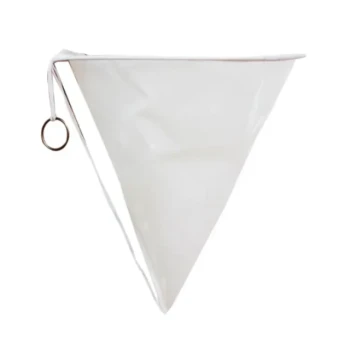
To facilitate the flow through fine nylon or metal meshes, systems often employ mild heat. This lowers the honey's viscosity (thickness), allowing for faster processing without damaging the honey's structure.
Understanding the Trade-offs
While filtration is necessary, it requires a delicate balance between purity and biological integrity.
Preserving Nutritional Value
The goal of a high-quality filtration system is selective separation.
You must remove the waste (wax, legs, wings) without stripping the honey of its beneficial natural components. Professional equipment is calibrated to specific pore sizes to ensure that while dust and debris are caught, the nutritional profile of the honey remains intact.
The Risk of Over-Processing
If filtration is too aggressive or the heat used to lower viscosity is too high, you risk damaging the honey.
The industry standard is to utilize precision filtering. This avoids the pitfalls of basic manual straining, which can be inconsistent, while stopping short of ultra-filtration that might degrade the honey's natural character.
Making the Right Choice for Your Goal
The level of filtration you employ should be dictated by the final destination of your product.
- If your primary focus is High-End Retail Sales: Prioritize multi-stage, high-precision filtration to maximize clarity and delay crystallization, as shelf presence is paramount.
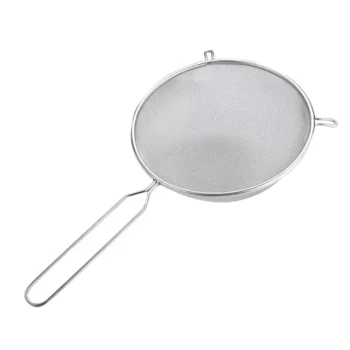
- If your primary focus is Natural or Raw Branding: Use a coarser, stainless-steel straining method that removes visible debris (wax/bee parts) but intentionally leaves finer particles to emphasize minimal processing.
- If your primary focus is Processing Efficiency: Implement a system with high-pressure pumps and mild heating to handle large volumes quickly without creating bottlenecks at the filter mesh.
Filtration is the bridge between a raw agricultural harvest and a stable, consumer-ready food product.
Summary Table:
| Objective | Key Function | Benefit to Producer |
|---|---|---|
| Purity | Removes wax, bee fragments, and debris | Ensures food safety and hygiene standards |
| Clarity | Eliminates suspended particulate matter | Enhances visual appeal for high-end retail |
| Stability | Removes nucleation points for crystals | Extends shelf life by delaying crystallization |
| Integrity | Uses food-grade stainless steel | Prevents metallic leaching and flavor alteration |
Elevate Your Honey Production with HONESTBEE
Maximize your apiary's efficiency and product quality with HONESTBEE. As a premier partner for commercial apiaries and distributors, we provide the full spectrum of professional beekeeping tools—from precision honey-filling machines to advanced filtration and processing hardware.
Whether you are scaling your wholesale operations or sourcing essential industry consumables, our expertise ensures your honey maintains its natural nutritional profile while meeting the highest market standards.
Ready to upgrade your processing line? Contact us today to explore our comprehensive equipment solutions!
Related Products
- Electric Double Wall Honey Filtering Machine Purifier Equipment for Honey Processing Plant
- Professional Stainless Steel Honey Filtering Machine with Water Bath Heating for Beekeeping
- 0.5T Capacity Honey Dehumidifier Dryer with Vacuum Heating and Thickening Filtering Machine
- Honey Concentrating and Filtering Dehumidifier Machine 2T Capacity for Honey
- Professional Stainless Steel Honey Filter with Support Handle
People Also Ask
- What is the process of filtering honey? A Guide to Clean, Pure, and Market-Ready Honey
- What types of equipment are used in honey filtering? Build an Efficient System for Pure, Marketable Honey
- What is the overall importance of using the right equipment in honey filtering? Boost Quality & Marketability
- How should honey filtering equipment be properly maintained? Extend Equipment Life & Protect Honey Purity
- What are the benefits of drying honey filtering equipment after use? Protect Your Honey Quality & Equipment Investment