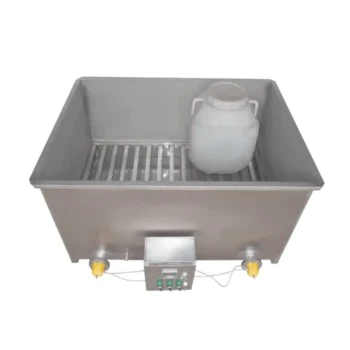
The primary goal of commercial honey processing is stability and consistency. Pasteurization involves heating honey to delay natural crystallization and facilitate high-speed bottling. When combined with filtration, this process removes fine particles such as wax, pollen, and air bubbles, resulting in a product that is clear, smooth, and remains liquid on retail shelves for an extended duration.
The driving force behind pasteurizing and filtering honey is to produce a visually appealing, shelf-stable commodity that resists granulation and fermentation, ensuring a uniform appearance for mass distribution.
The Mechanics of Commercial Processing
Delaying Crystallization
Raw honey naturally crystallizes over time due to glucose precipitation. Pasteurization involves heating the honey to specific temperatures to melt existing sugar crystals and retard the formation of new ones. This ensures the product maintains the liquid consistency consumers often expect from supermarket brands.
Improving Visual Clarity
Filtration works in tandem with heating to purify the liquid. High-precision filtering equipment and filter cloths act as physical barriers to remove fine particulate matter. This process eliminates wax, air bubbles, and pollen, resulting in a transparent, "polished" aesthetic.
Streamlining Production
For large-scale operations, viscosity management is critical. Heating the honey reduces its thickness, making it significantly easier to pump and bottle efficiently. This mechanized management is essential for maintaining speed and consistency in a commercial apiary environment.
Safety and Hygiene Standards
Removing Contaminants
Commercial extraction can expose honey to environmental contaminants. Filtration removes larger impurities such as hive debris and larval remains. This step is vital for ensuring the physical purity of the final product.
Reducing Microbial Load
While honey is naturally resistant to most bacteria, it can contain yeasts that cause fermentation. The thermal processing of pasteurization eliminates microorganisms such as yeast and bacteria. This enhances the biological safety and physicochemical stability of the honey, preventing spoilage during long storage periods.
Understanding the Trade-offs
The Impact on Nutritional Value
While processing creates a stable product, it comes at a cost to biological complexity. The high heat used in pasteurization can destroy sensitive components like natural antioxidants and enzymes.
Loss of Flavor and Identity
Filtration removes pollen and honeycomb particles, which are key contributors to a honey's unique flavor profile and geographical identity. By removing these elements, the resulting honey becomes more generic in taste and loses the specific health benefits associated with raw bee pollen.
Making the Right Choice for Your Goal
Depending on whether you value shelf stability or nutritional density, your preference for processed honey will differ.
- If your primary focus is aesthetics and shelf life: Choose pasteurized and filtered honey, as it will remain liquid, clear, and consistent in texture for months or years.
- If your primary focus is health benefits and flavor: Seek out raw or unfiltered honey to ensure you retain the natural enzymes, antioxidants, and pollen that are lost during thermal processing.
Commercial processing transforms a volatile natural substance into a dependable retail staple, prioritizing shelf appeal over biological complexity.
Summary Table:
| Process Step | Primary Purpose | Key Benefits |
|---|---|---|
| Pasteurization | Controlled heating | Delays crystallization, kills yeast, and reduces viscosity for bottling |
| Filtration | Particulate removal | Removes wax, pollen, and bubbles for a clear, polished appearance |
| Stability Control | Quality assurance | Prevents fermentation and ensures a uniform, long-term liquid state |
| Efficiency | Production speed | Enables high-speed mechanized pumping and consistent mass distribution |
Scale Your Honey Production with HONESTBEE
Transitioning from raw honey to a shelf-stable retail product requires the right technical infrastructure. HONESTBEE specializes in supporting commercial apiaries and distributors with high-performance honey-filling machines, specialized hardware, and a complete range of beekeeping tools. Whether you are looking to improve your filtration efficiency or expand your wholesale operations, our equipment ensures your product meets the highest industry standards for consistency and clarity.
Enhance your commercial production capabilities—Contact HONESTBEE today to discover how our machinery and consumables can drive your business growth!
Related Products
- Electric Double Wall Honey Filtering Machine Purifier Equipment for Honey Processing Plant
- Honey Concentrating and Filtering Dehumidifier Machine 2T Capacity for Honey
- Professional Stainless Steel Honey Filtering Machine with Water Bath Heating for Beekeeping
- Stainless Steel Triangle Support Honey Strainer and Filters
- Professional Stainless Steel Honey Filter with Support Handle
People Also Ask
- What is the process of filtering honey? A Guide to Clean, Pure, and Market-Ready Honey
- What types of equipment are used in honey filtering? Build an Efficient System for Pure, Marketable Honey
- What is the overall importance of using the right equipment in honey filtering? Boost Quality & Marketability
- What role do professional honey harvesting and filtering equipment play in meeting honey market quality standards? Boost ROI
- What is a potential concern associated with filtering honey? Balancing Clarity and Pollen Preservation